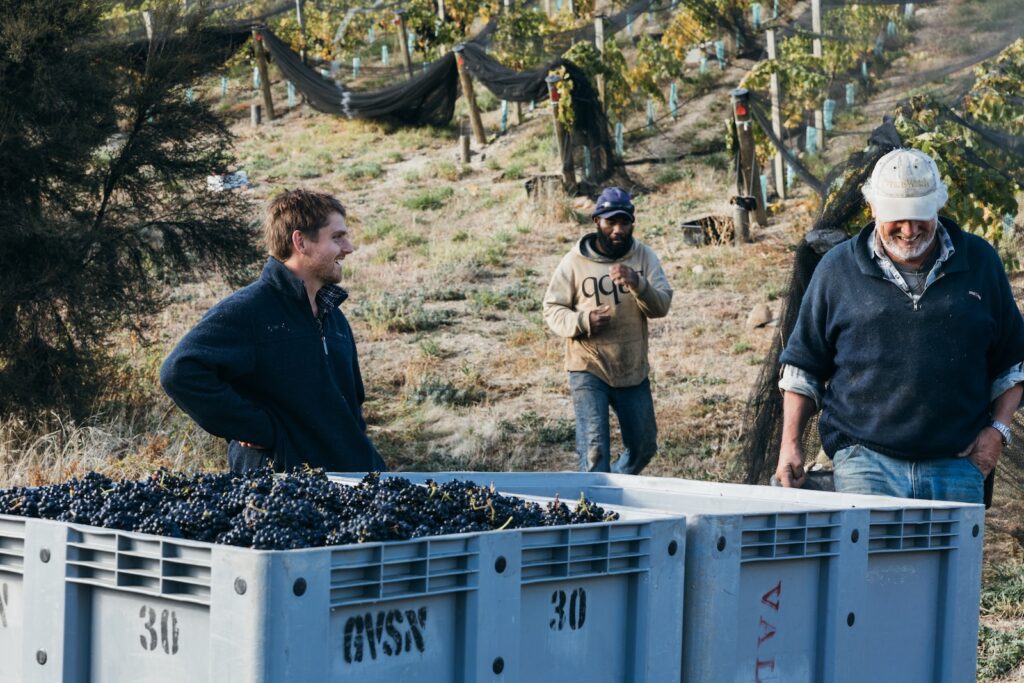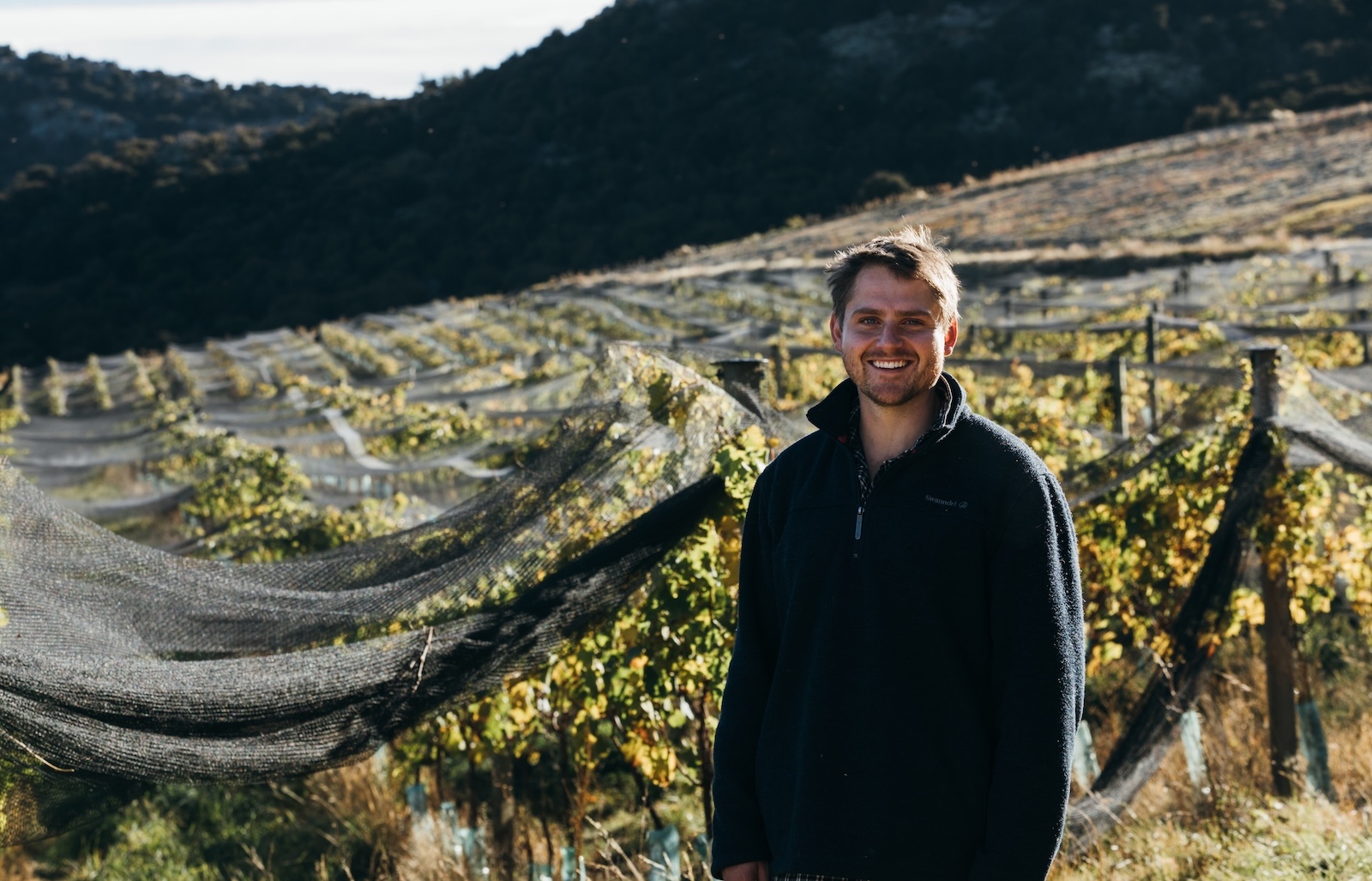
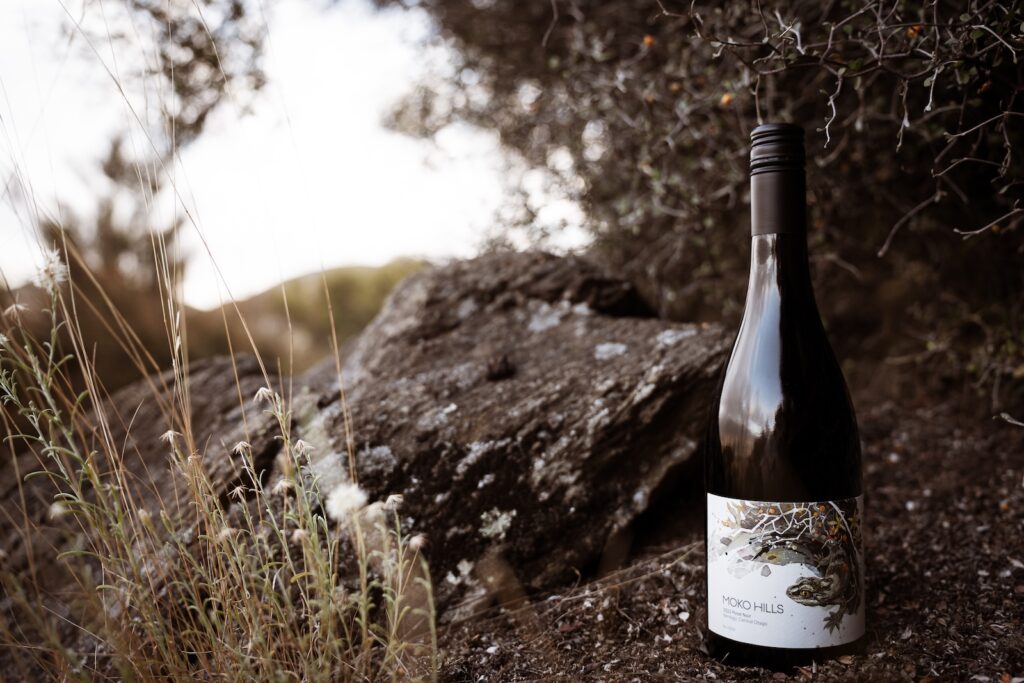
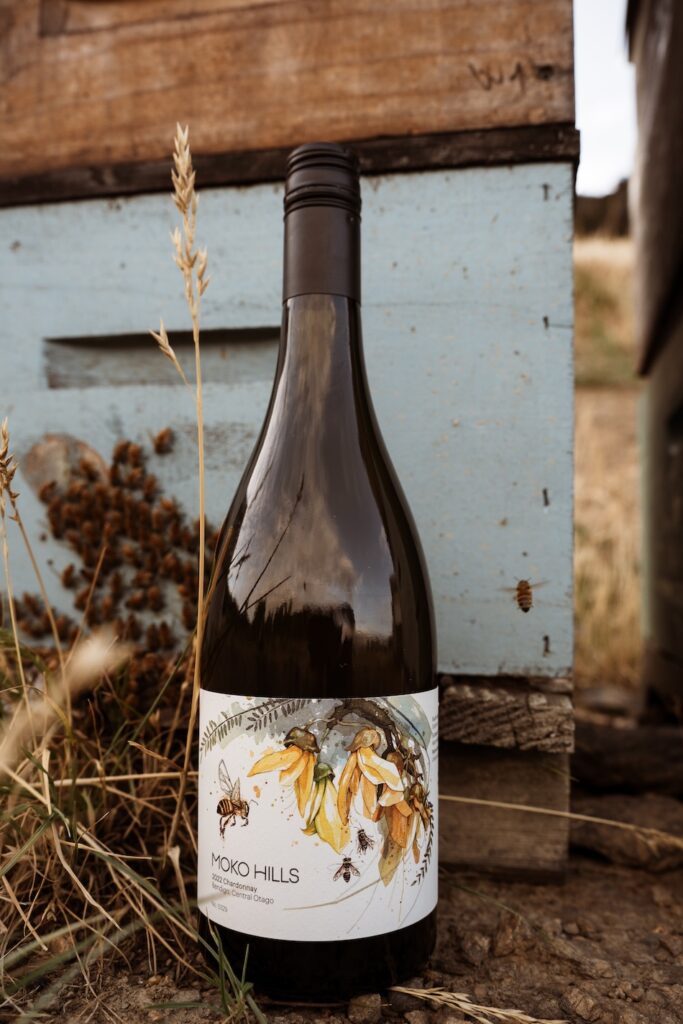
The Moko Hills label is one that first crossed my path when I was working in Vic Road Wine Bar and Cellar, and many reps and winemakers would visit, selling their wares. It’s a small place and a spot on the shelf is hard-earned. We stocked all three of the wines from this small family-run Bendigo producer and they sold extremely well. It was about time (only two years or so) that I caught up with Donald Van Der Westhuizen who is the face of the label – over the phone from his beautiful Central Otago home.
WineFolio: How did you first get into wine?
Donald Van Der Westhuizen: Oh, Jesus, straight into it. Well, I think probably it’s more of a slow growing up with wine – more in the sense of consuming it. So the old man was definitely a big fan of wine. Had a relatively decent wine cellar from all over the show – largely from trips he did, whether it be overseas or domestically. So wine has been part of the family in that sense for a long, long time, or at least since I was born. And then how I got into the wine industry itself was actually back in 2016 when we started looking at it as a family. How do we progress into the wine industry a little bit more than just pure consumption.
WF: So it was a family discussion, not just a ‘you’ discussion.
Donald: I did a Master’s in ecology. A couple of degrees and then doing work and research across the South Pacific, including New Zealand, and then jumped across to wine in 2017.
WF: But tell me about the family aspect to it then. I mean, what was in the background there?
Donald: So that it was more a conversation around the old man wanting to do a family project.
He’s a man that’s very much focussed on family and I guess he’s probably at age now as well where he’s looking at legacy – what he leaves behind. I think he grew up as well with family businesses. So it was a big part of how he saw the world. So he really wanted to start a family project.
Back in 2016, I was based in Nelson working for Department of Conservation and him and my mother came to visit me. And we drove around for the weekend, and ended up in Blenheim, sitting at Hans Herzog. I just still remember when they had the restaurant there. He basically said, “We want to start a family project, but we don’t have the energy. What do you want to do?” And I was like, Oh my goodness, that’s a big question.
We actually explored everything. My grandfather had a massive nursery in South Africa, where I was born. So we had some experience in terms of growing things. And then we looked at truffles, we looked at hops, we looked at cut flowers of all things. Yeah, so a whole bunch of stuff, but we kept circling back to viticulture. So I even remember my undergraduate when I was 18, 19, my dad said, ‘oh, why don’t you study viticulture?’ I said, “Mate, you are dreaming. There’s no point in me studying viticulture”. But it ended up being… he was right. Just don’t tell him that.
So 2016, we kept going around, coming back to viticulture. And then late 2016, during the summer, I was travelling around the south doing some work for the Kia Conservation Trust, in Mount Aspiring. And as I was driving back up to Nelson in my van, I saw a ‘For sale’ sign. And at that point, I’ve been looking at land, and had been very close to buying a piece of land in Blenheim, in the Upper Wairau – which I’m very glad we didn’t do in hindsight.
I stayed the night in the section we have now, in my van and walked around. And then called my Dad the next morning and said “I think I found the place”. And he said, “Are you sure?” And I said, “Well, I can see vines from where I am”. And he said, “OK, find out what you can”. Essentially the rest is history.
WF: So was that the moment when you realised this is what was ahead of you? This is what you would be doing?
Donald: Yes, well, I was also very ignorant.
WF: Which helps.
Donald: It definitely helps, yeah. I think you need a little level of ignorance when going into the wine industry. In 2017 we started land prep during winter. And then I realised “Oh my goodness, I have no idea what I’m doing here”. So went back to studying at the postgraduate wine science program at Auckland Uni on Waiheke Island.
You: It was bare land. You planted it?
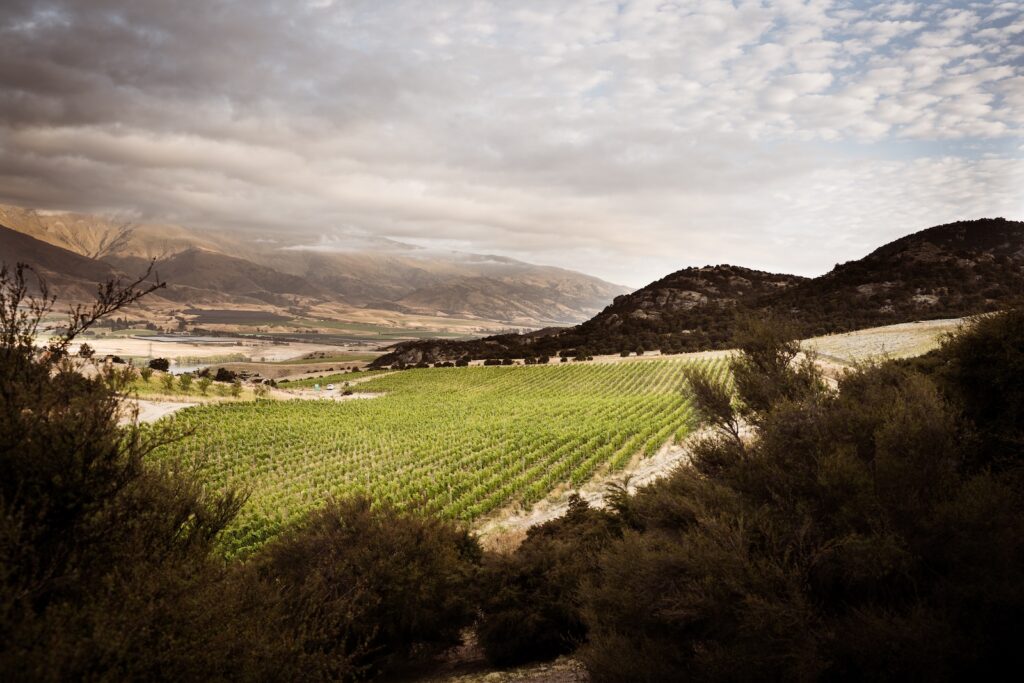
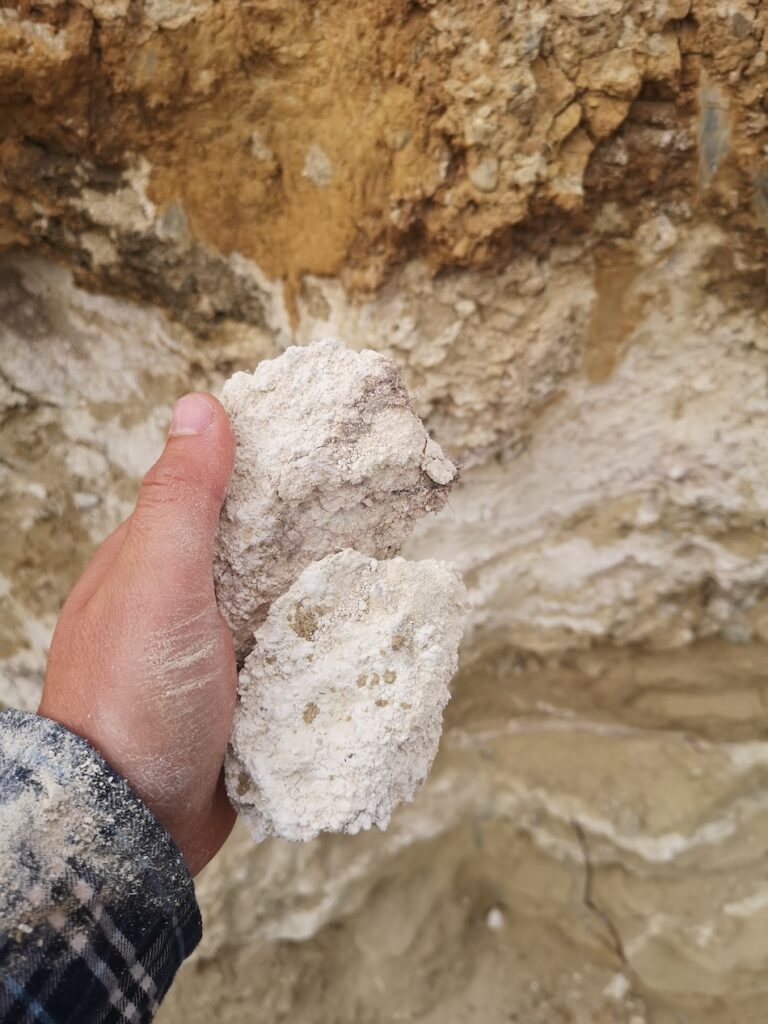
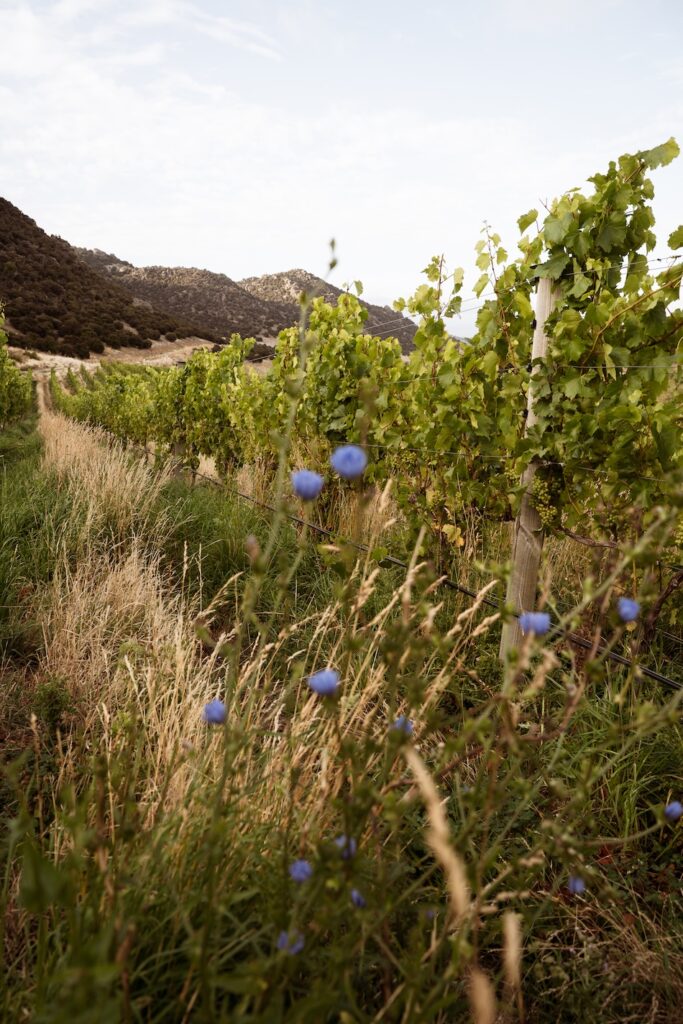
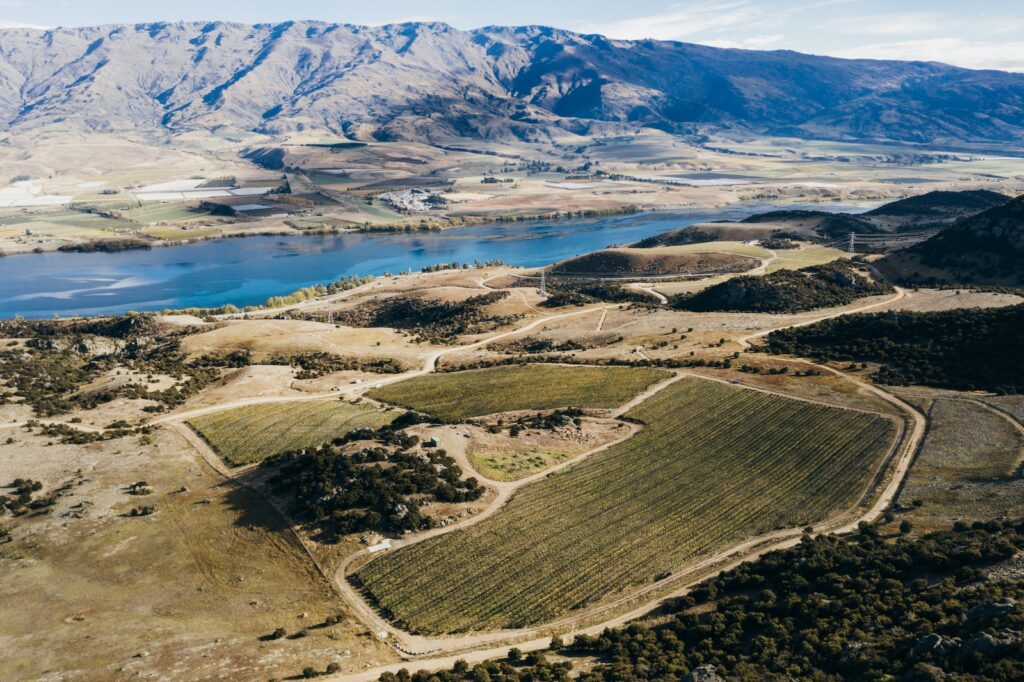
Donald: Yeah, it was literally just rocks and rabbits. Still is very much rocks, but a lot less rabbits. We we ended up moving about 4000 tonne of large boulders, just to get it off. And it is still very much rocky. So a lot of our growing methodologies and stuff also take that into account. It is pretty harsh and bare – not easy growing in Bendigo, that’s for sure.
WF: And did I see that as well as obviously having your label, that you work for a viticulture company?
Donald: Yes, I work for James Dicey.
WF: I was going to say, did you turn to the Diceys to help you get started?
Donald: Yeah, basically I leaned into James, to get the vineyard established on the initial blocks. And then at the same time, James said, “Well, why don’t you come work for me?” So I started working for him and then I started doing the vintage hopping thing as well. When Matt Dicey was at Mount Difficulty, I worked a couple of seasons there.
Did a couple of vintages in Oregon and Burgundy. And then subsequently in Valli as well, where I’ve ended up making my wine for four years now. Until just this year when we built a little winery on site. But that’s still my my day job. Vineyard manager for a few clients, my main client being Mount Edward.
WF: Who were your earliest mentors or influencers that helped you out down there?
Donald: The Central Otago community, as you probably already know, is super close-knit. Really supportive – so you could always lean on anyone, really. But it definitely was the Diceys, both James and Matt; and Jen Parr as well. Jen was a massive help, especially with us supplying grapes for Valli for quite a few years – for the Bendigo. And then her and Grant also offered me a small area since 2022, to make my wine at their winery.
WF: What skills have taken the longest to learn?
Donald: Well, the one that I’m still learning is probably the sales front. But definitely one of the challenges is purely viticulture. Everyone always talks about the winemaker and winemaking, but in my viewpoint, winemaking, honestly, is probably the easiest out of sales, viticulture, and winemaking. Viticulture definitely has kicked my ass many, many times.
WF: You didn’t choose anywhere easy either, did you?
Donald: No, honestly, probably the hardest vintage for me was 2024. I started pushing the boundaries in terms of undervine competition and weed management. But 2024 was probably the hardest or worst seasons to do that. Super dry, massive frost early season, and then to just top it off was – seven days before veraison – we had a massive, localised hailstorm which wiped out another 10% of crop.
So yeah, 2024 kicked my ass. But honestly, looking at the wines now and getting some feedback, and ’24 seems to be a really good vintage. So, I guess the whole adage around, a hard season is making good wine. There may be some truth in it.
WF: You can taste the tears in it.
Donald: Honestly, blood, sweat, and tears.
WF: What part of the year is the most challenging or gives you the most satisfaction?
Donald: I would say the most challenging is probably all of the growing season, and it’s all different challenges as well. So September, October, November we get absolutely annihilated by wind in Central Otago and probably more so in those upper glacial terraces in Bendigo. We get a majority of northwesterly wind, but for some reason, the wind actually comes down a northeasterly gully, and just hits certain sites along the vineyard, and it’s very difficult to manage.
Because we are organically growing and don’t cultivate – the biggest challenge during the growing season is weed management. And then water management as well. The wind, as well as higher competition in terms of undervines, we’ve had to adjust our water management. In Central Otago, I think a lot of people are trying to replicate large rainfalls instead of the historical drip feed, where every day it gets a little drink. So it’s a few things we’ve been learning and I still don’t think we have it right; and we might not have have it right in the next 30 years – but, slow and steady.
WF: So what part gives you the most satisfaction?
Donald: Probably all the stages in certain parts. Usually, one of the breathing points is when you get nets on, and it’s almost like ‘okay, we’ve at least got a month before harvest’. So it’s a nice little downtime, and then a time for reflection. And then another one is when all the grapes are off after harvest and you can say ‘Oh, Thank God, that’s over’. And it usually happens when the sun is setting late in the evening… super quiet. And it’s just like all these little points of reflection along the growing season or along the process. Another one, obviously, is when everything’s in barrel and then when everything’s in bottle.
WF: How important is your place – your site? I understand people talk about terroir, but how does that directly relate to you and your plot of land?
Donald: Going back to my days in ecology, conservation and research. What was probably the biggest challenge for me at that time was that I felt like, regardless of what we do, our efforts were almost going backwards – in terms of conservation values within New Zealand. Just in terms of funding et cetera. So when this opportunity came to actually have a little bit of land to start working on – it feels like I actually have the ability to progress forward in terms of restoration and ecology.
So that’s one aspect which is, again, a slow, slow progress. And you don’t necessarily see the changes until you actually start looking back and reflecting. Occasionally an image pops up and you’re like ‘holy shit, we’ve come a long way’. And then one of the big things is that it’s our home now. So several years ago we moved on site. My parents are on site now as well. My sister is on site with my niece and nephew. So it’s definitely become a family project. And honestly, I live and breathe it. It’s a healthy – or unhealthy – obsession. I’m not sure yet.
And now that’s a generational thing where my nieces and nephews are super inquisitive – starting to take an interest. Whether they decide to carry it on in the future, who knows, but they’re still a while away. But everything we do at the moment is long term. We’re not looking at for short term benefit. Obviously, we still need to be financially sustainable in some sense. But the majority, and if not all, of the decisions we do make is long-term vision.
WF: What’s good and bad about working with family?
Donald: The good thing is that they probably understand you more on a personal level. Which is also a bad thing in some sense. But honestly, for everyone there, it’s beyond just a job. Working with family, it is that, again, that whole long-term vision. It’s not just a pay cheque nine to five job. So everyone has a similar idea, or similar goal, or similar dream, really.
WF: What do you think things like the kind of project you’ve got going on – where it’s family owned, family run – handmade, I suppose, in some ways. What does that offer that maybe some bigger, mass produced wines don’t?
Donald: I honestly think it’s personality. I guess the big thing is for small producers, like ourselves, is to try to communicate that story and then hopefully it resonates with a group of consumers. Because for me, when I’m drinking one, I’m not necessarily purely focussed on how the wine tastes – it’s the story behind it or the intent, or the feeling the wine gives you.
WF: So character and personality more important to you than a sort of perfection or the same wine every year?
Donald: Honestly, I think there’s no such thing as perfection, especially when it comes to Pinot. And I would say that for Chardonnay as well. The first thing that comes to mind for me is Bordeaux – that is a pursuit for perfection; whereas for Pinot it is a wine of personality. So it’s almost saying, I’m not perfect, but that’s basically perfect in itself. Like, perfect and its imperfections. It’s got character, it’s got personality. Again, it comes down more to a feeling than a perfection.
WF: Of the things that come to my mind when someone says ‘perfect wine’ I suppose is that Grand Marque Champagne model, where Moët are looking to make the same wine every year. But also a bad thing is Robert Parker. I think he’s had a huge influence on the world of wine since the mid-80s and not all of it good. That perfect score – 100 points and such. I value wines with character and personality much more than than a 100 point wine that someone says is perfect.
You mentioned, Pinot, obviously, and Chardonnay, because that’s what you put out – but, do you work with any other varietals or is there something you would like to work with?
Donald: So we do have a couple of vintages of Méthode, ticking away in the background, Blanc de Blanc. I’ve been doing that since 2024 but very, very small amounts. Essentially 500, 600 bottles of a vintage. And then other things – a couple of years ago, I planted some different varieties – so I planted Cabernet Franc, Syrah, and Gamay.
And this vintage just been has been the first vintage for the Cabernet Franc and the Syrah, so just a barrel of each. Which has been interesting given that 2026 down here in Central Otago was a bloody cold vintage. Probably the coolest in a long time. Probably even cooler than 2020 and 2017. So it will be very interesting to see how those two actually progress because if I can pull it off this year, then the following year should be a lot easier!
WF: I love the ‘17s. I’ve got more Central Pinot from 2017 than any other vintage.
Donald: Honestly, I think the coolest vintages in Central Otago are the best, and that actually translates well to Syrah. The Ghost Town, which Mount Difficulty make – the cooler vintages have been by far the most interesting vintages.
WF: What was 2018 like? I generally don’t rate the wines very high.
Donald: 2018 was a shit show. Essentially, what was it… a month early? But It was a good growing season for young vines – and I had quite a few, as it was before our first vintage. But I remember I was working for Mt Difficulty and it was just an absolute insane growing season and the fruit came in hot and fast.
So by no means a good vintage, I don’t think, for Central Otago. Some people managed to make decent ones, but by general, it’s not a vintage I would be jumping up and down for.
WF: Are there any changes or, for example, costs, that have affected your work over the years?
Donald: Well, fortunately for us, in terms of just purely sales, we’ve been increasing year on year, even across these tougher years. I think the biggest driver for us now is our whole long-term view. We’ve actually now started investing even more into our projects, not less. For instance, this year was a first year in our own winery on site.
Because we’ve been hit quite a lot with frost as well in the last couple of years, we’ve invested in a frost fan. In particular on our Chardonnay block – which has paid off this year. So, yes, there are cost pressures, but it’s also about creating efficiencies and driving long term costs down. Yield is the biggest thing for Central Otago, cost wise, for a bottle. So if you’re producing three tonne a hectare, versus five tonne a hectare, there’s a massive difference in terms of cost. But obviously if you’re producing eight tonne, then you have a quality, effect as well. So you have to find that sweet spot.
WF: What role does experimentation play in what you do? Obviously, I appreciate you’re still learning. Do you get the chance to play around a bit as well?
Donald: The beauty about working for the breadth of vineyards that we manage is not just across subregions but also growing methodologies. So, James is super open for me to trial our whole range of bits and pieces.
And but then also having my own project, you know, there’s no real person I necessarily need to answer to in terms of what I’m doing. So it’s probably more the extreme on our place in terms of what I’m trying. I definitely push that boundary a lot more. It’s a lifetime of experience. You’re never going to get it right all the time. One thing might work one year, one thing might not work the next year.
WF: How do you define success?
Donald: I would say to define success would for me, it’s probably ‘enjoyment’. So, continue enjoyment, challenge, being challenged. And then the creating and maintaining of community. Those three things. You’ll be bored shitless if you’re not being challenged. There’s no point doing it if you don’t enjoy it on some level; and there’s no point enjoying it if there’s no one to share the experience with.
WF: There’s obviously been a few changes in the Central Otago wine landscape over time, including some passing of the baton from the pioneers. What do you think is next for the region? Other than a gold mine, obviously.
Donald: Jesus, that’s a whole other story.
WF: Do you have a good Sam Neill story for me?
Donald: I’d only met Sam Neill a couple of times in the last year or two – in a little bit more comms or an email because we were actually working quite closely around the gold mine. Which he was very passionate about. He definitely took a big personal hit around the gold mine – especially online, and then also people hassling him through emails and messages. So he definitely took one for the team, especially because his voice was so prominent – or people at least people listened when he said something.
In terms of baton passing, a lot of the – I’ll call them old timers, even though they’ll give me shit for it – are still around and I think they are now looking at legacy. What they’ve done really well is that they’ve created a very specific sense of culture within Central Otago. The word that always floats around Central Otago is ‘collaboration’.
One of the things is that people are very careful to not jeopardise or risk the collaborative nature of Central Otago is by doing something that might only benefit themselves. Which I’ve seen. So a lot of people might look at a project, but they say ‘actually, I’m not going to do that until I have the approval from my peers’. So it’s a really interesting community.
But I think that collaborative culture will be challenged. Just with larger producers and more corporate producers entering the fray within Central Otago. The moving away from family operated vineyards to more to people that essentially it is their nine to five job. I can see it because we’ve been doing a few events, in Australia recently with Central Otago winegrowers. Historically, the excitement has been around winemakers attending those events.
But it’s moving now because it’s just becoming more complicated and a lot of winemakers or owners don’t necessarily have the time. So that is becoming more sales staff driven. Which is, I think, just the maturing of the industry. I think that’s going to be the biggest challenge – how we manage that. But honestly, when I look at Central Otago, I think there’s absolutely massive potential. We just need to realise the potential, I think.
WF: How important do you think storytelling is to keeping something like the momentum of Central Otago going?
Donald: There is definitely a refocus on that. I think COVID really hit Central Otago quite hard. Because we were both reliant on visitors, and also heavily reliant on export markets. I think we’ve lost a bit of ground in Australia because they’ve been heavily domestic focussed. So now there’s a renewed effort to re-engage Australia, as well as storytelling. Central Otago Winegrowers are working really hard around that branding identity piece of work. Last year was the first event back as a collective of wine producers in Australia, across Brisbane, Sydney, and Melbourne – a deep dive into Central Otago.
WF: What’s the most memorable feedback you’ve received from a customer?
Donald: Well, probably the best feedback I receive is when people come and visit me. I don’t have a Cellar Door but I’ve had a few times now where someone overseas got my wine. And they’ve emailed me, said, ‘oh, I’m visiting Central Otago. I’d love to come visit’. And it essentially creates a long-term relationship, because it’s not just about wine, it is that building those connections. So I think all of that is probably the most rewarding.
WF: It’s great that someone would want to go and connect those dots. I mean, that’s the some of the best feedback you can get is when somebody then seeks you out. OK, last question. Have you ever created something that even surprised yourself?
Donald: I would say just this whole journey to be honest. Like if I if I look back in 2017 and thought where I am now. Honestly, it’s still a long way to go. I think plenty of dreams still ahead. But when you reflect actually what we’ve been able to achieve in coming up to 10 years? It’s massive. Which I think we needed a level of ignorance, like I said before. Because it’s been a whirlwind.