Nebbiolo is one of those grape varietals that has an effect on winelovers that goes beyond rational responses. You may enjoy a glass of Merlot, or Sauvignon Blanc – but those your favourite? I often say “It is better to be a wine that some people love, than ‘a wine that everyone thinks is OK”. Nebbiolo is one of those ‘favourites’. Its fans are true disciples, whose eyes glaze over at the very thought of opening a bottle. As such, the top wines are expensive and have cult-like followings.
One of Italy’s most important grape varieties – some would say the great grape of Italy. Responsible for the two great DOCG wine styles of Barolo and Barbaresco – it is primarily identified with the Langhe region of Piedmont, situated in Italy’s north-west. Not widely grown elsewhere in the world, it isn’t even the most widely-planted grape in Piedmont, where other red varieties – Barbera and Dolcetto outnumber it. Suffering from a reputation of being a finicky grape that thrives only in specific terroirs (like people used to say about Pinot Noir) – even well-known and ‘large estates’ like Fontanafredda only have 120 hectares planted. One to two hectares would be considered a regular-sized vineyard in Langhe.
Other Piedmont sub-regions such as Roero – which is a DOCG – and Gattinara & Ghemme from Alto Piemonte round out the offerings from its ‘home turf’. The only other meaningful producers are clustered around the cooler, steep terraced vineyards of Valtellina in neighbouring Lombardy. Pockets of Nebbiolo are also grown in the north where Boca, Bramaterra and Carema make noticeably fresher, edgier styles. Nebbiolo has also found an important place in Australia, aided by a preference for italian varieties from the immigrant communities. It is seen in cooler, elevated vineyards throughout Victoria and in the Adelaide Hills.
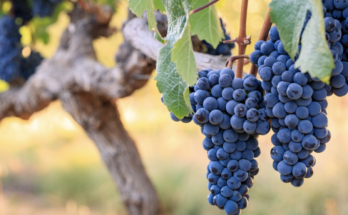
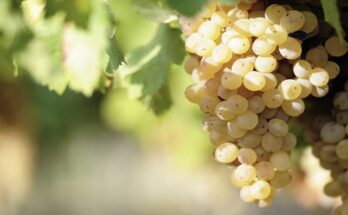
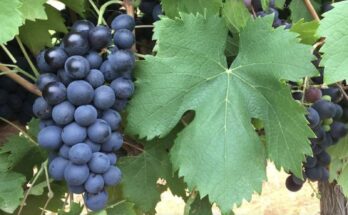
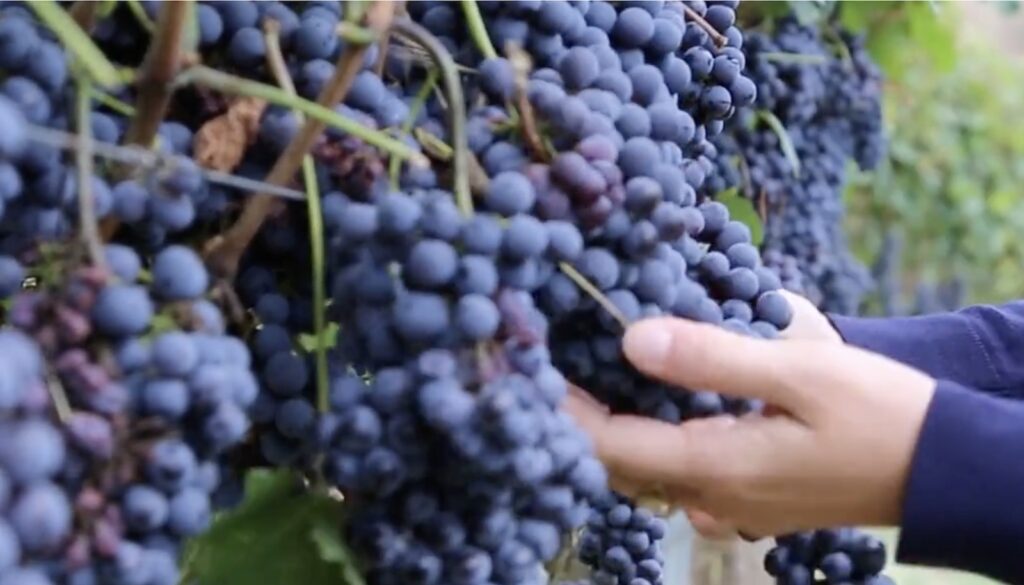
Bunches of Nebbiolo grapes are typically medium to large, cylindrical or pyramidal in shape, with densely packed berries. They often have a wing, which can appear as a second cluster. The berries themselves are small to medium, round or oval, and have a thin but tough bluish skin. They are known for their high tannin and acidity levels. Nebbiolo buds early but ripens late, making it susceptible to spring frosts. The vine is typically of medium-high vigour.
Anthocyanins – which are a group of water-soluble pigments that give fruits and vegetables their red, purple, and blue colours – are not strong in Nebbiolo. As such, the colour of the wine tends to be quite pale – a translucent ruby colour, and it can be hard to judge the age of the wine by the colour in your glass.
Wines made from Nebbiolo are a conundrum. The elements at play in a glass of it shouldn’t make sense – shouldn’t work together… yet they certainly seem to. Its tannin can be heroic, but the nose can/should be outrageously floral, delicate and ethereal. The best examples aren’t afraid to stray into ‘rustic’ territory, with a dry terracotta-like dustiness. There will be a stony minerality; and often a balance between a fleshy sweetness and a sappy tartness.
This is a varietal that can achieve high ripeness while retaining lots of acidity. Unlike many grapes, the fruit doesn’t become overly rich and sweet at higher ripeness, usually looking somewhat savoury and with those signature grippy, black tea tannins. Nebbiolo can vary from lighter-bodied expressions with tart cranberry, red currants and sour red cherry flavours; through to the classic “tar and roses” styles with more weight – looking more savoury, with pot pourri, pepper, star anise, orange rind and bacon fat.
It conveys nuance of site like few varieties, and it can produce staggeringly long-lived wines. While people think about Nebbiolo being a wine for the cellar, – and the Barolos are certainly examples of that – there are actually some pretty, up front wines that are enjoyable in their youth. Even Barbaresco is well-suited to being drunk in its youth. They can be very pale in appearance but still have that tension in the palate that keeps you going back to the glass, but with the prettiness on the nose balanced with mouth-watering acidity and stout tannins. There is also something that compares to a negroni about these fine-boned examples.
Here are the best regions in the world for Nebbiolo-based wines:
Piedmont, Italy
This is by far the most important region for Nebbiolo, responsible for its most iconic expressions.
Barolo DOCG
Known as the “King of Wines”
- Powerful, complex, and long-lived
- Key communes: La Morra, Serralunga d’Alba, Monforte d’Alba, Castiglione Falletto
- Producers: Giacomo Conterno, Poderi Aldo Conterno, Fontanafredda, Ceretto, Paolo Scavino, Massolino, Pio Cesare
Key vintages: the new releases from 2021 and the recent 2015 vintages are both well-regarded; and 2010 and 2001 will be drinking well now. Older years like 1990, 1989, 1982, 1978 would be awesome – if you can afford them!
Barbaresco DOCG
- Particularly known for its co-operative ‘Produttori’
- Style: More elegance and earlier-drinking than Barolo. Finer tannins, similar aromatics
- Key communes: Barbaresco, Neive, Treiso
- Producers: Produttori del Barbaresco, Gaja, Bruno Giacosa, Marchesi di Grésy, Bruno Rocca, Giacosa Fratelli, Cascina Roccalini, Ca’ del Baio and Pelissero
Other areas in Piedmont
- Langhe Nebbiolo: Easier-drinking, less strict aging rules. In Langhe tannins are balanced by juicy acidity, leaving the palate refreshed. There can be a distinct salinity which helps round the mouthfeel and gives great length on the palate.
- Roero DOCG: Roero nebbiolo is celebrated for its elegance, red fruit clarity, mineral structure, and food-friendliness without the heaviness of Barolo.
- Gattinara & Ghemme (Alto Piemonte): High-acid, mineral-driven nebbiolo (locally called Spanna) – elegant, pretty, aromatic expressions that have a real immediacy to them.
- Producers: Vietti, Paolo Scavino, Conterno Fantino, Rivetto, Cantina Malabaila, Malvirà and Sottimano.
Valtellina, Lombardy, Italy
- Alpine Nebbiolo (locally called Chiavennasca)
- Grown on steep terraces
- Style: More delicate, high-acid, ethereal wines
- Subzones like Valtellina Superiore and Sforzato (Sfursat) — the latter is a richer wine made from dried grapes in an Amarone style.
- Producers: Nino Negri, Aldo Rainoldi, AR.PE.PE and Mamete Prevostini.
Australia
In the mid-1980s, Carlo Corino planted nebbiolo in New South Wales’ Mudgee region, releasing the wine under his Montrose label. Since then, the tendrils of nebbiolo have spread to more climate-appropriate regions of Australia. In Victoria’s King Valley, where Italian immigrant families turned to viticulture following the demise of the local tobacco industry, the Pizzini’s planted their first vines – riesling – in the late 1970s. It wasn’t until around 1987 that Pizzini planted Nebbiolo, making it the first Nebbiolo after Corino’s groundbreaking efforts in Mudgee.
- Regions through Victoria – such as Yarra Valley, Heathcote & King Valley and in South Australia Adelaide Hills really shines as a leading example.
- While the numbers are low in volume terms (the 2023 National Vintage Reports shows production of Nebbiolo was around 1/18th that of Sangiovese; or less than 1/1,200th of Australia’s shiraz production!).
- Style: lighter, floral, with brighter fruit
- Gaining traction with experimental winemakers
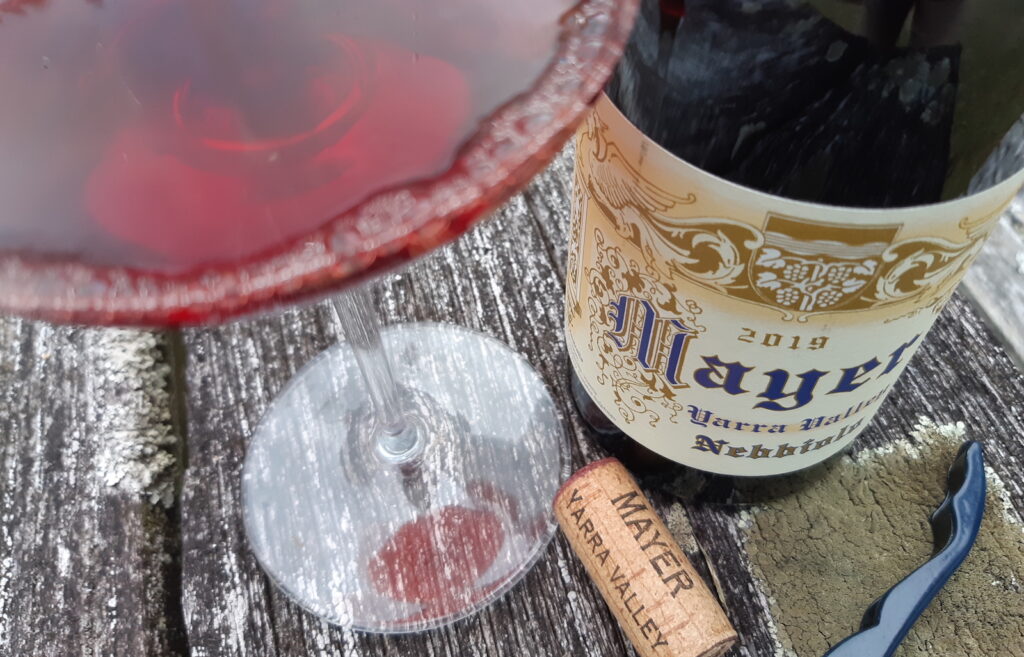
Producers: Adelaide Hills: Elderslie, Longview, Little Giant • Geographe: Vineyard 28 • Victoria: Paracombe, Pizzini, Vinea Marson, Timo Mayer (review > https://winefolio.co.nz/?p=4869)
California, USA
California Nebbiolo tends to work where cooling influences prevail – Santa Barbara, Sonoma Coast, Sierra Heights, and select Lodi hills. The best regarded examples come from small producers focused on terroir expression, freshness and structure.
- Still relatively niche, it is still an emerging varietal here.
- Notable producers: Castelli Vineyards (Russian River Valley); Clendenen, Palmina, Lepiane Wines, Piazza Family Wines (Santa Barbara County) and Giornata (Paso Robles)
Mexico
Valle de Guadalupe (Baja California) has shown lots of promise, and some success with Nebbiolo. Ensanada also has plantings.
Style: More robust, fruit-forward style due to warmth. Blackberries, dark cherry, chocolate on the nose. Rich in red fruits, strawberry and hibiscus, with elements of chalk, graphite and slate. Full bodied with velvety tannins and moderate astringency.
- Local favourite, though less traditional in style
- Producers: Dominio de las Abejas, Las Nubes, L.A. Cetto, Casa Magoni and Relieve Vinícola
New Zealand
New Zealand does produce Nebbiolo, though it’s still a rare and niche style here. Kiwi winemakers have been experimenting with Italian varieties, including some Nebbiolo.
> Marlborough
• Rock Ferry Wines makes ‘The Corners Vineyard Nebbiolo’, see notes below.
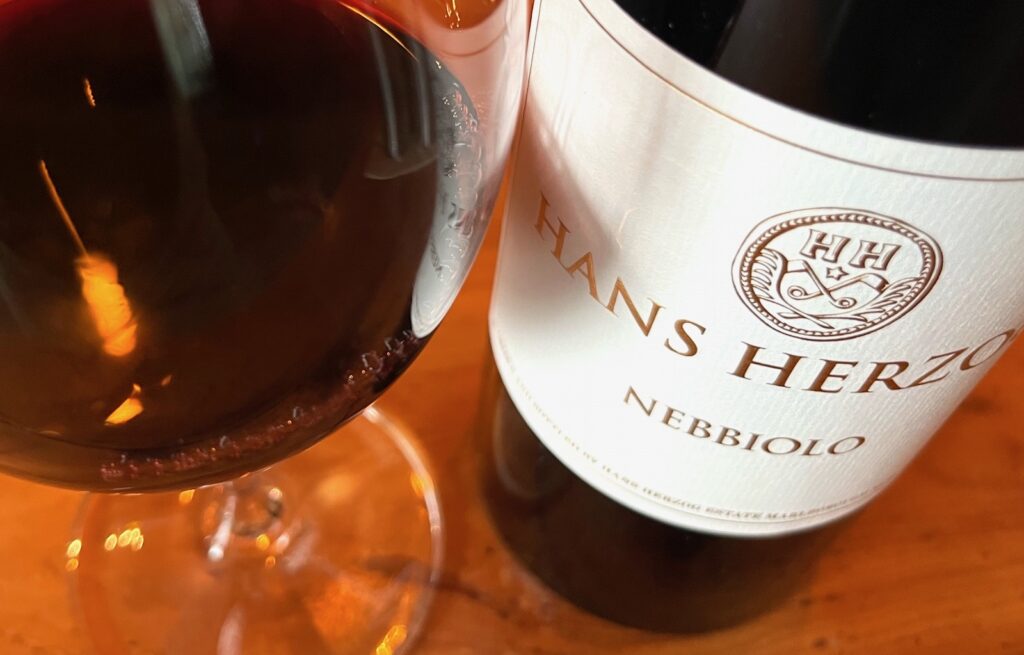
• Hans Herzog in Marlborough crafts a highly regarded Nebbiolo, which I gave 94/100 in this review > https://winefolio.co.nz/?p=10437.
> Hawke’s Bay
- Sub-regions like Gimblett Gravels and Bridge Pa Triangle are known for bold reds, including some Tempranillo and While Nebbiolo isn’t mainstream here, locals such as Warren Gibson have planted the varietal and are producing tiny amounts of experimental bottlings – none of which have made it to the general public yet.
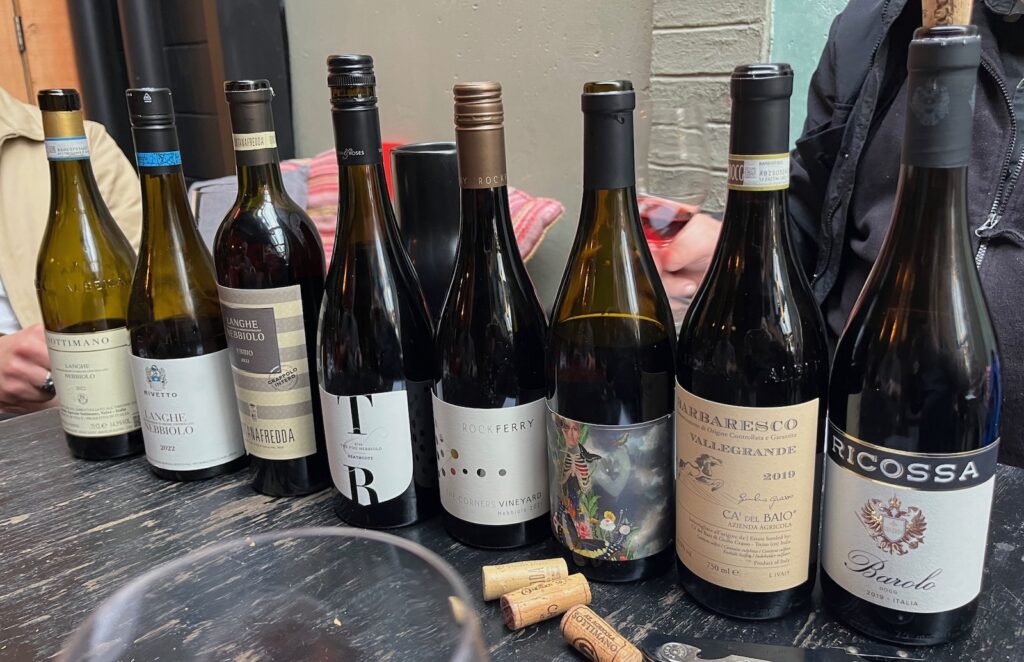
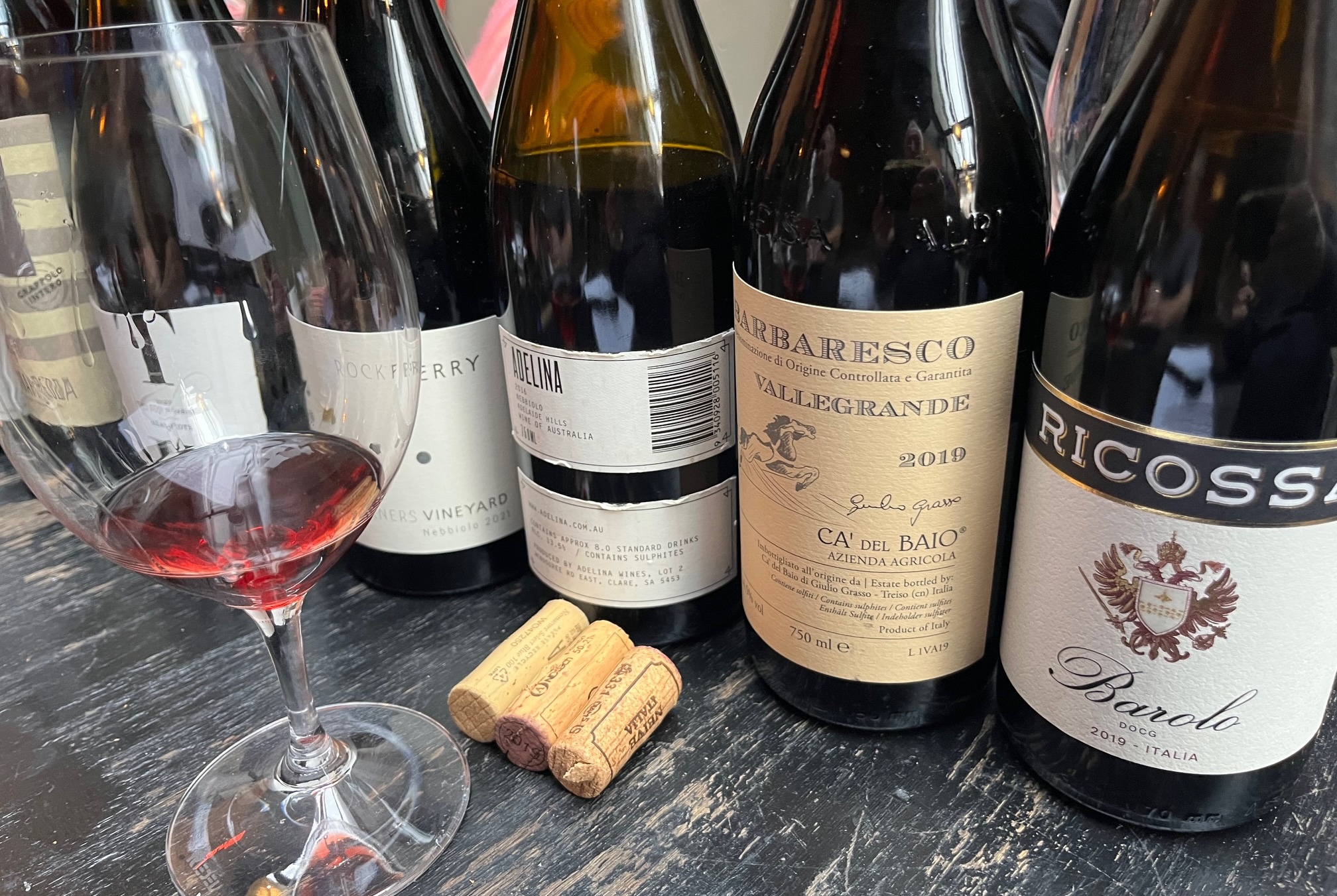
At our ‘Discovery Session’ a group of tasters went through eight bottles of Nebbiolo wines – from Langhe, to Barbaresco, Barolo, and on to Heathcote and the Adelaide Hills, before finishing on a local wine from Marlborough in New Zealand.
The style of the Langhe Nebbiolos was a particular hit. So approachable, juicy and quite light-bodied. You could easily mistake this for Pinot Noir, but once you take a sip, you discover those signature nebbiolo tannins are all there! Fontanafredda Langhe Nebbiolo ‘Ebbio’ 2022 was very pretty, with a bubblegum note as well as cherry cola, but the tannin certainly leaves a mark. Violet, red plums and pomegranate and a peppery finish. Versions from Sottimano and Rivetto – also 2002 vintages also had their fans.
In terms of wines from outside Piedmont, we ‘researched’ Tar & Roses ‘The Fog’ 2022 which is from Heathcote, and Adelina Nebbiolo 2016 from Adelaide Hills. The Adelina winery, known for its Nebbiolo, suffered significant losses in the 2019 Adelaide Hills bushfires. They described the vineyard as “burnt to a crisp” in some areas. The Victorian wine has a bruiser – with that ripe, jammy fruit so typical of big Aussie reds. Pepper, eucalypt and cinnamon all took us away from Nebbiolo into ‘generic, weighty red wine’ territory. An enjoyable glass of wine, for sure – but not your typical Nebbiolo.
Rock Ferry ‘The Corners Vineyard’ Nebbiolo 2019 was the other outsider, from a single vineyard in Marlborough. I wondered if this had a touch of carbonic maceration in the fermentation – with a pop of pippy, sappy fruit. A touch of green, peppery herbals, but also beef stock savouriness. One to sit and contemplate.
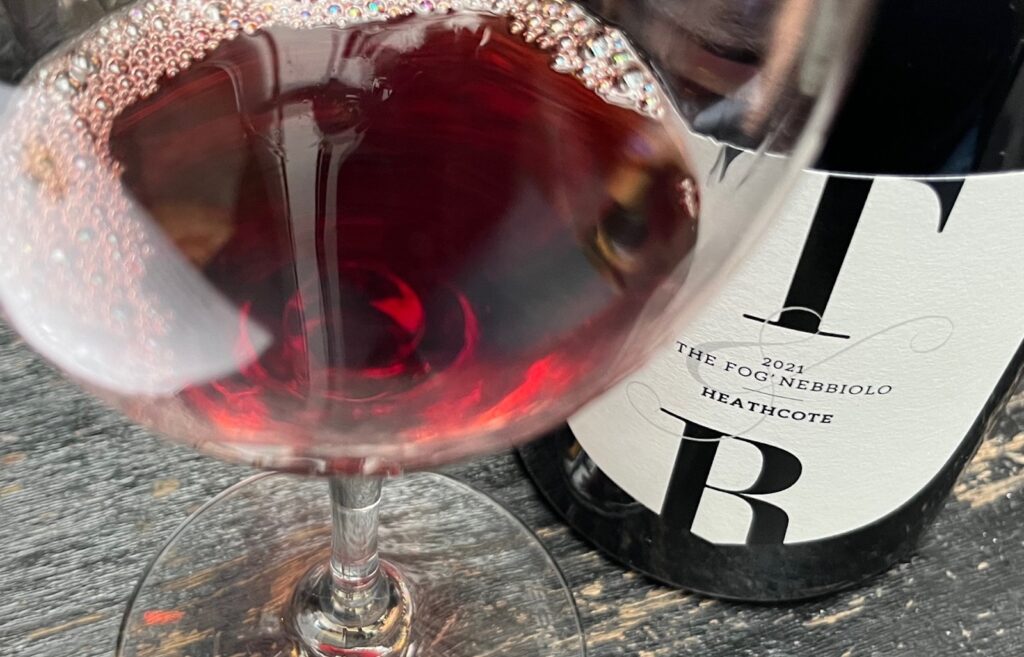
Back to Piedmont, and two DOCG wines. Ca’ del Baio Vallegrande Barbaresco 2019 comes from over the hill from Barolo and has just a little more delicacy and lightness of touch. That negroni element is there, with raspberry, bitters, orange peel and even a touch of espresso and cacao bean. Right now, it is the tightest of the wines we tasted – it took a decanter to really unfurl those lovely fruit flavours.
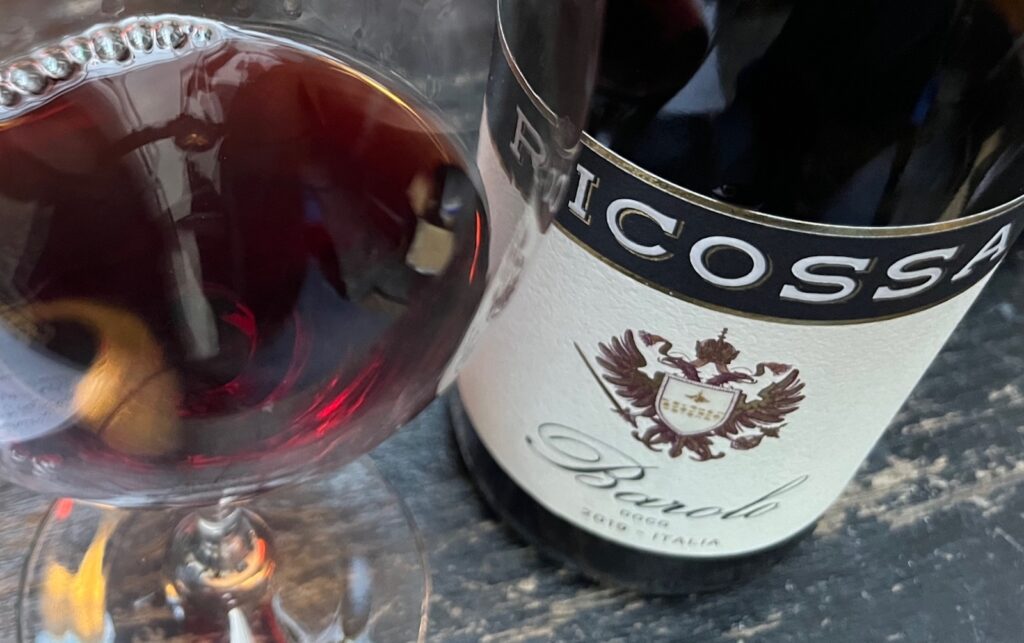
Ricossa Barolo 2019 was a bigger wine, with a little funky loam, tapenade and granite on the nose, but lifted by a waft of violet florals. A decent whack of charry oak adds weight, and there is plenty of mouth-coating tannin here – but we’d expect (want it, even) that. Both of the last pair have years of development to go.