Albariño (called Alvarinho in Portugal) is one of the world’s most distinctive white wine grapes — known for its saline acidity, intense aromatics, and a sense of ‘coastal freshness’.
Albariño’s exact origin has been debated for generations.
There are two main theories:
A. The “Monastic / Pilgrimage” Theory (Romantic, but likely wrong)
- Legend has it that Cistercian monks brought Albariño vines from the Rhine Valley in Germany, to Galicia during the 12th century via the Camino de Santiago pilgrimage route.
- The idea was that it descended from Riesling or Petit Manseng.
- This story fits the romantic imagery of medieval viticulture, but DNA research has disproven a Germanic link.
B. The “Native Iberian” Theory (Supported by Science)
- Modern DNA studies (by the Spanish and Portuguese agricultural institutes in the 1990s–2000s) show that Albariño is indigenous to the northwest Iberian Peninsula, not imported from elsewhere.
- It likely originated between Galicia (Spain) and northern Portugal (Minho region) — the same coastal zone where it still thrives today.
- Its name probably derives from “alba” (white) and “riño” (small), meaning “small white one.”
History
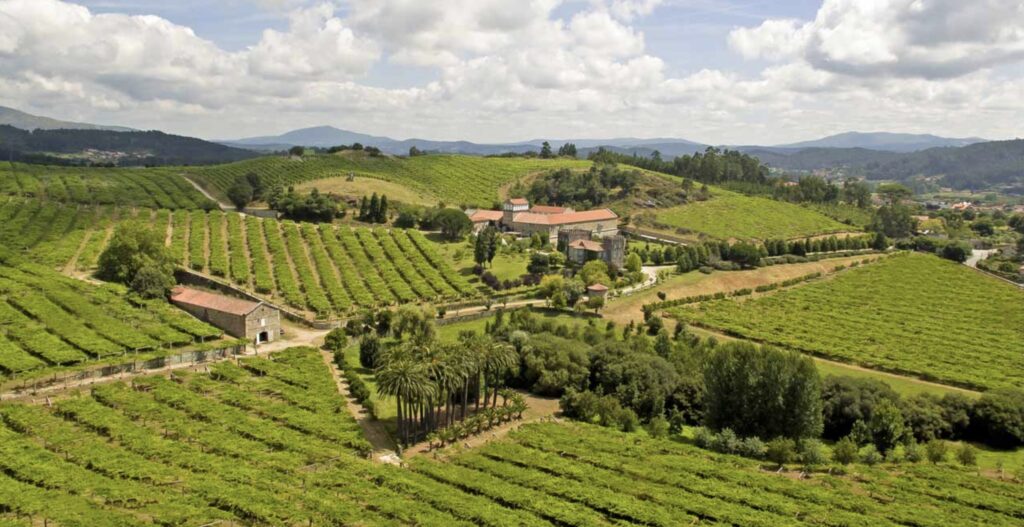
Albariño was first documented in Galicia in 1150, with vineyard references from monasteries such as Armenteira in the Salnés Valley. The grape stayed local, largely unknown outside of this specific area and never really exported. During the 1800s, phylloxera and mildew devastated many European vineyards, including Galicia and northern Portugal. Albariño survived mainly in small family plots, saved by its relative isolation. Until the 1970s, Galicia was a poor and rural region, with its wines often sold unlabelled.
In 1980, the Rías Baixas Denominación de Origen (DO) was created — formally recognising Albariño as its flagship grape. With growers working together in co-operatives, plus a handful of quality makers, production was modernised, emphasising stainless steel fermentation and vineyard selection. By the turn of the century, Albariño had become Spain’s most fashionable white wine, often dubbed “the white wine of the Atlantic.”
In Portugal, the grape was always known as Alvarinho and was planted mainly in Monção & Melgaço, a sub-region of Vinho Verde DOC. Portuguese producers started crafting wines that were 100% Alvarinho rather than blends typical of Vinho Verde (a style of young, or “green”, wine). These wines tend to be richer and fruitier than the Galician style, thanks to warmer inland conditions.
By the 21st Century Albariño gained an international following for its freshness, aromatic precision, and food-friendly nature. Plantings expanded to: Uruguay (Bodega Garzón, Bouza), USA (California – San Luis Obispo Coast is seen as prime territory; Oregon and Washington), New Zealand, Australia, Chile, South Africa, and even the UK (experimental vineyards). Today, Albariño is seen as a world-class alternative to Sauvignon Blanc or Riesling — combining minerality, acidity, and charm.
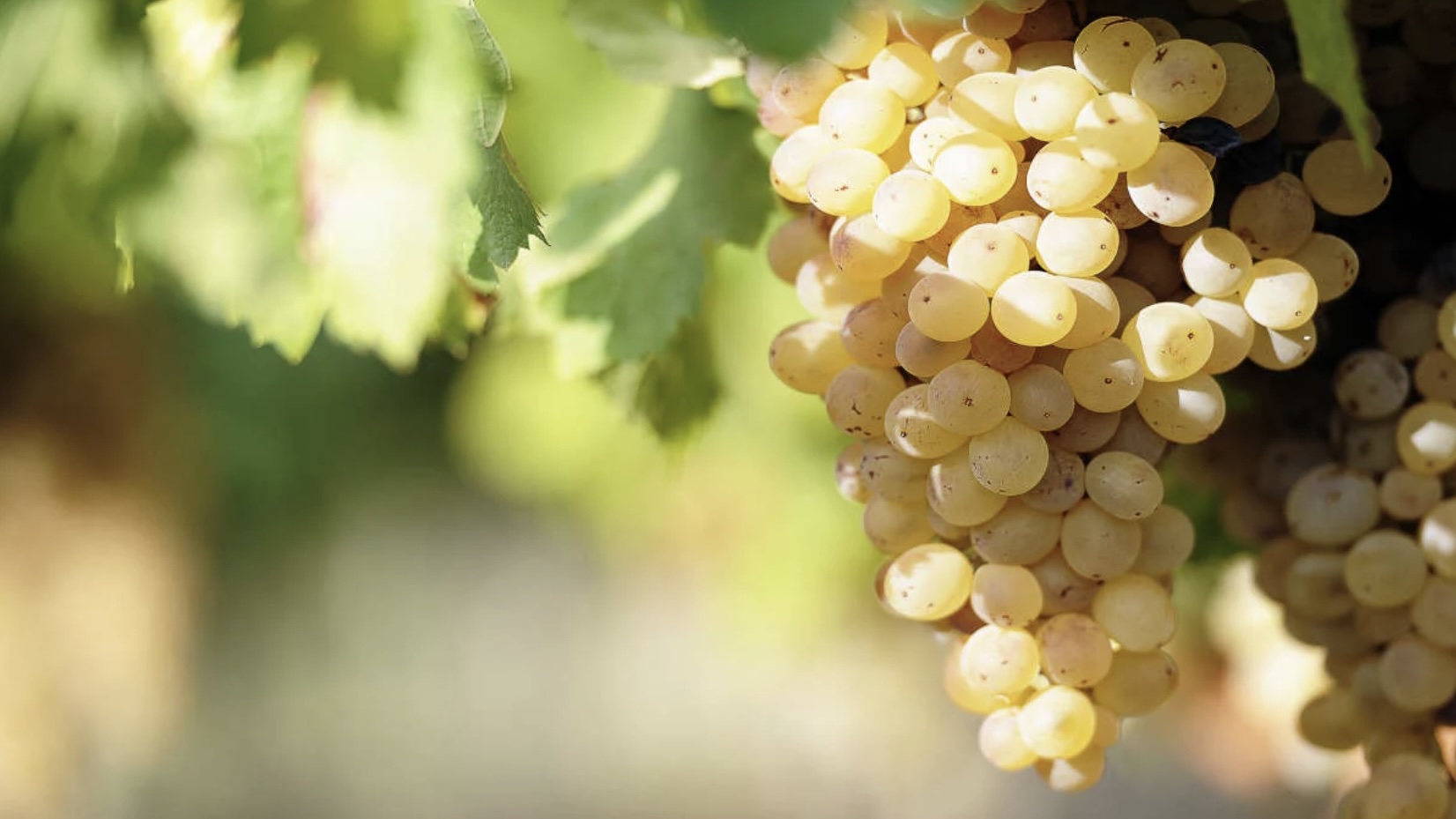
It is a thick-skinned white grape that withstands the wet, windy conditions in the north of Spain. For centuries, it was grown on pergolas (parras) — high trellises that allowed air circulation in the humid Atlantic climate and helped prevent mildew.
Characters of the wine
Aromas are often intense —led by citrus (lemon, lime, grapefruit), then stone fruit (peach, apricot), green apple, pear, melon; and there’s often a floral element (orange blossom, jasmine).
The palate is dry, crisp, refreshing and medium bodied. Acidity is high and vibrant — on a par with Riesling or Sauvignon Blanc, with a perceived ‘saline’ quality that helps identify the wine and varietal; often slightly oily or textured mouthfeel. With lees aging, a creamy texture develops, and there can be yeasty notes of brioche plus a hint of bitter almond on the finish.
Most winemakers tend to enhance its character by creating it in a pure, lean style, without oak, although there are plenty of examples where it has been made ‘like a Chardonnay’. The alcohol level is usually 12–13.5% ABV and rarely above 14%.
Around the World
Spain
The variety is most strongly associated with north-western Spain, especially the region Rías Baixas DO in Galicia – see the history section earlier.
Top producers:
- Bodegas Martín Códax — one of the largest and most well-known in the region.
- Pazo de Barrantes – Owned by the Craixell family of Murrieta since the 15th century. Located in the Salnes Valley, Rias Baixas
- Pazo de Señoráns — a benchmark, regarded as a premium producer.
- Bodegas Zárate — artisan, vineyard-driven, old-vine Albariños.
- Bodegas Forjas del Salnés — smaller, terroir-specific wines from Val do Salnés.
- Bodegas Granbazán — located in a gorgeous mansion and the only Galicia vineyard included on the ‘World’s Best Vineyards’ list
Portugal
In Portugal the same grape is called Alvarinho (synonym) and is best known in the sub-region Monção & Melgaço of the Vinho Verde DOC.
Top producers:
- Anselmo Mendes — mentioned by critics as a top Alvarinho specialist.
- Soalheiro, Luis Seabra.
Elsewhere:
In the USA it is grown in parts of California, Oregon and Washington. Uruguay has become known as become a region making quality Albariño, with producers such as Bodega Bouza and Bodega Garzón helping to put Uruguayan Albariño on the global stage.
Australia often champions ‘new varietals’ and with a combination of immigrant enthusiasm and attention from young winemakers looking to create fresh, immediate wines using grapes that do well in Europe. Although there was an early setback in 2009, when the first Albariño vines were actually found to be Savagnin plants, mis-labelled as Albariño. However, Spanish food and wine were very much on trend then – with the restaurant Movida leading the way, and Albariño has really taken off.
Top producers: Sitella, Orbis, Stanton & Killeen, Margan and Nepenthe.
In New Zealand, the varietal was trialled in places like Gisborne. I guess the climate has echoes of Galicia – warm and wet – it is often remarked as having pressure on diseases when growing grapes. The first commercial plantings of Albariño in New Zealand began in 2009 when pioneering growers — notably Doug and Delwyn Bell in Gisborne — planted the country’s earliest vines. These early plantings were made possible through imported budwood and propagation work, particularly by nursery programs in Gisborne that supplied vines to local growers. Plantings have now spread through Hawke’s Bay and into Marlborough.
The first commercial Albariño wine in New Zealand was produced from those early growers’ grapes and released in 2011 by Coopers Creek. In recent years, initiatives like Albariño Brothers (a collaboration of industry professionals) have aimed to champion Albariño’s story and profile in New Zealand’s wine scene.
Top producers: Mount Riley, Albariño Brothers, Forrest, Esk Valley, Wairau River.
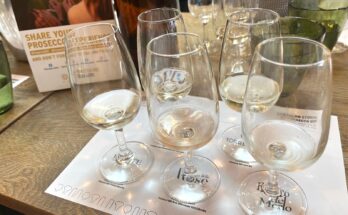
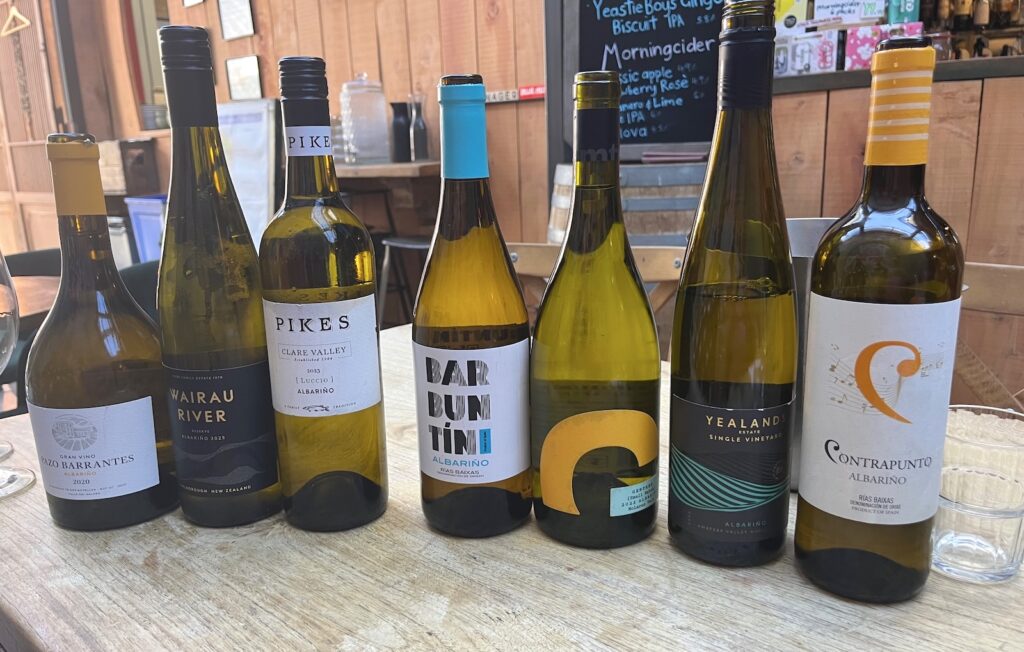
As usual I convened a “Discovery Session” and opened a few examples of the wines that are available here in Auckland, New Zealand to see if the wines matched up to the research I’d done. Huge thanks to Glengarry who supplied three of the wines below – The Gemtree, Contrapunto and Pazo de Barrantes.
Starting off with three wines from the homeland – Rías Baixas, then a couple each from Australia and New Zealand.
Maz de Bazan Contrapunto Albarino 2023 – a combination of fruity, floral, citrus and herbal aromas – vibrant and fresh. The palate delivers the signature refreshing fruitiness and saline acidity. After thirty minutes of being opened, this particular wine seemed to double in weight and body too – becoming fatter and more unctuous. $37.99 – Glengarry
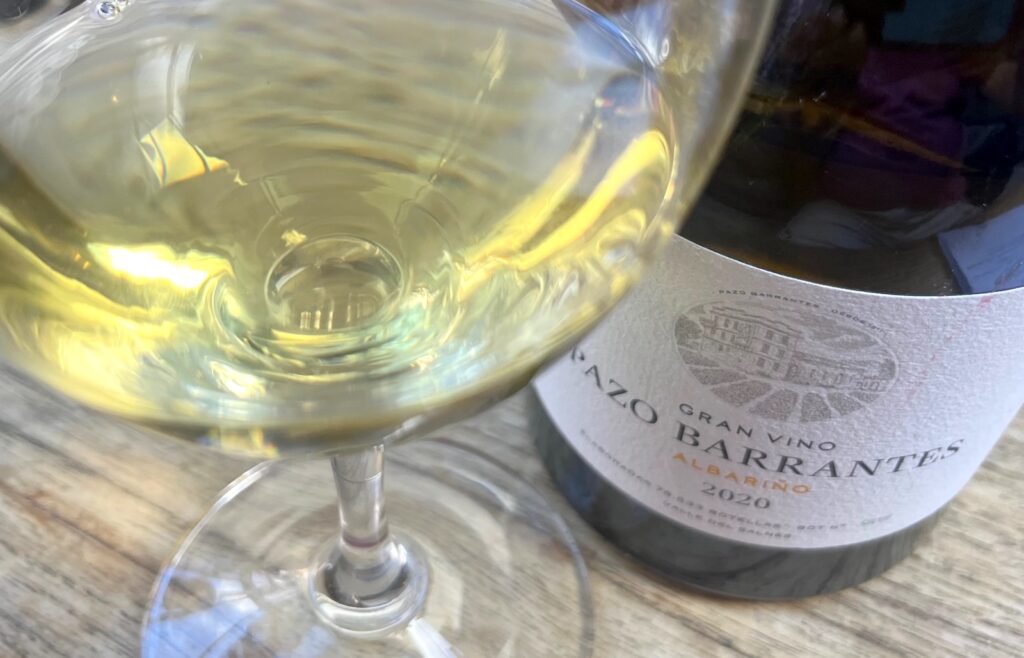
Pazo de Barrantes Rias Baixas Gran Vino Albarino 2020 If you read the ‘characters of the wine’ description above – then this is the wine – distinctly Albariño. Quite fine and elegant, with citrus to the fore, and a bergamot note that reminds me of both tonic and tea. Fresh, but also creamy and quite concentrated. The structure suggests it will age well – and further (it is 5 years old). Fruity, saline and with a good length to the drier finish. $74.99 – Glengarry
Quinta de Couselo Barbuntin Albariño 2023 – a wine that has won the title of “Best Albariño in the World” – at the International Wine Challenge 2018. The wine has echoes of Chardonnay to it – with notes of lime zest, red apple, nectarine, and a touch of salinity. Dry, medium-bodied, and shows a vibrant acidity. A classic style. $40 – Planet Wine.
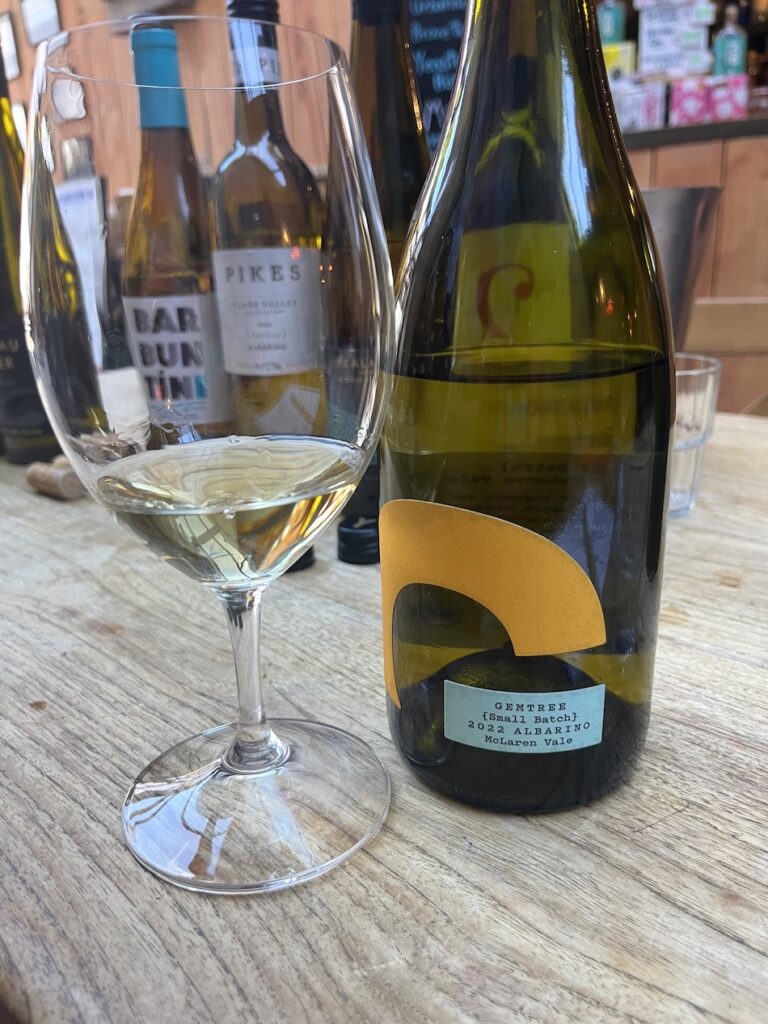
Gemtree Small Batch Albarino 2022 – A wine from McLaren vale in South Australia. Using 100% Malolactic fermentation and maturation in a concrete egg. The almond signature is there on the nose, with peach, satsuma and guava. Quite phenolic and textural through the mid-palate. $47.99 – Glengarry
Pikes ‘Luccio’ Albariño 2023 – a wine from the Clare Valley and their Polish Hill River Estate. Quite light in weight, with gin and tonic notes, then citrus, cucumber and dill herbals. You get the variety’s signature briny edge at the same time that generous tropical fruits emerge – green melon, white peach, and a hint of pepper and ginger. Mix a plush mouthfeel, mouthwatering acidity and strident length and you just want another sip.
Yealands Estate Single Vineyard Albariño 2023 – the Champion wine in the ‘Other White Varieties’ class at the National Wine Awards of Aotearoa. Aromatic, with a perfume led by zesty fruit notes of apple, lime, apricot and floral cherry blossom on the nose. Lit by a pithy acidity the palate is dry, crystalline and tightly coiled. A touch of chalky minerality hints at the site (a coastal clifftop) and the carry of the palate is very good – into a lengthy, fresh finish. $25.99 – Bottle O
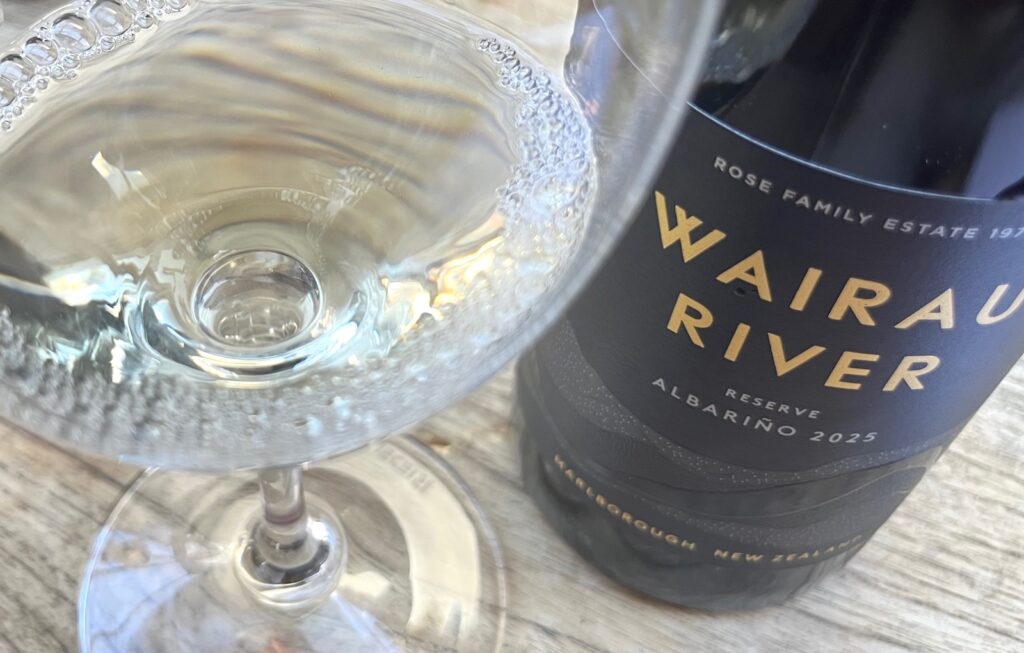
Wairau River Reserve Albariño 2025 A richness and depth on the nose – pineapple, melon and white peach, as well as few flavours familiar to drinkers of Marlborough Sauvignon – some grapefruit, blackcurrant and cut grass. On the palate there is a generosity, but now joined with a crushed-shell minerality, a bite of citrus and crushed herbs underlined by the infamous saline acidity. The finish is clean and zesty. $30.99 – First Glass, Takapuna
So – what did I learn? It appears that site has a distinct influence on the wine in your glass. From the Polish Hill riesling-like characters in the Pikes wine, to an expression from the Wairau sub-region of Marlborough that reminded us of our most famous local grape (and style). Rich, ripeness from McLaren Vale, and classically complex examples from the Spanish homeland.