One grape with many names – Cinsault is a versatile and heat-tolerant red grape variety. It goes by many names – the most common alternative of Cinsault is just an alternative spelling – Cinsaut. In Catalonia, Spain, Samsó can refer to both Cinsault and Carignan, while Sinsó is a standalone synonym. Cinsault has also been known in the past as ‘blue imperial’ and ‘oeillade’. In Italy it is called Ottavianello.
It is thin‑skinned, which makes it more prone to certain viticultural issues, but its adaptability to arid conditions has seen it become a favourite variety in areas such as Lebanon, Israel and North Africa. In France it is the fourth most-planted varietal. An important grape in Languedoc-Roussillon, where it is often used to add freshness and fragrance to red blends of Grenache, Mourvèdre and Carignan. Cinsault is also present throughout the Southern Rhône, and is a major element in the global phenomenon that is Provence rosé. Several leading Châteauneuf-du-Pape growers produce a single vineyard Cinsault – such as Domaine Isabel Ferrando’s ‘F601’,
Elsewhere, it is widely grown in South Africa – where it is the parent, along with Pinot Noir, of Pinotage. Cinsault is also planted in the USA, with vines going back to 1885, and the majority of vineyard plantings are in California, although there are some in Washington State. There are also some 50 hectares in Puglia, in the south of Italy. Australia saw Cinsault put into vineyards by the pioneers of viticulture (in Barossa in particular), but it is a rare find to see a bottle labelled as the varietal.
Cinsault is also increasingly being looked at in grape-growing regions where the effects of climate change are being felt, and concerns therefore arise about how the traditional varieties will cope with warming temperatures. Amongst the next generation of winemakers, there is interest in old vines planted in sandy soils, low intervention & minimal oak — all of which allow subtleties of Cinsault to come through.
So, what do wines made from Cinsault taste like? The most common descriptors used by critics are ‘fragrant’ and ‘pretty’. Like Gamay, it also has an ‘earthy’ edge to it though. ‘Geosmin’ is an actinobacteria that contributes a musty, earthy odour to wines. The fragrance is not unlike an offshoot of ‘petrichor’ which i would describe as the smell of ‘dirt after rain’ – Cinsault has a bit of this to it.
Fruit-wise, Cinsault can have bright aromas of red berries, like raspberry, strawberry and cherry, while some ‘blue’ notes, like violet or blueberry also crop up. On its own, Cinsault rarely achieves much more than medium-bodied, with fine tannins and bright acidity.
It is most often used as a blending agent in red wines and rosés, although there, of course, a few single varietal Cinsault wines. Winemakers who use it are typically interested in making lighter styles – along the lines of modern Pinot Noir, Barbera and Grenache – that are more perfumed and drinkable young. Even reds that are intended to be served chilled. Cinsault fits well here.
France (Southern France & Rhône Valley)
- Languedoc-Roussillon: The heartland of Cinsault production. Used in blends with Grenache, Syrah, Carignan, and Mourvèdre.
- Rhône Valley: Found in some southern Rhône blends – like Côtes du Rhône, and some Châteauneuf-du-Pape.
- Provence: Widely used in rosé wines, often blended with Grenache and Mourvèdre.
- Vin de France & IGP wines: Some producers now bottle varietal Cinsault, especially from old vines.
Producers: Domaine Raymond Usseglio & Fils, Mas Combarela, Domaine Rouanet Montcélèbre, Famille Dutraive. For rosé: Paradou, La Vie en Rosé and Circulade.
South Africa
- Once the most widely planted red grape in the country.
- Cinsault is one of the parents of Pinotage (with Pinot Noir) – a varietal that is very important to South Africa’s wine identity. Historically it was known as Hermitage. Traditionally Cinsault was often a blending grape, adding softness, lift and aromatics in ‘Cape Blends’ and other red blends. But now more wineries are letting it stand on its own.
- In Swartland old-vine Cinsault is being revived and bottled on its own by quality-focused producers.
- The dry‑farmed bush vines in Stellenbosch often yield lower quantity but more concentrated flavour and terroir expression.
- Paarl produces fresh, low-tannin reds with bright red fruit and spice.
Producers: Van Loggerenberg Wines, Leeu Passant, Sadie Family Wines, Scions of Sinai (Bernhard Bredell), AA Badenhorst, Mullineux, Kaapzicht, Duncan Savage.
Lebanon
Most plantings are in the Bekaa Valley.
- Often used in blends with Carignan, Grenache, and Cabernet Sauvignon, although it is sometimes bottled as a varietal wine or seen as the dominant component in blends.
Producers: Domaine des Tourelles, Château Musar and Château Ksara.
USA
California has some plantings in Paso Robles and Sierra Foothills, but Lodi is probably best known for it (along with Zinfandel). Some ungrafted, original vines in Lodi are really old – planted in 1886.
- Washington State: Small but growing interest.
- Gaining attention for its potential as a light red or chillable wine. Typically made in a fruit-forward, low-alcohol style.
- Dry‑farmed and organic vineyards are producing yields that are low but high quality.
Producers: Turley Wines, Ser Winery and Onesta Wines.
Chile
Especially in the Itata Valley and Maule Valley.
- Part of a movement to rescue older vineyards and revive bush vines of varietals like País, Carignan and Cinsault that were better known before the wave of ‘Bordeaux varietals’ took hold.
- Wines are fresh, often with low intervention winemaking.
- Bottlings of Cinsault on its own are becoming increasingly common.
Producers: Leonardo Erazo, Viña De Martino, Viña Carmen.
Australia
Small but growing interest in McLaren Vale, Barossa, and Riverland. The sandy soils of the Barossa sub-region of Vine Vale (planted with old vines) often comes up in research.
Part of the “new wave” of Australian reds: lighter, more drinkable. Less new oak, with more attention given to preserving acidity and fruit freshness.
Producers: Spinifex, Ruggabellus, Frederik Stevenson, Year Wines, Micro Wines.
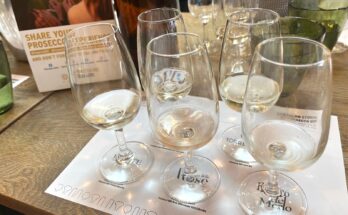
As usual, a ‘discovery Session’ was organised, where a collection of afficiandos opened a few bottles of Cinsault and fine-tuned our thoughts around the grape – and added a few lines of wisdom to this very article. I won’t go through all the wines we tried.. but here are a cross-section, and my thoughts, below:
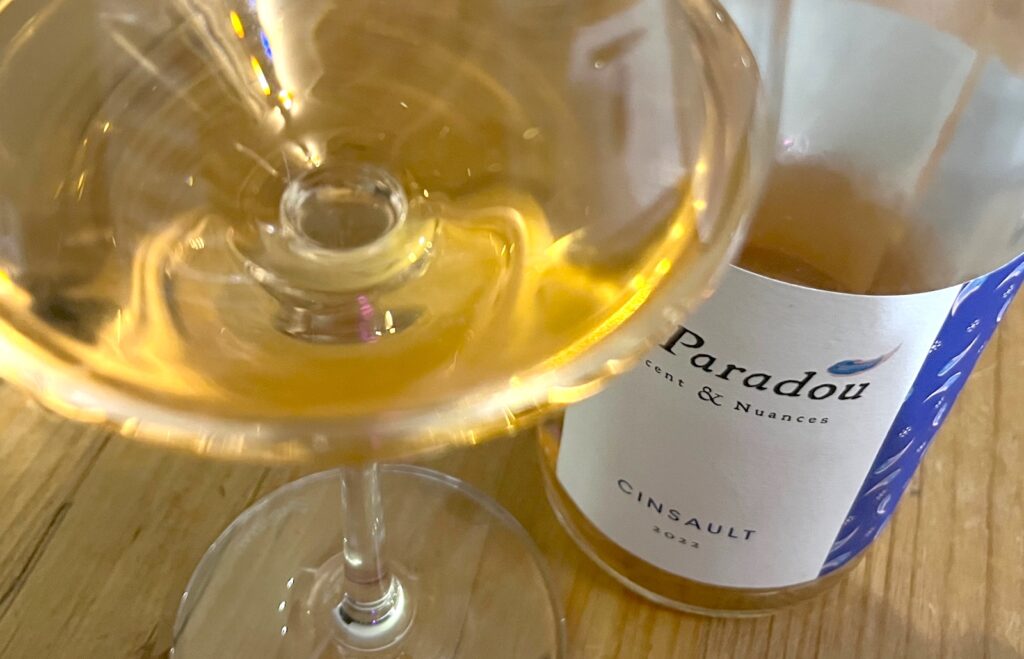
Paradou Cinsault Rosé 2022 is a very coppery pink colour in the glass. Dry, with raspberry, garrigue, cherry cola, orange peel and lovely floral notes of rose petal and carnation in the perfume. A little tannin adds a fuzz and texture. This is my kind of French rosé (labelled Mediterranée IGT), with bright acidity and a balance between fruit and savoury flavours.
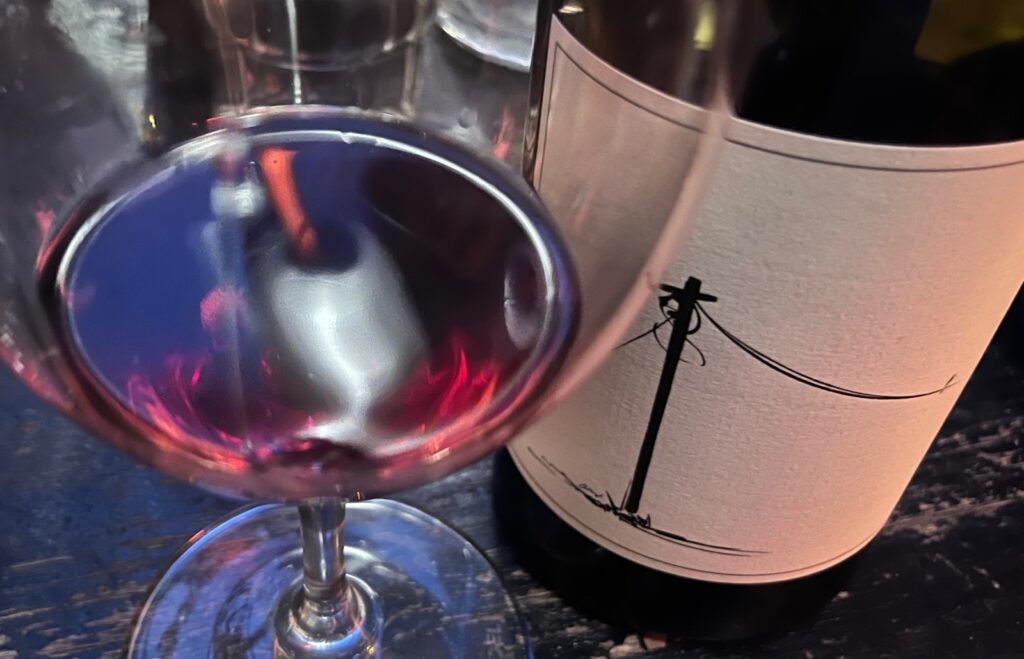
Savage ‘Follow the Line’ Cinsault 2021 comes from a very on-trend maker of modern South African wines. I reviewed the 2016 vintage here > https://winefolio.co.nz/?p=6337. Something Syrah-like to this example, with cherry, redcurrant and white pepper and violet florals. Grown on granite soils, it has that earthy minerality I mentioned earlier. Solid, ripe tannins and quite perky acidity. Not heavy, with a lightness of touch throughout.
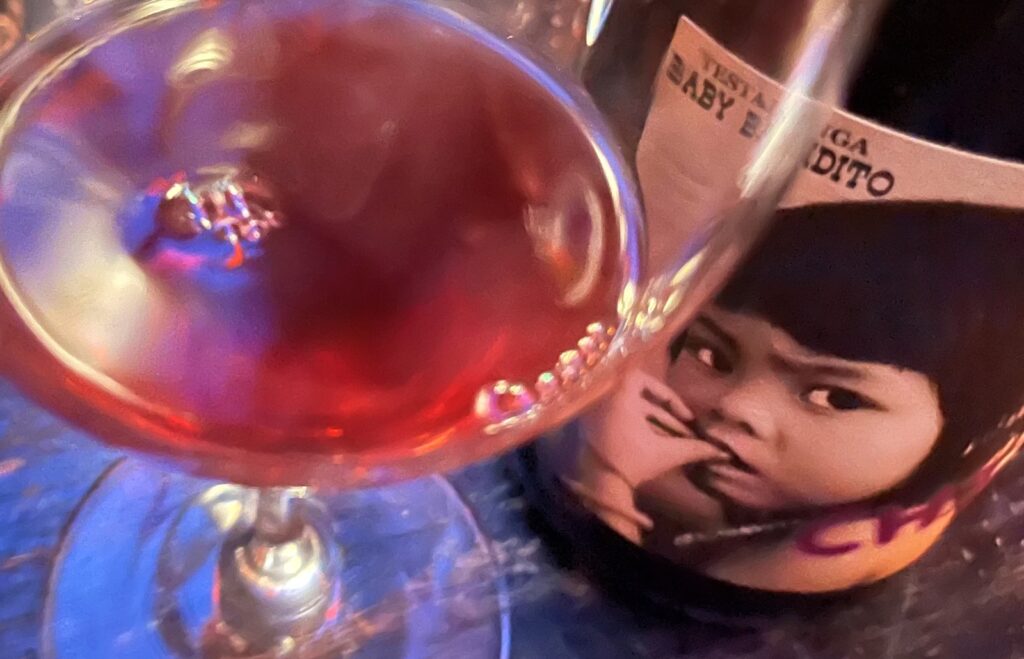
Testalonga Bandito ‘Chin Up’ 2023 is one for the hipsters on K Road – straying into natural winemaking territory with a wallop of whole-bunch influence. Very green and herbal on the nose, but tastes fruitier in the palate. Sour cherry, plum juice and blueberry. Light on its feet and very juicy, but lacking structure and body for my taste. Could try it chilled (we didn’t) and see how that goes?
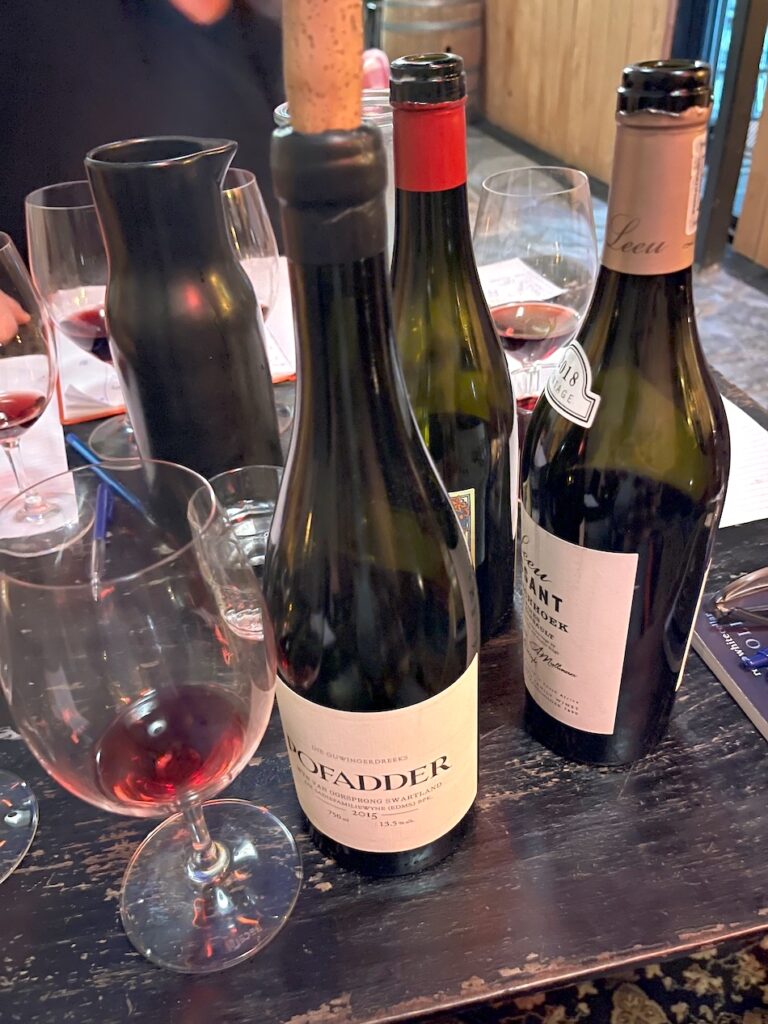
The Sadie Family ‘Pofadder’ Cinsault 2015 is from Swartland in South Africa and was my favourite wine of the session. Served blind, this is more in a Pinot Noir realm, and could very easily be from Burgundy. I loved the acidity on this – making it a very juicy expression but with the age, it also has a spicy richness and grippy tannin that drags across the tongue. The finish shows something of that cinnamon bubblegum you used to be able to get.