This article is about a winemaker whose wine I first encountered only recently – at the excellent recent ‘Wairarapa Spring Showcase’ that was up in Auckland. Some of the regions do a fantastic job of putting their members wines in front of the Auckland trade. Then there are other regions that I can’t even remember the last time they organised a showcase here! I did a brief write-up of the afternoon here > https://winefolio.co.nz/?p=15803. I asked for background and contact for some of the labels that were new to me. That’s how I ended up calling one of those – Christopher Reid – last week to get the lowdown on what he is up to.
WineFolio: How did you first get into wine?
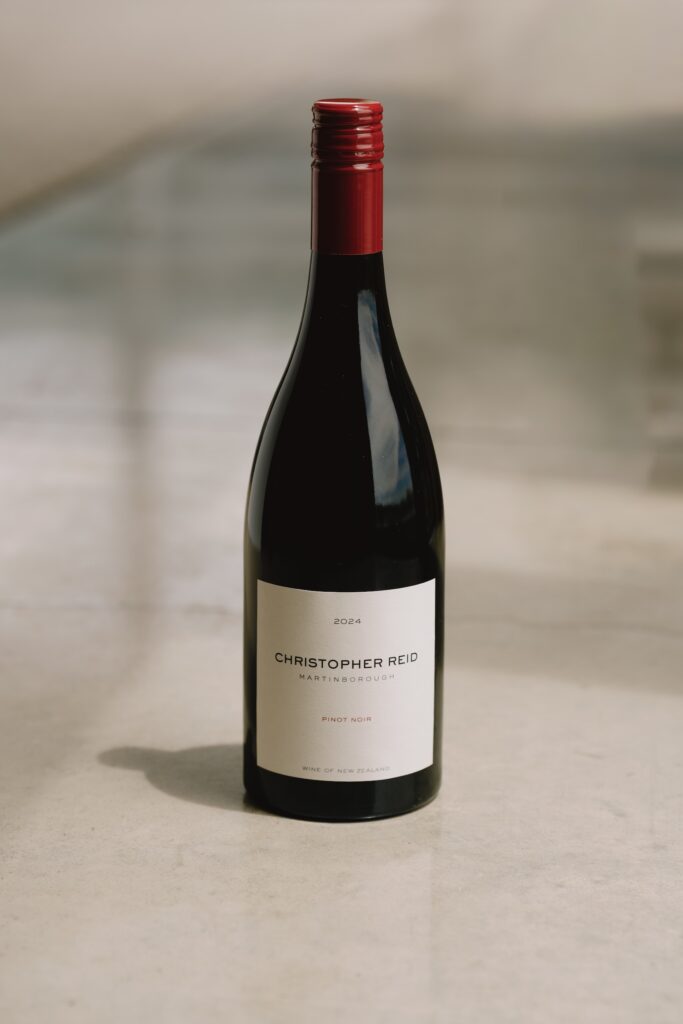
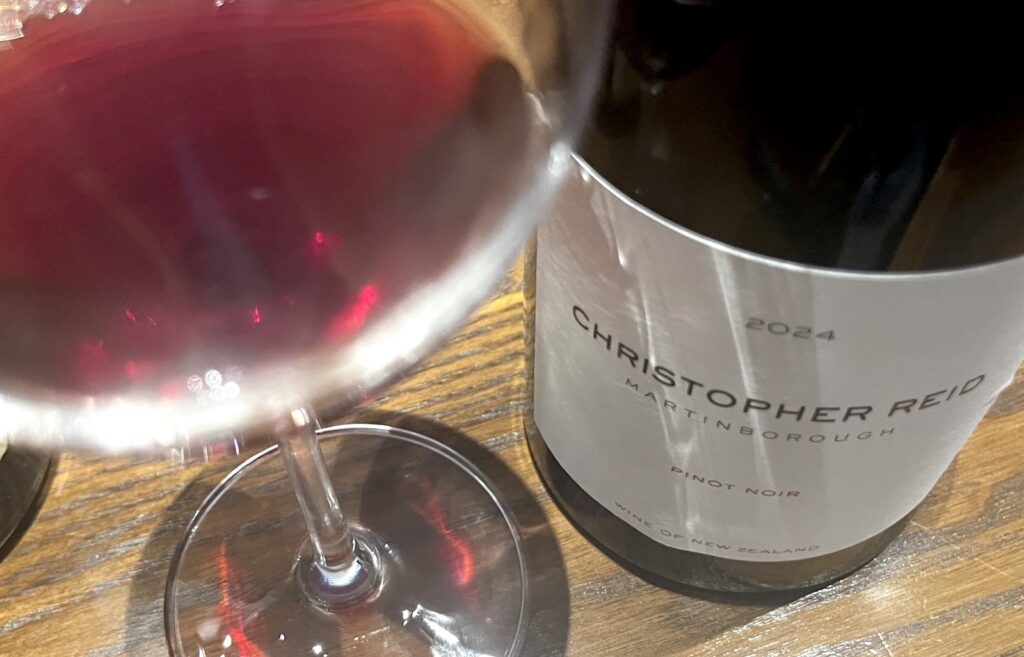
Christopher Reid: I’ve been making the wine since 2013. Those wines were made at Ata Rangi, when I was working there. But it was only two barrels per year that would go to a couple of restaurants and then mostly friends and family. So the 2024 vintage that you tried is actually the first commercial quantity of wines that I’ve been doing.
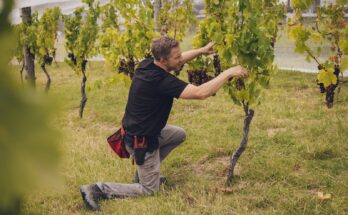
But I got into wine very young. I wanted to be a winemaker since I was 14 years old. My parents had a holiday house in Martinborough and it had a tiny little Pinot Gris vineyard on it. I think it had about 150 vines in it. I loved gardening as a kid – that was always my weird hobby as a child. So I used to look after this little 150-vine vineyard, with help from a guy called Mike Kershaw, who was the vineyard manager at Nga Waka at the time. He taught me how to prune, and about sprays and all that sort of stuff, early on. So that’s how I developed my passion in wine.
WF: And then you went off to study winemaking?
CR: Yeah, started 4 years at EIT – Viticulture and Wine Science. And then in between, in semester breaks, and over the summer, I’d work at Ata Rangi. Between studying and even when I was doing overseas vintages, I’d always come back to it. Do harvest, and then go over to the northern hemisphere. And then, Jannine Rickards left… I think it was the end of 2012; and then I took over from Jannine in 2013.
WF: It’s not a not a bad place to learn the trade, is it?
CR: No, and they’re really nice people, with that really family vibe; and it’s a really welcoming environment to work in. I’ve worked other places around the world and I’ve never worked anywhere that had such a sort of cohesion between people. Making it fun, but also being very serious about what you’re doing.
WF: I got introduced to Ata Rangi through a friend of mine – Curt Thomas – a great wine lover, who has recently died; but he knew Clive before Ata Rangi. And so had quite a long history with them. He had stayed in the bush block with Clive, and so on. We had a lovely afternoon there one time just sitting quietly under the trees, chatting and tasting through a few wines. I really got an amazing sense of the place. Would you say they were your earliest influencers or mentors?
CR: For the very early days, when I was 14, 15, 16, then it was Nga Waka, as it was basically where all my early experiences were coming from. But then, in terms of physically working in vineyards and doing winemaking – that was all at Ata Rangi. I never worked for Nga Waka. That’s really where I would say I learnt my trade.
WF: Was there anything else that you had thought you might have done when you were younger, aside from wine?
CR: No, not at all! All my subjects I chose were all based around being a winemaker, so – chemistry and physics were what I focussed on. I remember going up to Hawke’s Bay and I think I might have been talking to Brandon Nash at Craggy Range and him saying, “if you want to be a winemaker, then do sciences.”
So straightaway I knew that’s what I wanted to do. And that nice practicality between a sort of farming, and the production side, which I really enjoy. My main business, Reid & Reid is very much more just production, which is fine; but I think the winemaking side is just a bit more interesting.
WF: It’s a very kiwi thing to do. I always think, wine growing – it suits the country.
CR: Yeah, and I think with the mentality of people as well. We like to get stuck in, come up with interesting ways of doing things. You look at viticulture in New Zealand and the things we do, it’s quite different from what you do in France and even in Oregon. Each country has their own little quirks of the way you approach things.
WF: What keeps you passionate about it day to day?
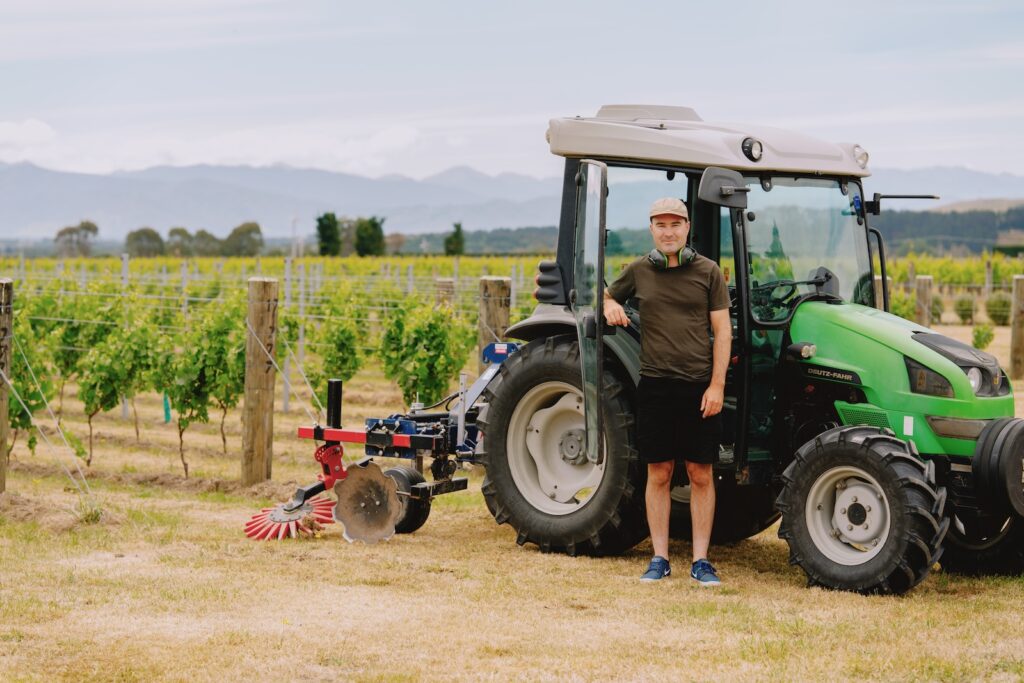
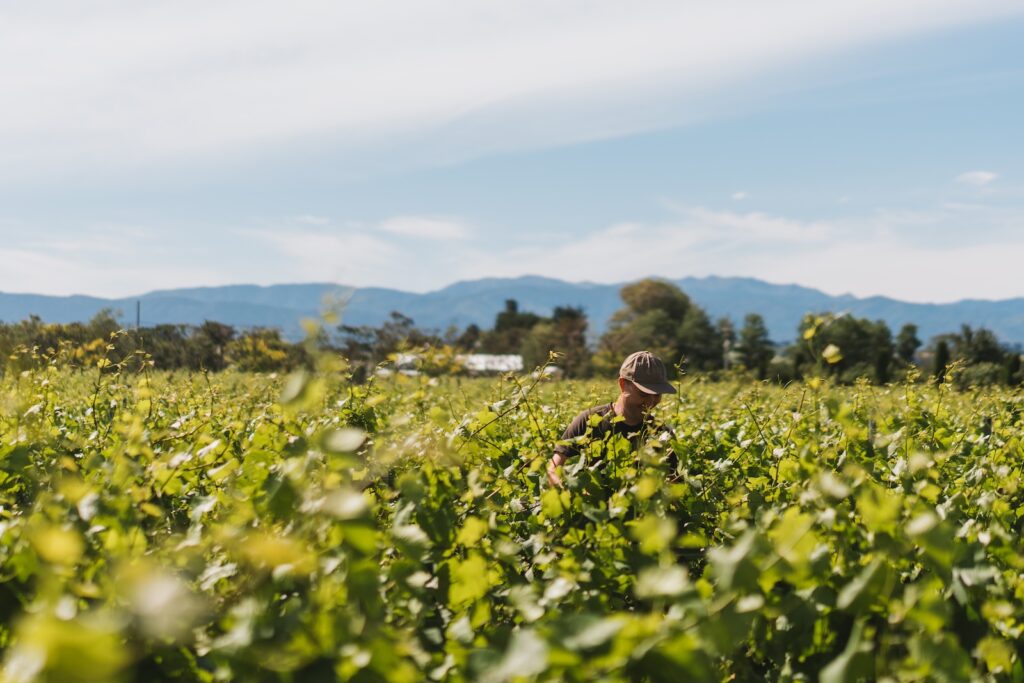
CR: The important part for me is having my own vineyards. I’ve planted all my vineyards, myself. Everything has been selected how I want to do it. So, especially with the young vineyards, seeing them growing up and developing. I don’t think my connection would have been as strong if I had just bought a vineyard. I think having that connection of actually physically digging the holes and planting them, and seeing them coming up is quite rewarding and also frustrating because growing in the Wairarapa is not the easiest of climates to grow anything.
WF: It helps when you’ve had pioneers who planted Cabernet Sauvignon and realised that it probably wasn’t the greatest idea.
CR: Yes, people who have done the trials and worked out what has worked. Probably in 20 years time we might be able to grow Cabernet, but we’ll see.
WF: How important are terroir, varietal and clones to Wairarapa?
CR: It used to be very strong. Whereas now, given the climate change curveball, we’re having to rethink. Fortunately, Abel has been a very strong clone, and, being that it is a slightly later-ripening clone, it retains its acidity really well. I think my blocks are probably at least 80% Abel. That’s based on me seeing the Dijon clones – in the warmer years – getting ripe a little bit too quick. For me, I like wines to be picked a bit earlier. I want to retain freshness.
I prefer going towards more of that sort of ‘red fruit’ character. So having clones that can take a little bit longer to ripen and not have high sugars has been really important and I’ve done that with Chardonnay as well. We’re planting and I do have most of my blocks as Mendoza, but I’ve also planted ‘Calera Clone – 107’ which is sourced from California. It’s a bit of a heavier cropper, but it retains its acidity in the warmer years. It keeps more citrus fruit, whereas Mendoza, in the warmer years, can go a little bit pineapple… a bit too tropical for me.
Trying to think towards the future – if we are going to be growing in a warmer climate. In the 20 years I’ve been growing in Martinborough, harvests have moved 2 to 3 weeks. Not as bad as Burgundy, but still it’s a big, big change. My thought process has definitely changed considerably, in the last 10 years from what it used to be. You used to just go “okay, we’ll use 3309 root stock and we’ll put 115 on”. There would be workhorse clones and workhorse root stocks. Certainly now with less water going around and things like that, you’re having to approach things differently.
WF: What changes or even costs, I suppose, have affected your work in recent times?
CR: Costs are very expensive. Everything’s gone up massively. Given the wine brand is only just coming out, so I don’t really have anything to kind of go off in terms of the cost side. Also I do everything myself – I just do it as a nerdy, passion project.
But, for us, probably the biggest change in the last 10 years has been disease pressure and things like that. How you approached that changed from – back in the day, you just spray every two weeks to be fine… and now you’re constantly having to think about when you’re spraying, and what you’re spraying with.
WF: Where are your vineyards?
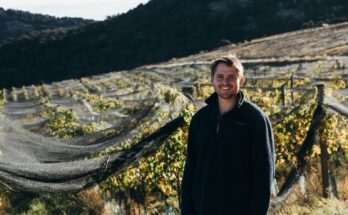
CR: We’ve got three vineyards. The main block, which is where I live, is on Hinakura Road. My house looks out onto Te Kairanga’s winery. My brother’s block is in Te Muna – close to where the Craggy Range entrance is. And our third block, closest to town, is on Todds Road – sort of in between Moy Hall and Colombo. That’s where the winery and the distillery is. Two hectares across three blocks.
WF: Obviously growing wine can be tricky. Do you have to have a kind of a ‘belief’ in it. You know how people do biodynamics and it’s a belief – it goes beyond just what science tells you to do. Do you think that applies generally to growing wine these days?
CR: Not for me. I guess some people have a very spiritual feeling towards growing. I probably look at it more from a scientific point of view. Using organics – but organics from a more scientific and an environmental point of view. To me, biodynamics is a crock of shit. Whereas proper organics is based on scientific research, and seeing the effects of using hard chemistry or compounds, that can be broken down.
At the moment, we’re not organic, because we’ve got young vines. Our canopy management is organic, but all the young vines, they’re all still herbicided. And then the older vines, I use under vine tillage. There’s often conflicting thoughts between whatever you’re doing within the vineyard.
WF: Do you lean towards traditional wine making techniques or are you keen on things like skin contacts or amphora – things like that?
CR: I’m quite traditional – I guess when I was really getting into wine and the burgundies of the mid to early 2000s were the sort of wines that I just went “wow, holy shit, these are great.” And I don’t think we will ever see those wines ever again, to be honest, given the way Europe’s going in terms of climate change.
WF: I was watching a video the other day where Jancis Robinson and Stephen Spurrier were opening and re-tasting some unicorn bottles that had had massive impact on them. And they were talking about how you won’t see the like of this wine again because things have changed. How it was made… the way tastes have changed…the style of wine, with weight and extraction and things like that.
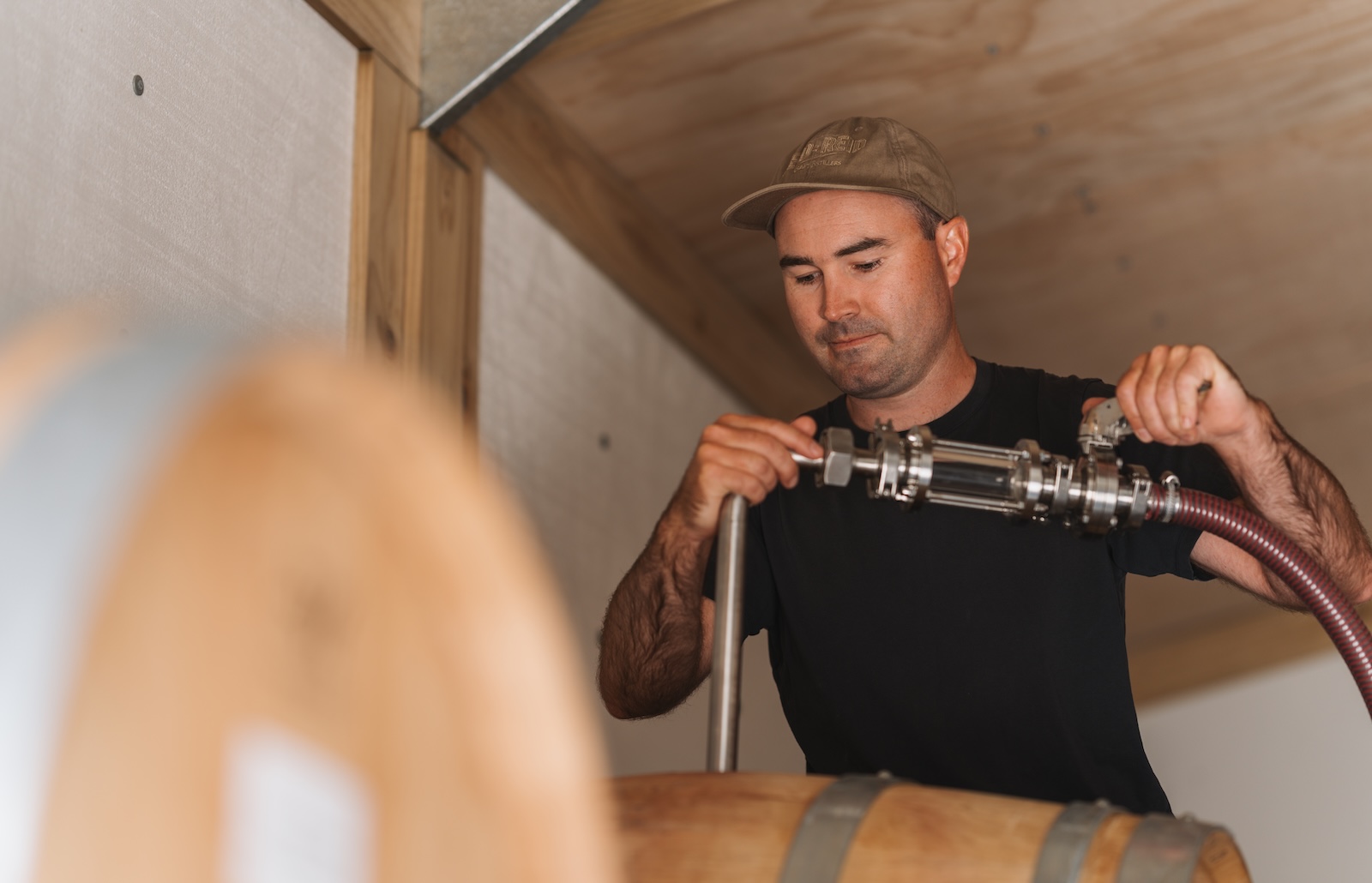
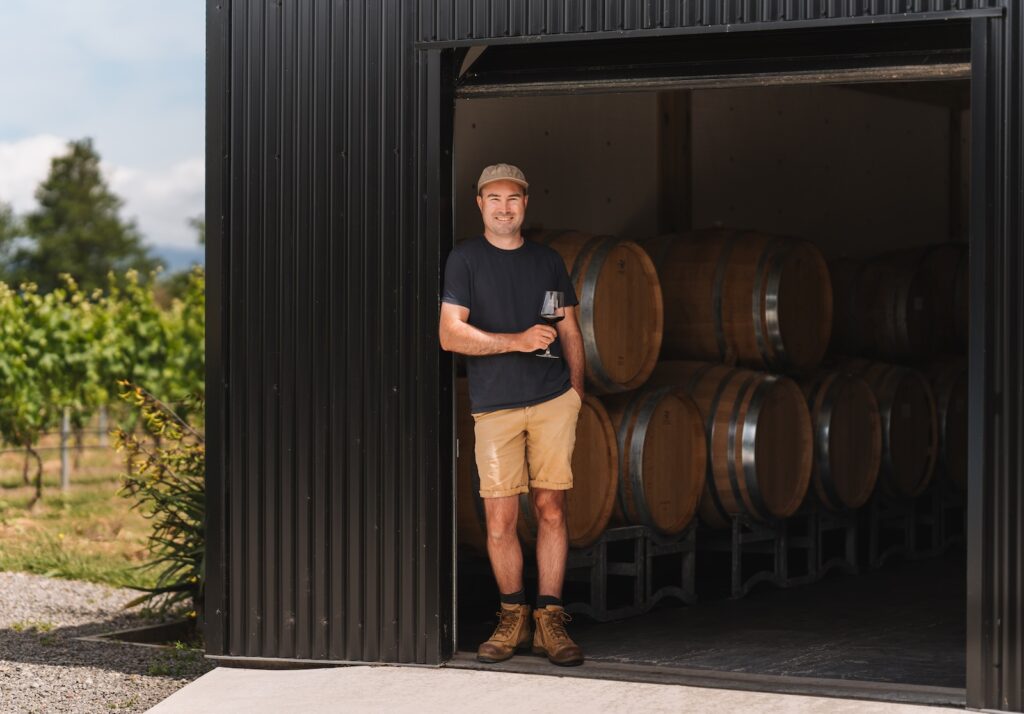
CR: In terms of wine I’m making, I try and keep it as simple as possible. I do like whole cluster, but depending on vintage. The majority of the time it will be wild fermentation, and generally my approach is very hands-off – just good winemaking. It’s natural wine making, but you’re still controlling it. You’re still topping barrels; you’re still using a bit of oak, but not huge amounts of oak. So I would say I’m very traditional.
WF: I look at the full spectrum, in particular New Zealand wines, all the way from natural wines through to very old-fashioned stuff, and I sometimes joke to people “well, you do know Ata Rangi is basically natural wine.” What do you think defines great wine?
CR: For me, I wouldn’t say something is great, just for tasting it. I like really well-made wine. I think the whole package to me is really important. When I buy wine, if I’m at a restaurant, I’ll go through and look for independently owned.
WF: Well, it’s important to support that sort of thing. I think there is almost like a two tier system in New Zealand, where you’ve got your corporations and then people who are independent. What do you think is the difference there – between what a hand-made wine offers, that a mass produced one can’t?
CR: I think these days, the gap has become a sort of a different technology. You look at the technology on some of these selective harvesters – I think that has made the gap a lot smaller, and big, commercial vineyards are able to make very smart. It is more philosophy-based and, in a blind tasting, would you be able to tell the difference, in a lot of cases? Between, someone relatively big and someone small. But it depends on how big you’re talking. Like if you’re talking independent size, then, yes, you can tell the difference.
WF: One of the things that I do to keep myself current is to try and judge, and I have to say, I don’t do it for ‘fun’. But it is an amazing workout for the palate. I do go back and look at the wines that won awards, and see what I think of them because obviously you don’t know what’s in that glass that you judged personally.
As you know, I do my own monthly events now, which is about getting extra feedback on wines I’m sent to review. I take the wines out to dinner and see what people think. And we usually start with Sauvignon Blanc. And there’s sometimes a couple of groans around the table as I produce it. I want them to understand that Sauvignon Blanc is important. And there is some good stuff – don’t just close your eyes to it.
CR: I was in London a few months ago and got a curry with a mate. And there was a Sauvignon Blanc on the list. I was like “oh, yeah, let’s have that!” I was like “no wonder people love this stuff.” It was super acidic, really aromatic, a little bit of residual sugar. So good with the curry. And the value for money, because like Chardonnay, you know, you need to be spending $40-50 to get something good. And then, with Sauvignon Blanc, you know, 25 bucks, you’re getting tremendous value.
WF: What do you make of the current doom and gloom in the industry?
CR: It’s hard – especially when you’re going around the trade. Obviously the hospitality side is not good. It’s really hard to get in front of people. Ten years ago, people might not list you on your product, but you’d still be able to sit down and have a chat. I think the wine industry has never been a big pay – it’s always been a really difficult industry. But you always had that sort of cohesion with people. It was always the social side which was really enjoyable. I think since COVID, that really died off massively, and obviously a lot of people have left the industry – or left the country. For me, that’s been probably the most difficult.
WF: I often say to people, I don’t think it’s a wine problem. I think it’s a societal problem. I think it’s a middle-class society problem – that they’re feeling the pinch so much that a lot of those markets – like hospitality – are just disappearing. And since it isn’t a ‘wine problem’ I don’t think wine can fix it.
CR: Yeah, totally. You saw all alcohol sales, I think, declining over the last 10 years. We know that – but we saw over COVID, when money was cheap, people were able to go out – were able to spend money. It’s different now.
WF: How different is the Reid & Reid business to your winemaking?
CR: Very different. I guess my philosophy with Reid & Reid is relatively quick turnover. To me, gin is a drink that should be a bit more accessible in terms of you don’t have to think about it as much. Like having a beer – it’s just enjoyable, it’s a delicious drink. Whereas I probably get a little bit more emotive around the wine side. I guess because I’m growing that. I feel like it’s more personally connected than the gin side.
WF: I assume you’re into flavour as a concept, as an idea. Because I do think that gin is one of those great, direct carriers of flavour. I find it more noticeable than if somebody gives me a rum from one island or another and I’m like, all right…I can’t tell the difference. But if someone says, “oh, I foraged the botanicals from within a mile of my distillery”, then you’ve caught my interest. My head always goes from the background into what’s in the glass and can I see that? Does that storytelling flow through and make me connect with what’s in my glass? And I actually think that with some of the gins I’ve had, they have done that.
CR: So that’s exactly what the concept around our Native Gin was – exactly what you said. But in terms of business-wise, it’s very much ‘processing’. We do grow a lot of our own botanicals. The difference is you do want to repeat the same product every time. Whereas with wine, you don’t. You want to show what is the vintage.
WF: Do you think storytelling is important in getting your product across to people?
CR: Very important. I think I’m always going to be hitting a niche market. I never try to go for a bit more mass appeal. The only people who are going to be buying my products are people who are genuinely having an interest. And they’re very much like me – I’d like to know who’s making it and why they’re making it? And are they making it themselves rather than having a contract made or being a marketing company?
WF: How will you define success with it? With your your personal label?
CR: At this stage, I think it’s just being able to sell the product – just being able to get through and get people to try it. Get it on the wine list, and I want to get it on by the glass. I don’t take a pretentious approach. I don’t want to be like “oh, we have this exclusive wine, you can only get it if…” I think that sort of marketing is not very kiwi. I think it could be a bit false if I do it any other way.
WF: What’s the favourite wine that you’ve had a hand in?
CR: Probably the Ata Rangi 2015. That was definitely a wine that I’ve always come back to. It was just so good from start to finish. And I’m really proud of my ’24, to be honest. I like that one. I actually had a glass last night and the ’24 tasted so good.
WF: I guess that’s where you want to get to, isn’t it? You look back on something that you made, when you were working for somebody else… and at some point in the future, you want to make a wine that you think is just as good, I suppose.
CR: At the moment the only thing I’ve got to go off really is the wine. Obviously, I’ve had my other small barrels, but I’ve never had enough to make the wines how I wanted to make them. I’ve got more options in terms of different fermentation, because, for example, with whole cluster, I like to go very high whole cluster and still have options as well.
WF: OK, last question. Who would you most like to share a glass of your wine with? Or would have liked to have shared a glass of your wine with?
CR: Oh, God. For some reason, Nick Cave is coming into my head.
WF: Nick Cave? That’s a great answer. Most people say ‘my grandad’ or somebody. I like Nick Cave – he’s such a dude.
CR: He just seems very interesting and, you know, I’m not a hugely philosophical guy, but he’s very articulate – but I don’t even know if he drinks anymore!
WF: I’m so pleased with that answer. Is there a more interesting human on the planet at the moment than Nick Cave? Fantastic answer.