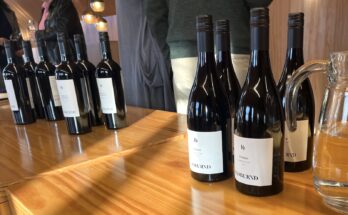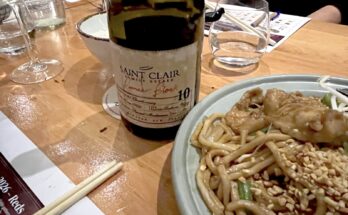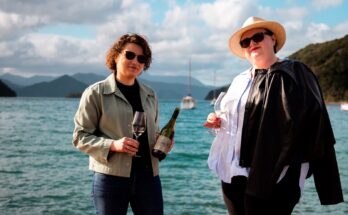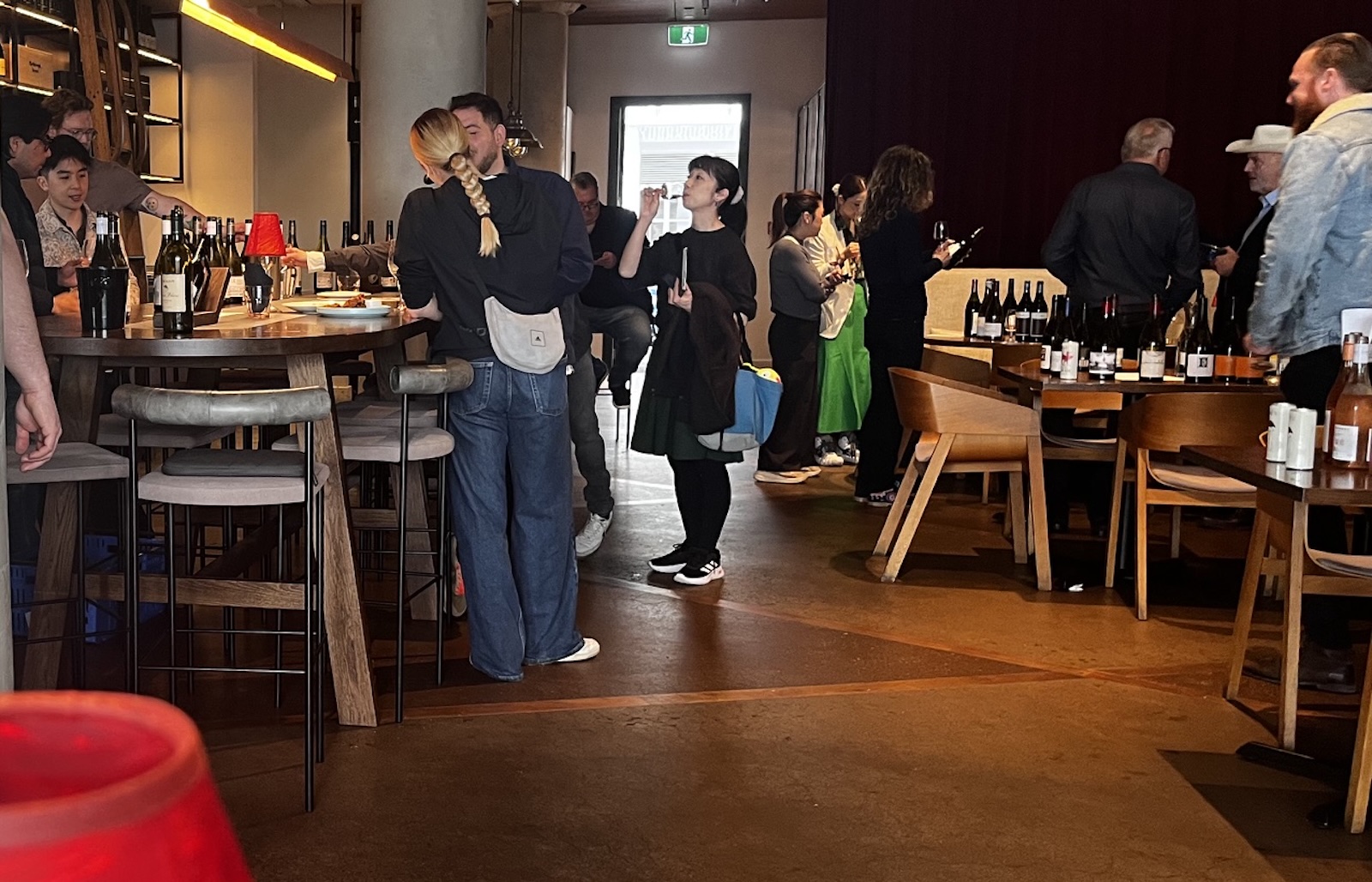
An annual event that I really look forward to. Some of the regions of New Zealand that are winemaking hubs make a real effort to put their members wines in front of people. Whereas others don’t. So – big Hurrah! to Wairarapa for another Regional Showcase that was full to the brim with differing styles and producers – and people that came along to see it – myself included.
In true ‘Walk around Tasting’ style I didn’t get to taste every wine. But I made a concerted effort to try both whites and reds (and of course there’s a lot of saying Hello to everyone.) I was pleased I did, as there were a few of either labels or wines that were brand new to me – and I will be sure to follow up on these with the makers – and a few more that I’d had before and impressed me rather more this time around.
The Pinot Noir takes the headlines, but I’ve admired the whites from the region for many years. A lot of the Sauvignon Blancs that I tasted over the last year – in particular at the New Zealand International Wine Show – have been very high quality. I start today with that varietal and it is an absolute cornucopia. I was at a tasting of Cambridge Road wines with Lance Redgwell last year, which was an eye-opener. Two of their Sauvignons were excellent – Cambridge Road ‘Down the Rabbit Hole’ 2023 and Cambridge Road ‘Crystal Veil’ 2023 – the latter a textured, green, savoury, soulful expression that’s aged in Totara wood. Basically the most Aotearoa wine ever.
A sweeping generalisation… but. Wairarapa can often present a more classic ‘Old World’ expression of Sauvignon than many customers might be familiar with when thinking of New Zealand’s usual contributions. Both Gladstone Vineyard Sauvignon Blanc 2026 and Martinborough Vineyard Home Block Sauvignon Blanc 2026 take a walk down this path. Some crisp mouth-watering acidity here, a touch of barrel there, but well-balanced and delicious.
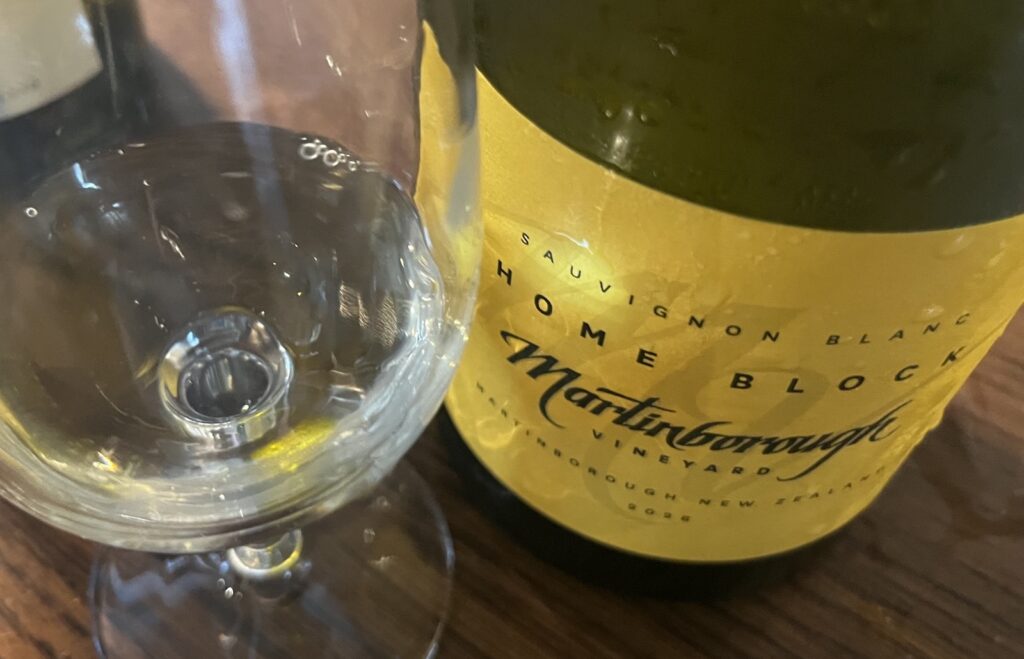
Then you’ll get a couple that straddle the line between funky and conventional. Tītoki Vineyard Ltd Edition Sauvignon Blanc 2025 and Urlar Gladstone Sauvignon Blanc 2026 are both well worth your time to discover. The Titoki shows how a richness of barrel can work in tandem with the natural freshness and acidity of the varietal.
Other whites can be great from the region too – traditionally strong on Chenin Blanc and Riesling, but also look for some excellent Chardonnay and Pinot Gris too. Te Kairanga Pinot Gris 2025 has a bouquet that my notes suggest has “clean laundry and ozone” to it, as well as clear varietal notes of baking spice and pear. Nga Waka Chenin Blanc 2025 was one I’d not tried before, but was a crunchy, lighter expression with “a touch of apple pie, garrigue and spring flowers.” I was impressed with the Cambridge Road ‘Filament’ Riesling 2024 too – “A bounce of acid, some apricot and smoked sage, then a cleaner finish with great length.” A label that I hadn’t come across before – I had to ask about it, comes from the Masterton end of the region – Home Fields Chardonnay 2024 was a style I could easily get to know. Plush, with width and a nice texture in a mid-palate loaded with citrus and stone fruit.
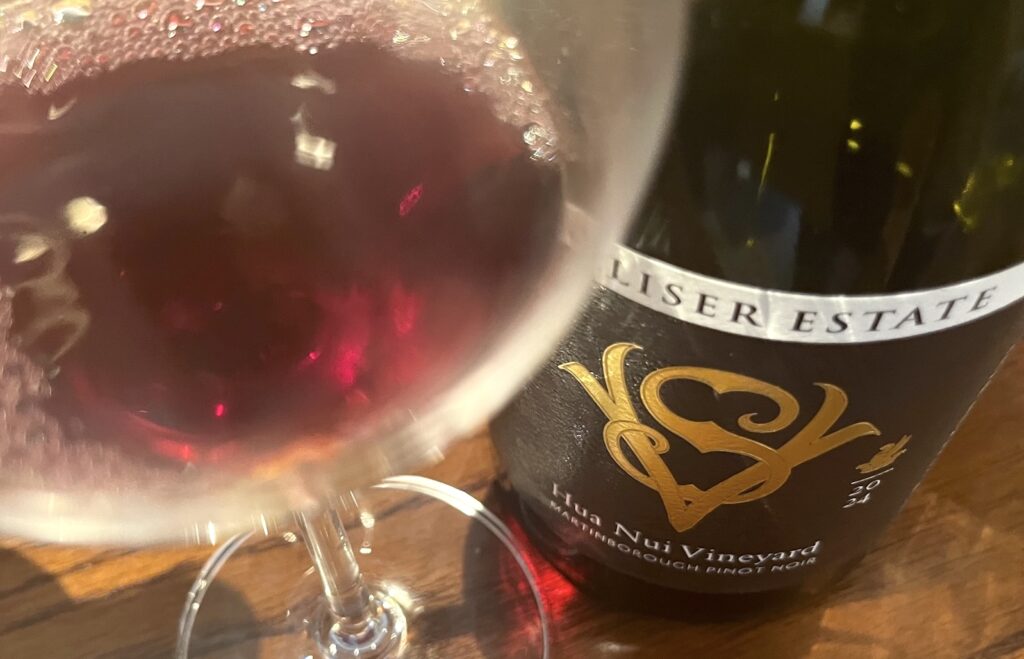
The Pinot Noirs on the table, were admittedly very, very good. I can appreciate the attention they get. Examples I’ve tried before and loved – from Oraterra, Schubert, Big Sky, Luna, Palliser Estate, Craggy Range, Mason ‘Hidden Vineyard’ and Ata Rangi, were all excellent. Showing that signature bloodiness to the fruit and a savoury, earthy quality through the palate. Oak is usually well-judged and tannin kept grippy, in a good way. New labels, or wines, to me were Christopher Reid Pinot Noir 2024 – a maker who had worked at Ata Rangi, and is well-known for the local distilling business Reid&Reid; and I hadn’t tried the Cambridge Road ‘Wilde One’ Pinot Noir 2024 either. This was clean, lush and perky – with carbonic maceration giving a real pop to the fruit.
I must make a visit down as soon as I’m able to get back on the road. The mixture of styles, terroir, producers and sheer diversity of the region is fascinating. It’s certainly had its share of changes in the last few years, and seems to me to be one of the most progressive wine-producing regions in the country.