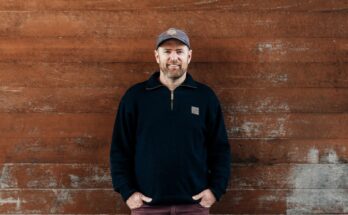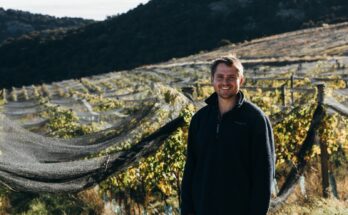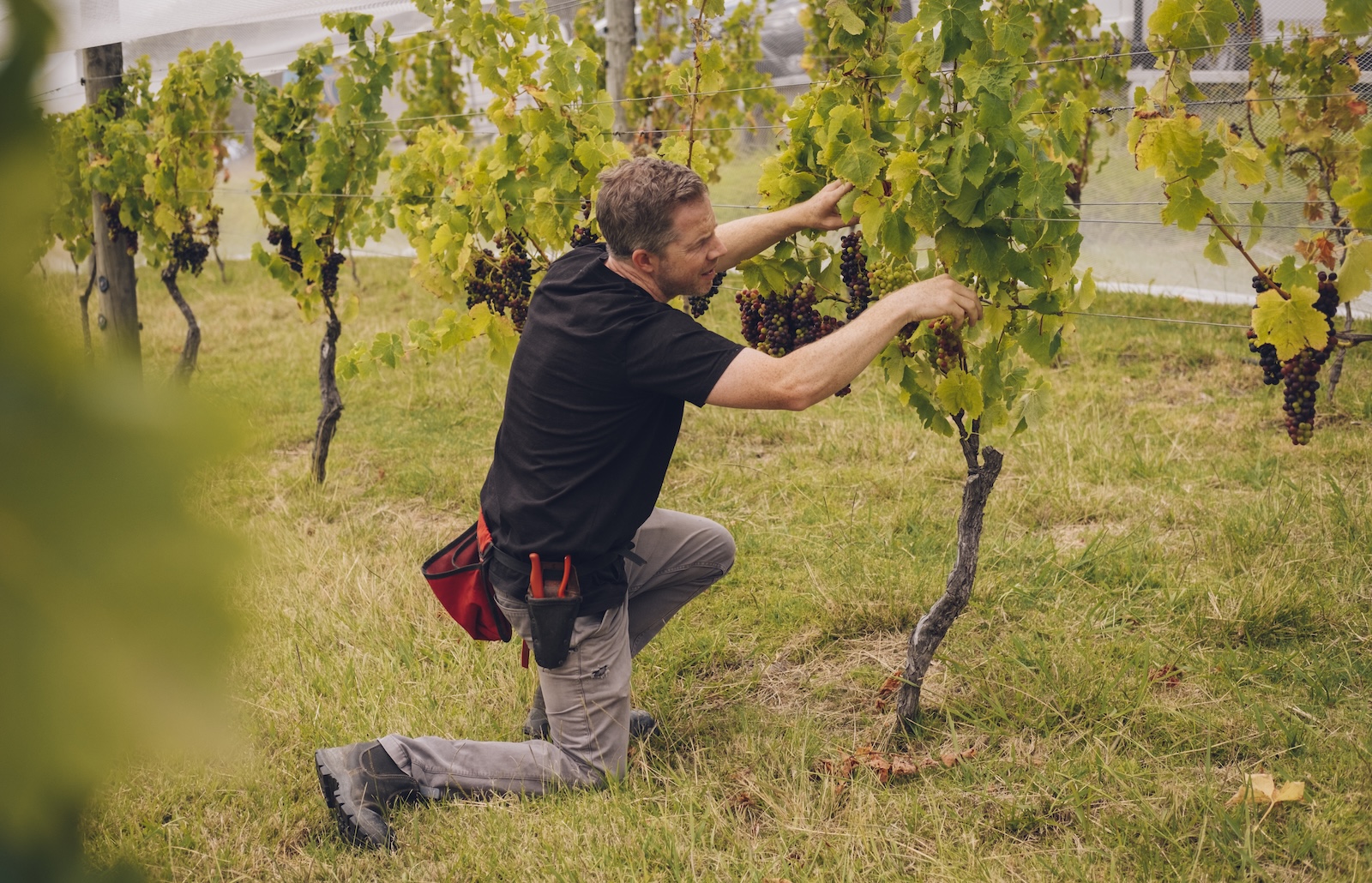
The reason I get to be talking to Randal Peart this morning, is the Waiheke Wine Month collaboration with my project – The Tasting Table. I bumped into Alex Perez (winemaker at tantalus on Waiheke Island), and was talking to him about The Tasting Table. And he said, ‘oh, you’ve heard about ‘Waiheke Wine Month’. And I said, yes, I have, and we both kind of looked at each other and thought ‘wow, there’s something to be done here.’
Alex said – get in touch with Josie, the co-ordinator. And as soon as I spoke to Josie, she was like, ‘yes, please…we have people who either don’t have Cellar Doors or would just be very keen that somebody would organise something that they could be a part of’. So that’s how the collaboration came about – and Kennedy point was one of the wineries to be included.
If the collaboration had not come up, this would have been the eighth Tasting Table I’ve done. I present other people’s wines as professionally as I can. So it’s good for me to know the background to whatever wines are there. I start by explaining this, and asking Randal what I’d need to know about his wines.
Randal Peart: Oh, it sounds great. The other interesting thing about your format is…I bet you get better feedback when the winemaker’s not there. Because, you know, I do it every day. And people don’t, most of the time, have the confidence to be critical to the winemaker’s face. And no matter what I say, and no matter how much I encourage them and, you know, say “you’re not going to offend me. I’ve heard it all, you know”, they’re still not honest. And man, good honest feedback is so, so valuable.
WF: I just need to know more than I can find out online. Some of the background to what you’re doing in the vineyard. Like you said, you do this every day. Imagine the sort of questions people are going to ask? The sort of things that people will ask about are plantings, and how old is the vineyard? What clones have you got? The sort of things that I just wouldn’t know. So, if you could take me through some of those things.
RP: What’s the level of knowledge that your guests have?
WF: Usually quite high. But this is an open door. People can see the adverts and book online. So I won’t even know who’s coming until I turn up on the day. I normally organise my own things and it’s a dozen people and they’re very well versed in wine. I get sent all sorts of things to review, including just straightforward ‘supermarket’ wines.
But we’ve had a few growers on the island who’ve supported it- Awaroa, Destiny Bay and Te Motu, hence their involvement this time as well. Josie suggested Mawhitipana and yourself and a couple of others. And I just thought, out of courtesy to these people who have supported me this year, I’m going to mention to Rory, Sean and Linda that I’m doing it – and they were still keen to be part of it.
RP: I’ll more than likely send you Syrah. Syrah is our focus at Kennedy Point – over 70% of our vineyards now are Syrah. So we first planted it in 1996, where we planted the old Corbans Hermitage clone of Syrah here at 44 Donald Bruce Road. And that’s the stuff that was spread out of the Limmer vineyard.
After the first few years of that vineyard being established, they sent plantings around, to the different nurseries. And then I have three out of the vineyards where we grow Syrah with a mixture of clones. But it’s largely that early Mass Selection and then Chave. Rex Sunday really pushed that clone in the late 90s and early 2000s. And it’s actually one of the big points of difference for us, is that we have plenty of Chave still being grown. It has higher acid, a different tannin profile and lower alcohol than than a lot of other Syrah.
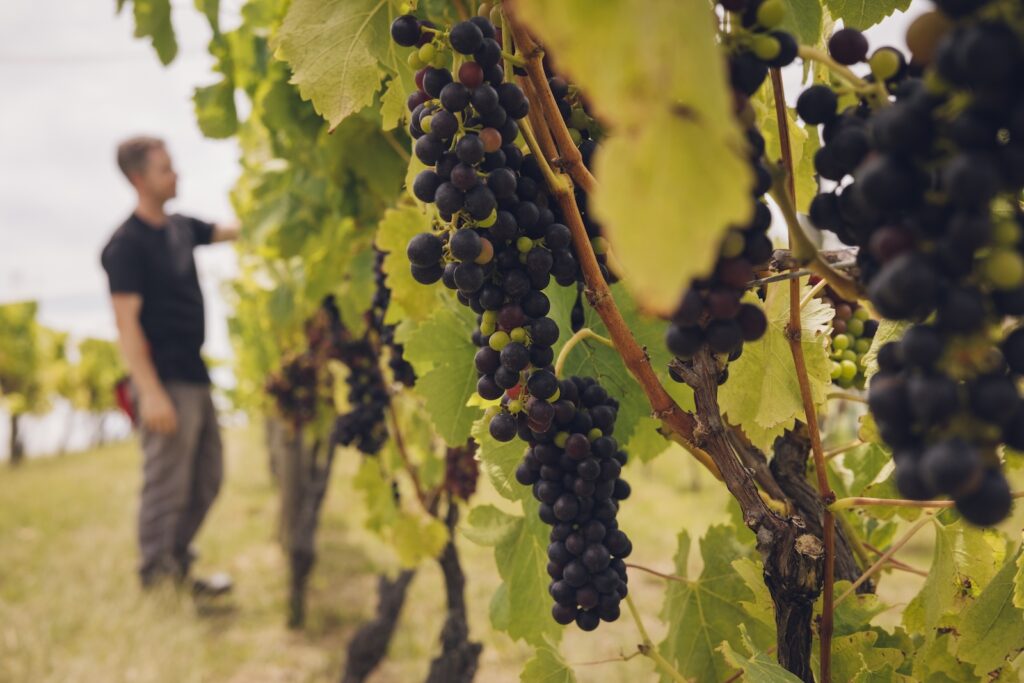
WF: Is that the clone with the huge bunches?
RP: Yeah, in it’s youth. Syrah is a funny beast. To be honest, I’ve seen giant bunches in just about all the clones and and it’s a little bit messy, to be honest. It’s not as organised as Cabernet Sauvignon. Which always makes me think maybe that’s why Cabernet is always thought of as so noble is because it grows in such a beautiful way. Whereas Syrah is a bit messy. So they’re not too big now. I think that earlier on, we did struggle with vigour and big bunches, but we’re at a pretty good stage now.
In general, my Syrah is lighter, lower alcohol, more aromatic and fine than any other Syrah on the island. That’s something we’re really proud of, and a real point of difference. So it actually is more like a cool climate Syrah. Definitely referencing more northern Rhône than a lot of producers on the island. I really love getting people’s reactions because their preconceptions of Syrah is often tied to Shiraz or the biggest New Zealand styles, and then they taste ours and they’re like “oh wow” which I really love. And when it gets old it honestly just looks so stunning and like a big Pinot or a Barolo, or an old Tempranillo. Far different to an old Shiraz.
Also, we’re the only certified organic vineyard on Waiheke. We’ve been growing organically since 2003. And were certified around 2009. And that’s core to our values and core to our everyday. Growing in a conscious and thoughtful way that does no harm to people and place and and the wider ecosystem. Really important to us. I don’t actually beat on about it too much, because I don’t like lecturing or preachy – if that makes sense to you.
WF: I’m really interested in ‘intentions’ so I’ll ask “why?” Obviously, there’d be reasons other people would give as to why they’re not organic and they would give disease pressure and things like that as reasons. But that’s not the only thing about organic. I mean, you’re not biodynamic, but did I hear that you’re close to it. You make your own preparations, don’t you?
RP: Not anymore. Our biodynamic lead left about 5 years ago, and I’m not really that into it. It’s just not my vibe. I do like the overarching philosophy of a holistic management and also accept that there are forces out there we don’t understand. But I don’t subscribe to anything Steiner has to say.
WF: You start heading into the realms of belief at that point, don’t you? It becomes that as much as it becomes science. It’s more about the belief of it – that you have to have it if you go biodynamic.
RP: Well, belief is very important. I mean, that’s an interesting discussion to have. Belief is incredibly important and farming and making wine is super challenging, and at times depressing and heartbreaking and financially crippling. And having a belief structure – something to hold on to – a bedrock, you know, gives people a huge amount of confidence and gives people a foundation. And so I completely understand it.
I have a science background and I believe in science, and it’s funny to say that in 2026 because some people don’t believe in science. But I’m not overly scientific in my production or in my vineyard or winemaking. But I have the background and so the wines are accurate.
WF: What part of the process is the most challenging for yourself?
RP: Oh, growing the fruit. I reckon Waiheke is one of the hardest places to grow wine in New Zealand. There are so many challenges, both climatic and cultural. I think from that comes some really stunning wine sometimes – when it comes together. I think growing on clay is great. But super hard. Like when it rains too much, and you can’t even drive your tractor? But at times, I just am so glad we’re on clay because we don’t get the same drought pressure that other places in New Zealand do. And we don’t have to irrigate our vineyards, which is amazing because the best wines in the world aren’t irrigated. People forget that.
WF: You would have seen cycles before. What do you make of the current doom and gloom in the industry?
RP: I don’t know what to make of it. I actually think it’s less about wine. I think it’s about the wider state of the economy and of the demographics of our population. So it’s not a wine problem. And so I think there’s not necessarily a wine solution. I think Marlborough had gone too far, for example; and I think potentially Central Otago’s gone a bit far too. And so I think there is some natural correction; that is brutal, but maybe necessary. That’s kind of all I would have to say about that.
I think people will really, really regret moving on from wine. There is so much joy and satisfaction and so much to get out of it. And all of the ceremonies and all of the attached things, like friends and family and food and everything. And honestly, if people leave it behind, they’re really going to regret it.
WF: Why I say cycles is because places like Australia have seen it before – where they ripped out 100 year old vineyards because they were getting a bit of money from the government to do so. And now here we are, they’re doing it again, and it’s just like the lessons just don’t seem to have been learnt.
RP: Kennedy Point – and Waiheke – are so far removed from that. That’s more an issue for the industrialised agricultural part of the country. It’s not really an issue for us. And I talk about wine growers or grape growers. And if you’re a wine grower, you know, it’s so different to being a grape grower. And these people who are just like fly-by grape growers because they’ve been getting a good price for this Sauvignon Blanc for 10 years. Like, good riddance.
They could grow so many beautiful things in Marlborough. They could grow stone fruit, pip fruit, cherries. I don’t know, there might still have one cherry orchard left and they could grow that, or go back to beautiful lamb. They could grow so many things there. They don’t have to grow Sauvignon Blanc.
They’re changing back to other fruits in Hawke’s Bay too. It’s just like other industries – they’re planting areas which are more marginal, and what have you with that – lower profit margins. And so I’m not super worried. I mean these businesses need to have to be diversified better as well. You have to welcome people into your vineyard and winery. People bring it up all the time, David – it’s interesting that people want to talk about it. I just often try to shift the conversation on a little bit more from the doom and gloom. I’m not super worried for my career.
WF: I’ve been writing for forty years, and you get bloody A.I. comes along and you’re like ‘oh, come on?’ I was reading a really good article today about something but I felt like I recognised bits of it – and I thought, “oh my god, am I reading something that scraped my website?” It was about people growing Albariño in New Zealand and I wrote about that earlier this year, and parts of it were surprisingly similar.
I want to ask a couple more things about your wine and specifications and so forth, but you must send me the information of whatever wines you choose to send…
RP: Yeah, I can do that, but in general, I use less oak than everyone else. So my latest Syrah has no oak – which I’d love you to taste, so I might send that. That’s 100% whole cluster with no oak.
WF: Have you used a touch of Viognier in the Syrah as well, either now or previously?
RP: I quite liked a little bit of Viognier, but I had to pull it out. Viognier is super, super disease prone and it was just an absolute vector for my vineyard. So I decided to pull it out. It was the first to get disease and it would get covered and then it would spread from there. It was just horrible.
WF: How did you first get into wine? What’s your background to this point?
RP: Oh, I drank it from a young age. My parents liked wine and they were generous – introducing it to me and – you know, kiwis start drinking young! And I couldn’t drink beer. It made me sick. And so, while all the other guys were drinking beer, I would drink wine. And then I studied at university and never looked back. It’s just a science degree really, like focussed on wine and I was good at science.
So my first job was at Oyster Bay, which was horrific. And then I went to France and then I came back to Matakana for a little while, and went to Oregon. And then Central. And then I worked for Matua for a few years out west. And came out here.
WF: Who influenced you, or what mentors have you had along, along that path?
RP: I don’t know if I’ve had mentors. I can’t name one above others. The winemaker at Carrick when I was there – he had some influence over keeping things really simple. Which was an absolute counterpoint to going to the commercial scale. Where that was the opposite of simple. Like, what can we throw at this? You know?
WF: I guess you look there as well, and although it is mostly things that you didn’t want to do… but everything sort of has an effect, doesn’t it? You know, as you walk the path. There are things that you learn not to do as much what you do want to do. “Ad astra per aspera” – Latin for “To the stars through hardships.”
RP: Yeah – learning through the negative. So doing all these things, and you actually get a positive result from doing all this stuff. I think the winemakers over the years who I probably like are the ones who do very little winemaking. I’m just focussed on beautiful fruit that’s not picked too late, with skin integrity. A lot of people pick to that tradition when the skin of a grape starts dimpling or just getting slightly wrinkled. Have you heard that?
WF: Yes, I have.
RP: And a lot of winemakers take pride in that. But for me, that’s too late. And you can see it in the wines as well. So I really like good skin integrity, and like I said earlier, lower alcohol. In California and in Central, both the winemakers I worked for were all about picking a bit earlier rather than later. And a lot of organic, natural and biodynamic people are into that. It’s something that they often mention. Ochota Barrels in Adelaide Hills is a good example.
WF: I was asking somebody about tannin development, and they were trying to explain to me something that as a non-winemaker, just kind of went over my head a bit. But it was something to do with doing a soak, post fermentation – afterwards. I know people talk about doing a cold soak with the fruit before ferment starts. But this guy was talking about tannin, lengthening tannins by doing something afterwards. Can you explain that to me a bit more – and is something you do?
RP: Well, that’s a very old Bordeaux idea. And it it does work. It does achieve what they say. It does tend to speed up the polymerisation of the tannins and structural components in the wine. I have seen that. I’ve also seen it lend some colour stability to Pinot Noir, which sometimes struggles with colour stability. And so they quite like it for that. The downside of it is that you lose the fresher fruit characters and you actually risk getting sort of dried or developed fruit characters.
So you are sort of hastening the positive structural and ageing of the wine. But for me, you’re probably also hastening other maturity characters, which might not be a positive. The other thing about it is that it’s oxidative and potentially also microbially risky. So how do you manage those things through intervention?
So maybe you’re adding something? It’s a really interesting one. There are these old ideas in the wine industry. One of them is like more oak is better, you know? Longer in the oak better – like Reservas from Rioja and stuff like that. I’ve even had Côte Roties that have been in barrels for 3 years and they took them out of them after 18 months and then put them in more new barrels.
And I also think the maceration time or the ferment time – there’s definitely a big dick contest there. Like “oh, my wine fermented for 3 months” and there’s a bit of machismo going on there. Back in the old days, Mills Reef just had a rule. Every single red ferment was 30 days. Just that was it. And to me that just is denies all of the sort of natural fluctuations of wines and ferments and fruit, you know.
WF: How important do you think the balance of a wine being able to age, and being ready to drink on Day one is?
RP: Oh shit, that’s a tough one. Somewhere in between. I think we’re overly focussed on ageing in general. But if a wine can’t age, there’s something wrong too. I enjoy wines at any age. When wines are young, I probably look at them differently to when they’re old. I probably look at them more technically when they’re young. I don’t think we should be releasing wines which aren’t enjoyable to drink when we release them. I don’t think it’s fair to say, taste this… “Oh, it won’t be good for 10 years”. I think that’s ridiculous.
WF: I know people who are older than me, who are fiends for young wines. I tend towards older stuff, but obviously I see a lot of new releases. So I see both sides. What do you think defines great wine?
RP: When you know where it was made. A strong idea, a strong identity.
WF: You a fan of something like Pyramid Valley then – where there’s that very clear clarity to where that wine is from? I think Mike said “we’re just polishing the window through which you’re looking at the vineyard” didn’t he?
RP: Yeah, that’s a beautiful expression. He was always well-spoken. Put it this way – I don’t buy wines that aren’t certified organic.
So earlier I said I don’t preach to anyone, but I’ve drunk the Kool-Aid for expressive, certified organic wines with a strong identity. So, it’s exactly the same as my music taste. I want something to have a strong point of view and a strong identity. So I really want to know where it’s from. Ideally, I want to know the vintage as well. So if you’re rubbing out vintages, and you’re trying to lessen the character of the vintage, that’s a problem for me too.
So that’s why certain producers’ refusal to make wine in bad vintages is such a strike against their philosophy, for me. Because I think we have an obligation to make wine every year and an obligation to tell the story through the wine of that time. So I can get quite sort of romantic about it in that sense. It’s a communication medium for a very special place and a particular time.