
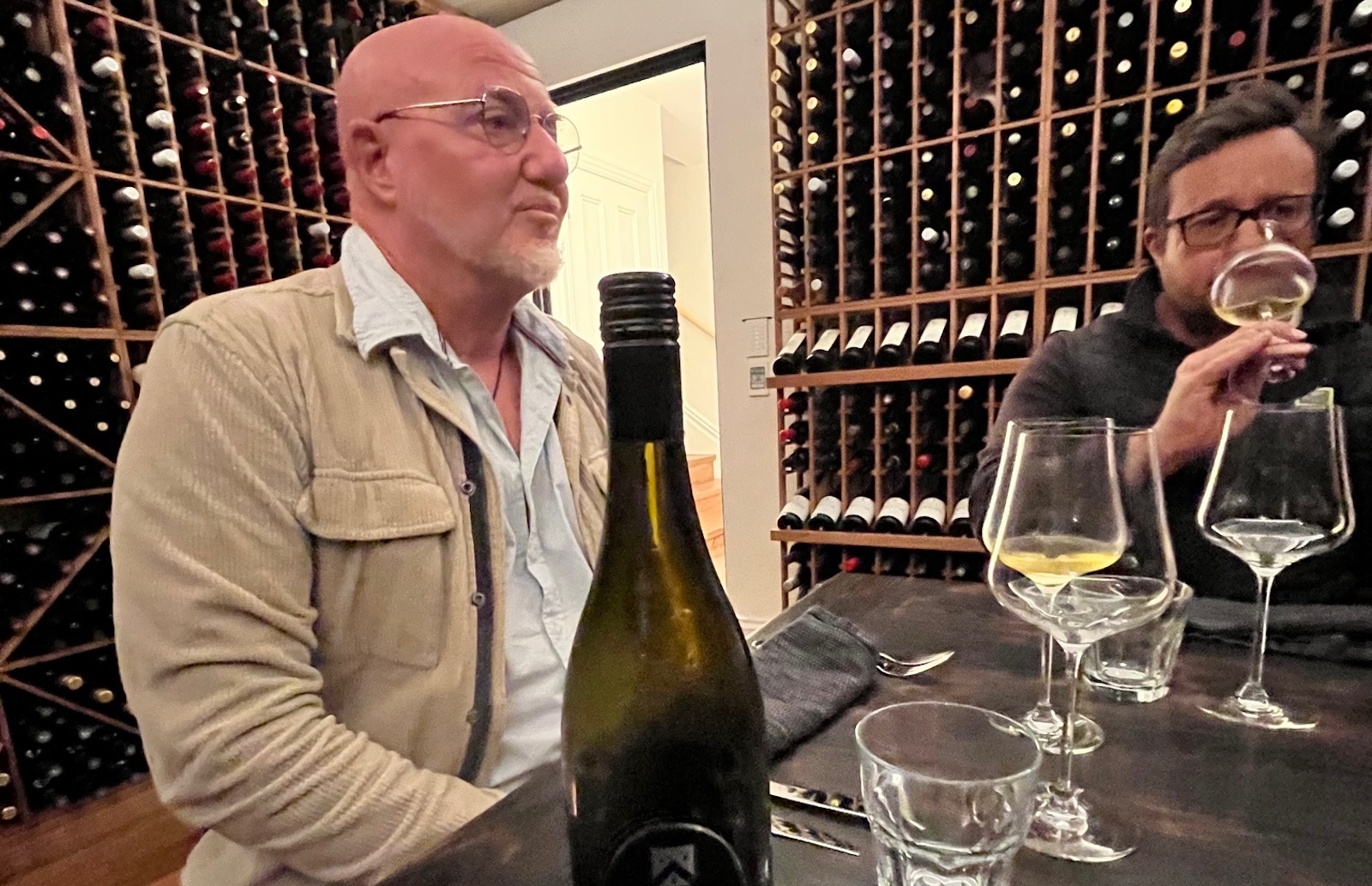
Luc Desbonnets has been growing and making wine for over 30 years, kicking things off in France back in 1989. After finishing a business degree in NZ, he headed to Bordeaux to reconnect with his roots and level up with a second degree in winemaking and viticulture. After time in Burgundy and Bordeaux, Luc took his skills and set about running large-scale wine operations in Hungary and Moldova before eventually bringing it all back home to New Zealand.
In 2006, he planted vineyards on Waiheke Island, and by 2010, the first vintage of what became Frenchmans Hill Estate hit the scene. While Luc has since stepped away from making wine and sold the vineyard, he’s still got an epic back catalogue that he will be releasing over time. He also remains a familiar face on Waiheke, often donating bottles to support local causes.
Luc has always stayed true to the techniques he learned in the legendary grand cru regions of Bordeaux and Burgundy. His philosophy? With the right land and a no-compromise approach to quality, New Zealand wines can absolutely hold their own on the world stage.
To celebrate his legacy, WineFolio contributor Steven Brunskill offered to host a special evening dedicated to Luc’s wines. Think great company, standout vintages, and seriously good food by renowned local chef Phil Clark – an ideal way to toast a career built on passion, precision, and a love of the craft.
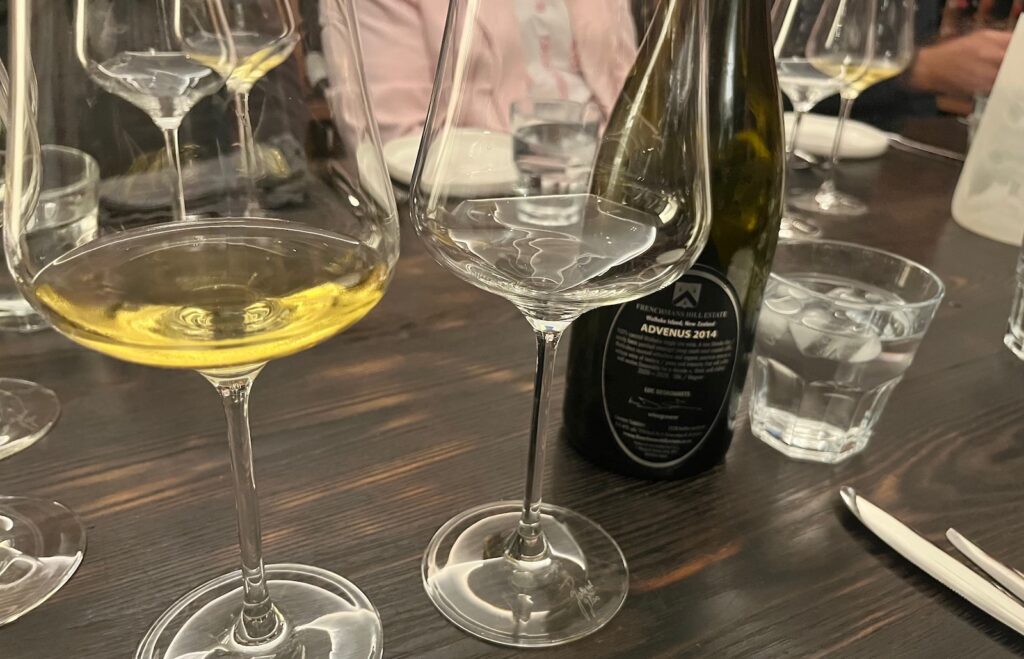
Our first wine is something of unique expression of Sauvignon Blanc. You’d be very hard-pressed to pick the varietal in a blind tasting. It does have ‘a splash of’ Viognier in it as well. Barrel fermented and aged for 5 years before release – the 2014 Advenus is drinking very well for a Waiheke white wine of such age. It has something to it that hints at Grand Cru aromatics from Alsace. A vibrant gold colour in the glass, with pear, apricot, pineapple and creme brûlée aromas. Unctuous, smooth and textural, the 9g/l of residual sugar fills out the mid-palate, where there’s weight, spice and richness.
A couple of plates of ‘Steve’s Chicken’ – nuggets of boneless fried chicken topped with pickles and coriander – and Deep fried mozzarella sticks with basil aioli see us through that opening white and into a pair of Waiheke Syrahs “done the Frenchman’s Hill way”. 2010 Expatrius Syrah is from that first vintage – as is the 2010 Wine Makers Reserve Syrah which is in magnum format. Luc loves Côte Rotie as his inspiration for great Syrah – and considers these two to be at the peak of their drinking window now, and they are certainly still fresh and vibrant. The Expatrius is full-bodied and full throttle, with smoky, chocolate and peppercorn notes; the Reserve showing a bit more restraint and juice.
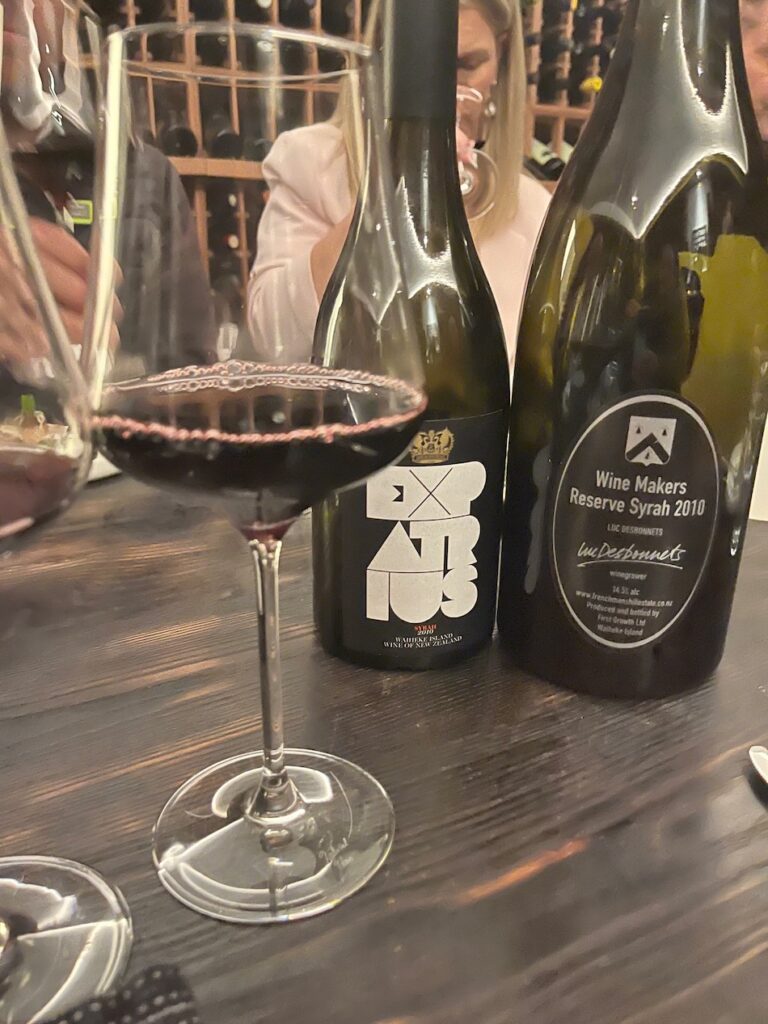
Luc has always refused to compromise on his processes – using top-end barrels from Sylvain that are a core of good Bordeaux producers. Similarly, he uses selected high-grade tested corks for his closures. The Syrahs have generous tannin and the fine wood frames the plush fruit well.
An interesting contrast appears next, with guests bringing a pair of Australian Syrahs – 2013 Henschke Mount Edelstone Shiraz from Eden Valley; and 2016 Hentley Farm Clos Otto Shiraz from Barossa. To accompany, an outstanding plate of ‘Chicken Breast, late season corn with truffle mushroom’ was my favourite food sensation of the night. The Henschke was beautifully youthful and bright. The Barossa wine showing much more of that jammy fruit intensity that typifies, to me, the less elegant examples of Shiraz. There’s discussion around the table of wines from makers like John Duval – to pick one – and I’d put this Hentley Farm example in the same basket of styles I wouldn’t go out of my way to seek out again. I am glad to have an older vintage of Mount Edelstone tucked away though, and it is much more akin to the Frenchman’s Hill wines we’re here to try.
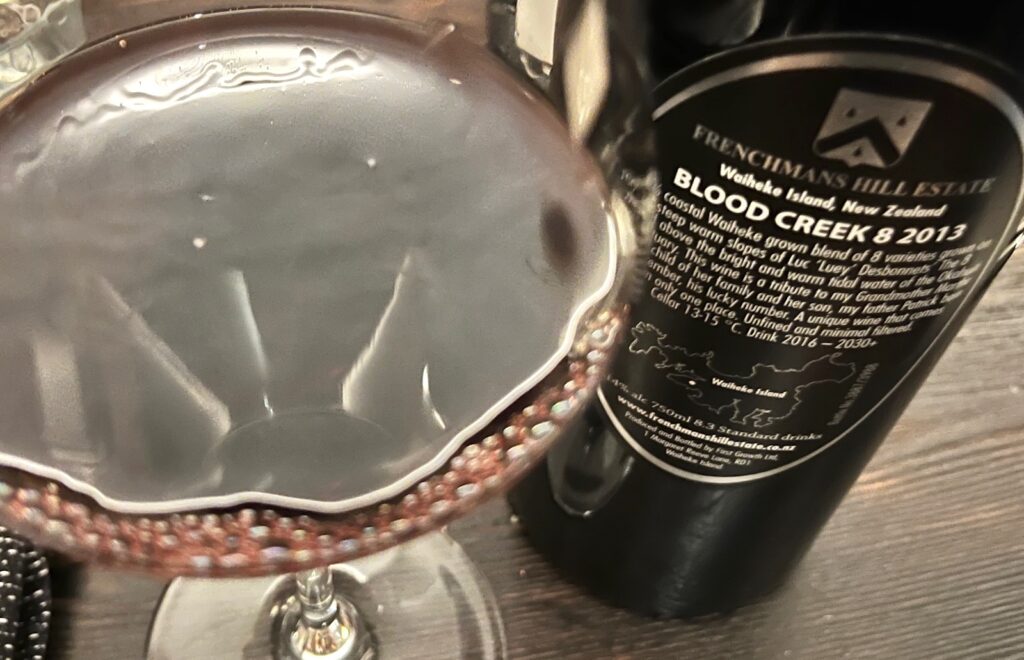
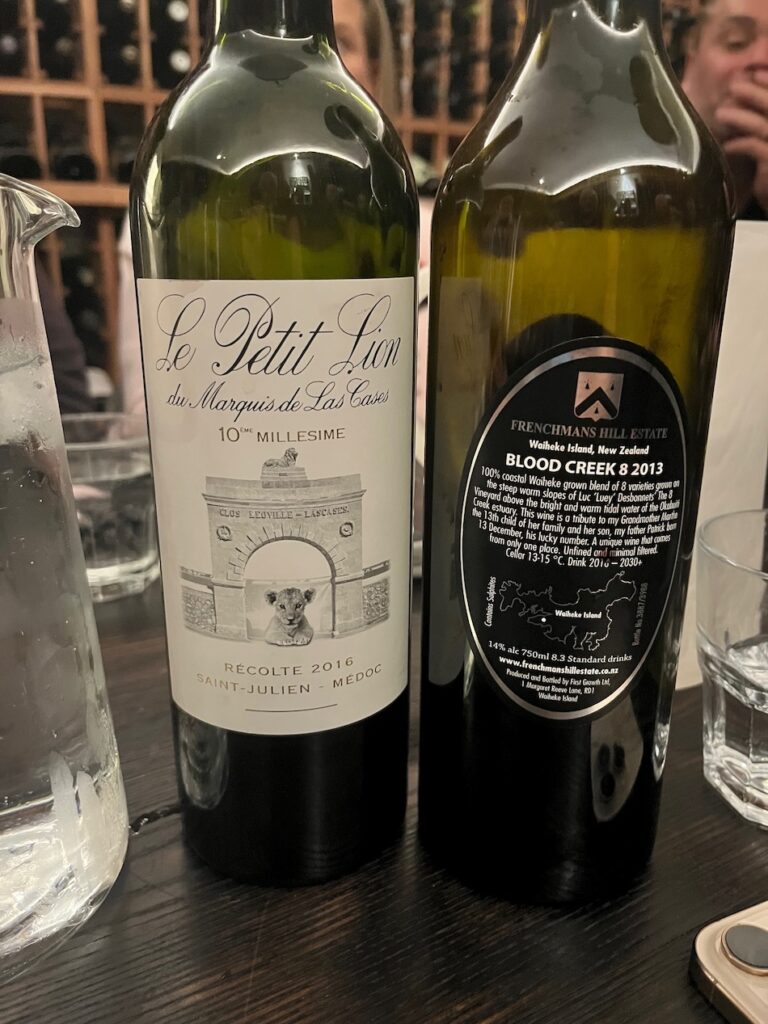
The wine that Luc describes as the heartbeat of the Estate is Blood Creek 8. The wine was effectively planted, and grown, in the vineyard – with specific root stocks, and varietals set out to create this masterpiece. It is a blend of around one third Cabernet Sauvignon, then another third between Merlot and Petit Verdot. The PV taking as much as 15% of the blend, which is a noticeable amount. The smaller components of Cabernet Franc, Tannat, Syrah and Viognier are joined by a real rarity – Kolor. This last grape has a dense red juice that the vigneron would trick colleagues with, pretending he’d got a bad cut in the vineyard by smearing the juice on his arm.
The 2013 Blood Creek 8 has been in 100% new french barriques for 16 months. It is very well-received around the table, but I have to say it’s not my favourite. Dense, bloody and smoky with flavours of cassis, liquorice and black plum, there’s plenty of structure with chalky tannin and spicy oak. I did find it slightly monolithic, blocky and the fruit just too ripe for my preference.
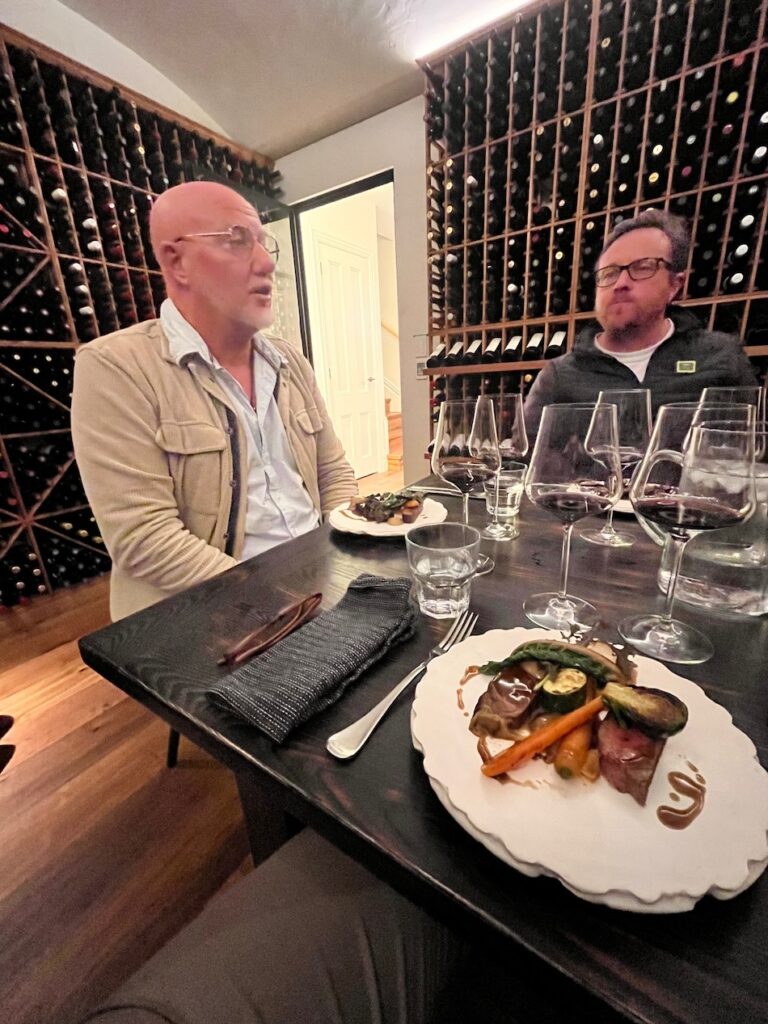
Everyone has brought a wine to share, and set alongside the Waiheke examples. Three Bordeaux are next, and a bistro classic dish of ‘Seared aged beef with black garlic & caramelised onion’ is a fine choice to taste with them.
2016 Château Léoville Las Cases Le Petit Lion from Saint-Julien and a 2017 Chateau Rauzan-Ségla from Margaux were fine examples, but had to share the table with a 1990 Château Pichon-Longueville Baron Grand Cru Classé from Pauillac that blew them away – was just exceptional. Well-aged Bordeaux is a rare thing of beauty, and this was exquisite. The two younger wines showed the renewed pursuit of balance and finesse after the mis-steps of Robert Parker-influenced styles of claret at the tail end of the last century.
The wine that I thought was the best of the night was opened next – Luc made the 2013 White Horse with a cépage of 63% Cabernet Franc, 23% Merlot, 8% Petit Verdot and 6% Cabernet Sauvignon. Intended to be a nod towards Cheval Blanc – he actually had a sample sent to that great St Emilion Estate, and received the comment – ‘a great wine’ back from the owners! So well-balanced, but with lovely line and length through the palate, into a seamless finish of sumptuous persistence. The rarity makes it a very pricey bottle now, but it is up there with the best of Bordeaux-style reds that I have tasted from New Zealand.
I was still in raptures over this wine when the final dish – Smoked duck breast, confit parsnips, lemon & caramelised onions arrived. A couple of mouthfuls, and then the last two reds of the evening arrive as well. Intended to be a look at “One Right Bank Two Eras” since there is a 2005 Château Belair and a 2019 Château Belair-Monange. In 2008 the Mouiex family bought Bélair, and then merged it with the neighbouring property – Château Magdelaine, to create the new Estate in 2012. Both the wines – pre and post merger – are labelled Saint-Émilion 1er Grand Cru Classé.
The younger wine shows the freshness, intensity and minerality of the new style of Bordeaux – with a lighter touch giving more supple tannins, less obvious oak and a real early drinkability compared to the 20-year window that was the intentions in previous generations. The 2005 was a good example of this – entering its peak drinking window and clearly a very fine wine. But the tannin were still quite grippy and dusty, and there was less energy on show, and less joy in the glass.
Our last tastebud sensation is a wine that very few people have tasted. Luc says it was only ever a ‘friends and family’ project, and not commercially released. It is effectively “Dessert in a glass” – 2018 Ratafia. Luc made it with a base of Syrah juice and some distilled alcohol – from Estate wines. It is a coral, copper pink colour and has lovely sweet-sour flavours that keep you wanting another sip.

Hi David
Great to meet you and share a wonderfull evening together with some great wines. Wow I hadn’t realised there was a write up etc. nice work and a great read . It’s so good to know there are passionate wine dudes out there enjoying the intricacies of what our wonderful earth and people can express!
Very best
Luc