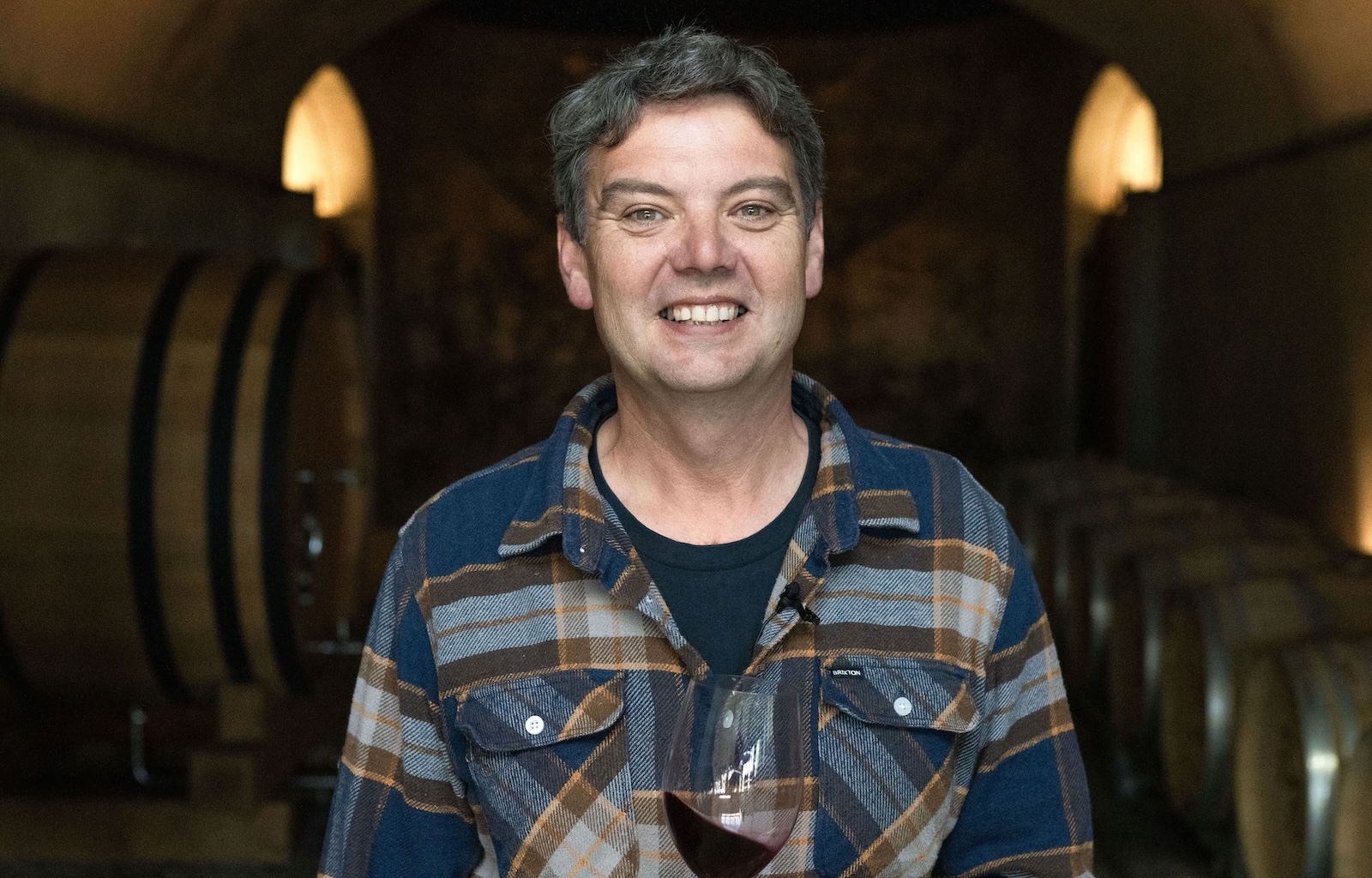
On my trip to the Tasman region I caught up with one of the winemakers at Gravity Cellars, Brett Bermingham, and had the most enjoyable hour tasting through barrels, and having a mini blending session with the different Pinots that they work with in the winery. Normally I’d put a catch up with a winemaker into the WineFolio ‘Winemaker Series’ but I didn’t really interview Brett – it was very much a cruise around the barrels, with conversation as we went.
As we venture down to the barrel hall Brett tells me: “I can show you a few out of barrels – you’ll definitely start to see the sub-regions. A journey through Central Otago, in Nelson!” We start with a Gibbston Pinot.
Brett reckons “It is really good to blend with a new block for our Central Otago program – Lowburn. The clones are 5, 667, 114 and 115, 10/5 and Abel – a little half hectare of each. They are younger vines and if I was a betting man I think this will work its way through to the next wine up quite quickly”.
This sample is quite pungent – there’s no holding back on this. A touch of reduction lurking in there, but also some very pretty aromatics and it reminds me of blood orange. There’s also some savoury elements, good complexity and it is quite minerally. The ‘M’ word! I like the tart fruit upfront and then it settles down and floods the palate.
They also take fruit from Bendigo – a vineyard I visited on my first trip to Central Otago. Brett says “I’m pleased we’re making wines off that vineyard because I like all the Bendigo wines. From here we pretty much get mostly Clone 5. I’ll show you a couple of the Clone 5s because they could almost be from different locations, but they’re not! This first one is about 30% whole bunch. And I’m a big believer in post ferment maceration – you get extra layers of extraction (rather than alcohol).
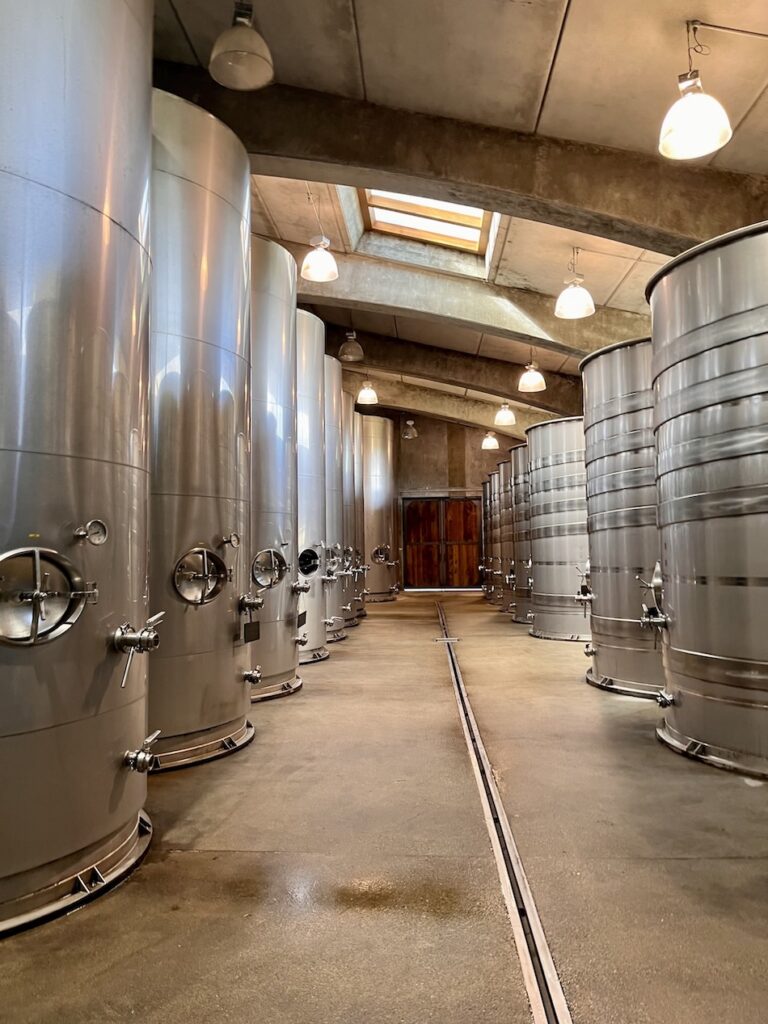
I mention that I’d chatted to winemakers about post-fermentation soaks before, and doesn’t that do something to the tannins as well? Brett explains “You do get a different tannin. You’ve got the tannin macerating out during the plunging, that is coming from the skins. And then with ten days at post, you’ve got the ethanol, and it’s a different tannin. It can fill in the gaps sometimes. I’m plunging less during ferment. But we have some concrete tanks up there that are amazing – they stay 30 degrees for days and days. And I taste it, taste it, taste it – then press it!
This is a yeast called RC212 – which is the stalwart of New Zealand Pinot yeast. It has been problematic – sometimes it just doesn’t like fermenting. But I learnt that if you feed it enough nutrients then it gets the job done. It brings a brightness to it. And the yeast we’ll look at next is more about extracting tannin from the fruit”.
It seems so different that I have to ask – ‘Are you sure that’s the same fruit?’ and Brett assures me “Yes. Crazy isn’t it? In a cool year I’ll use this yeast. I’m really excited to show this to the other winemakers. We’ve got about 200 barrels of Pinot and I need forty for our Goldfields which is our second label. I’ll take this, which is about 24 barrels, and then we’ll find some mates – maybe some Lowburn and some Gibbston. But we’ll challenge that on the day. I do have some preconceptions!”
The next glass I get comes from Bendigo again, and using the same yeast as I’ve got in the glass now. But now it is three different clones of Pinot. This mix gets a little bit less whole bunch – around 15%. The Clone 5 has a much broader tannin profile than the 155 and the 667. It feels so different.
Brett is keen on his trials – he tells me: “I’ve got another yeast trial – I seem to have thousands, but I’m pretty committed to it. This one is made by the same company of that one before, and it comes from just north of Pompeii? And it’s called ‘Volcano’! You don’t need any nutrients – you literally just pour it into the fermenter”.
I comment that “This one has a compelling nose… I could smell it all day!” I like this one a lot. I notice that it is a Sylvain barrel that I would typically associate with Bordeaux. Brett confirms: “Yes, if you went on a trip to Bordeaux, you’d see a lot of those. The burgundy barrels add sweetness, but these add structure. Try this – same wine, different cooper – Rousseau. I love these – mostly because Frederic Rousseau came out for ten years – knocking on the door, knocking on the door… until one day he said ‘I will give you one!’ He still comes out and tastes wines with us – it’s a cool part of it”.
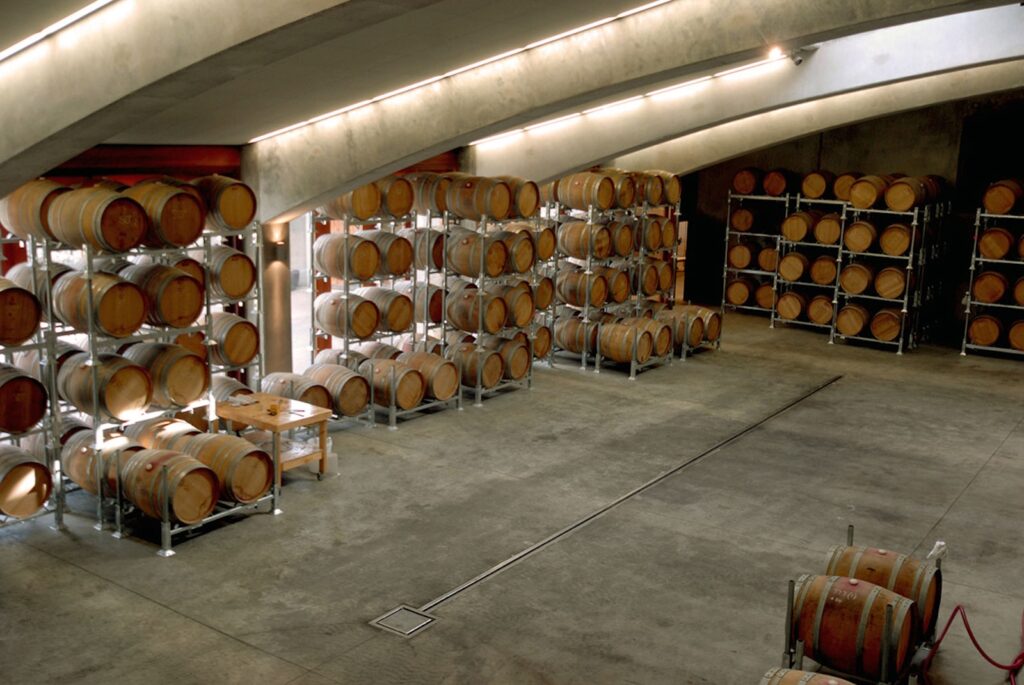
I agree, because to me (with an outsider’s perspective) it is an artisan, hand-crafted process – and to have that connection is important. Brett is keen to push further and tells me “I’ll show you some winemaking next. What I discovered is that if you take one of each… one plus one equals three. Because we have great options. If you only have a single vineyard you don’t necessarily get that. I say ‘If it tastes right, it is right’. End of story. I mean that’s the Champagne model, right?
One of the reasons I moved here was Chardonnay! What I want to show you is one wine that you wouldn’t have seen going round with Sammy – the Waimea Chardonnay 2024. You’re going to be the first visitor to have this.
Waimea Chardonnay is from old vine Mendoza, plus clone 548 which is the new selection from Burgundy. The total blend was about 8000 litres. All fermented in puncheon with 10% new oak. It tasted so delicious that three quarters of the way through malo I sulphured the wine, just to leave a bit of juiciness to it. I learnt that a couple of years ago – that retaining a bit of malic with this gives it more persistence”.
Not wanting to sound like a stuck record, but I’m also a fan of that. I like Chardonnay to have a bit of zip. I don’t like wines that don’t go anywhere or have nothing to say. I do note though that there seems, to me, to be less bad wines around than there used to be. Still lots that are just ‘OK’, but less genuinely faulty rubbish around now. Brett’s last comment is “That’s true. So, how did you enjoy that trip around the barrels?
As far as I’m concerned, it started off well, and then just got stupidly good. I am full of admiration for the vision you need to look at those parcels and individual barrels, and be able to see the blends in there. Adding an extra wine to the glass – it didn’t just double – it took a step sideways and morphed into something else. My number one rule is “is it delicious?’ The art of the blend – it was a real eye opener.
Read about some of the wines here > https://winefolio.co.nz/?p=14630, and here > https://winefolio.co.nz/?p=14524