
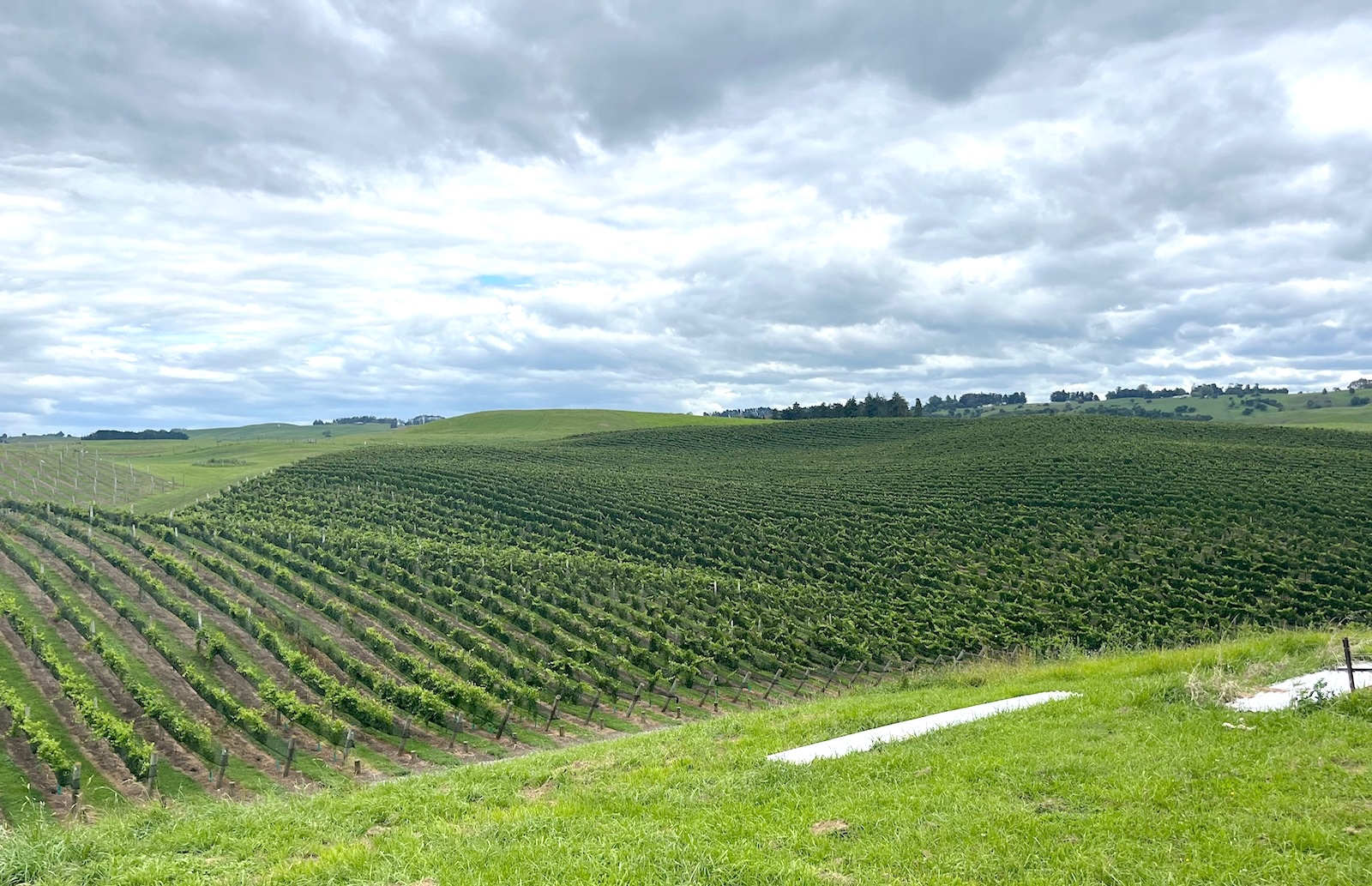
Back in 2017, The Brajkovich family behind the excellent Kumeu river label acquired their first major vineyard site outside of Kumeu. Rays Road, in Hawke’s Bay had been created by Trinity Hill, in collaboration with Sancerre legend Pascal Joliver. Founded on a limestone-rich hillside, elevated at around 180m, the intention was to make world-class Sauvignon Blanc from it.
As Milan Brajkovich explains: “We have spent a bit of time over the last twenty years looking at spots, including in Hawke’s Bay, and been interested in limestone, so when Paul saw this we rushed down and took a look. Unfortunately it was mostly planted with Sauvignon Blanc, but we’re fixing that problem!”
The Brajkovich family began replacing original plantings with Pinot Noir and specific Chardonnay clones (15 and 548) for a richer style, alongside the original clone 95. It is dry-farmed to yield high quality grapes.
A recent press release from Kumeu River highlighted how quickly the site is making its mark, remarking that “The Rays Road Vineyard is beginning to receive the wider recognition it deserves, as the site’s character and quality continue to come into clearer focus with each vintage. There is something very distinctive about Rays Road. Its limestone soils consistently bring freshness, flinty detail and quiet concentration to the Chardonnay, and we have been encouraged by its progress for several years now. As more of the vineyard comes of age, we are beginning to see even greater detail emerge across the site”.
In the latest edition of Wine Spectator, Rays Road Chardonnay was the highest-scoring Kumeu River Chardonnay from the 2024 vintage. The 2024 Rays Road Chardonnay has also received 95 points from both Wine Enthusiast and James Suckling.
I had long wanted to visit the vineyard – and a recent sojourn to Hawke’s Bay offered the chance to finally do so. It is off the beaten track, but not too far as the crow flies from places you’d have heard of – like the Keltern vineyard. Once you navigate the rough track up the hill, it does become apparent though that is a place apart. I catch up with Gary – the Vineyard Manager on site and the first thing he says is “It’s a good job you’re here today – we start harvesting tomorrow!” Gary was originally with Trinity Hill, and explains “I just went with the chattels! I’ve been here since 2010”.
All of the vineyard used to be Sauvignon Blanc apart from 1.2 hectares of Chardonnay, and about the same of Pinot. I ask about some of the vines that looking relatively established and Gary tells me “That block with the frost fan was planted first – so that was 2018. And then this one in 2020. The Back Block was ’21 and a few bits in between. It is 28 hectares all up. The first vintages you might have seen in bottle – would have been made with the existing vines. Can you see that area with the orange tape around the top of the posts? That’s all nebbiolo. That will be a month after everything else has been harvested! It’s only just going through veraison now”.
In the vineyard they do rolling picks, picking when things are ready – it is the Pinot that they will be picking tomorrow. It is sitting at 22 brix at the moment. Two trucks are hired and they swap over in Taupo. The blocks are a range of aspects and varying steepness. Around the hillside is a huge valley that encircles it – creating a microclimate. Typically any weather also just flows around.
There’s a dam which is used for irrigation of the new vines. And a spring that feeds it at around 2.5 litres a minute all year round. Once the vines are established, the irrigation is actually pulled out after two years. Down by the dam there’s a scar in the ground that clearly shows the white streak of limestone underneath a layer of soil. The rains just runs off the hills. Only down in a few of the hollows can I see grass that is looking pretty green. The main frost pressure is – normally – down in those too.
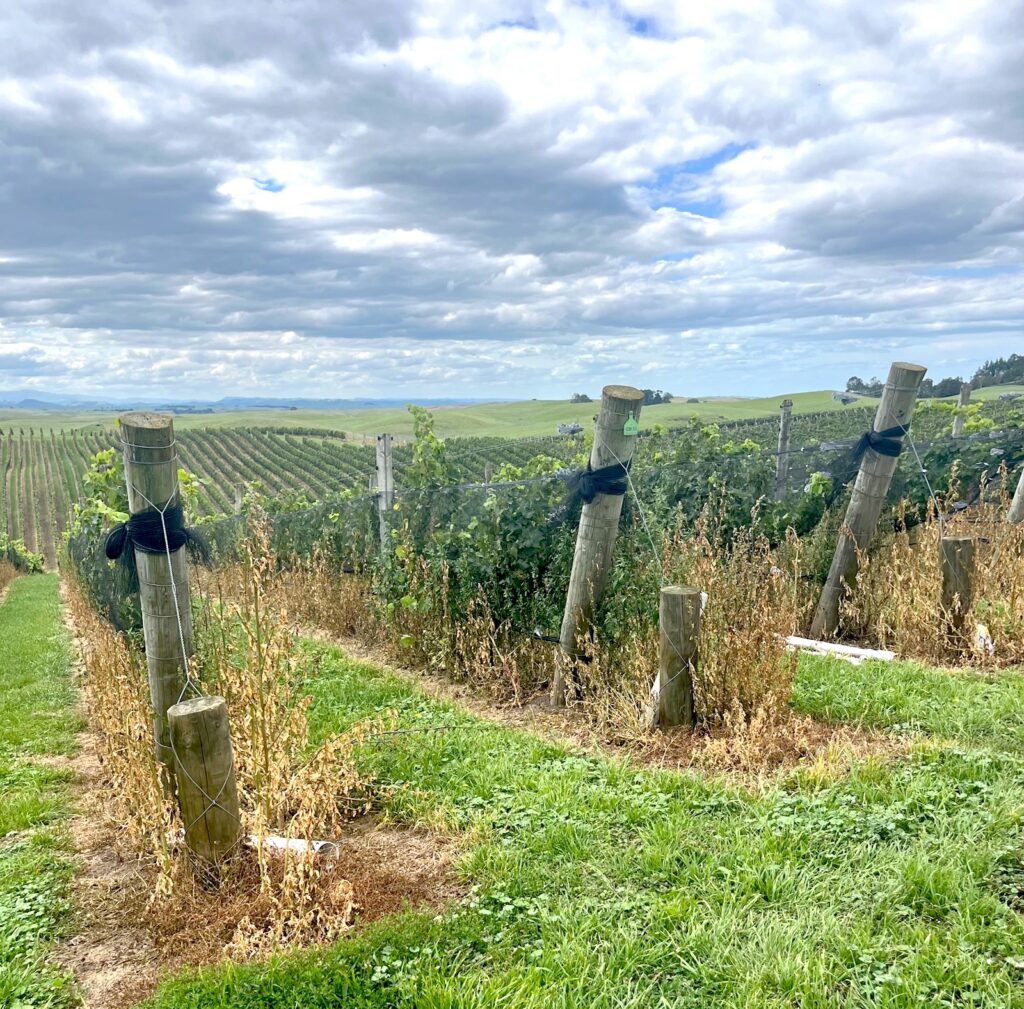
Whilst I’m there, the nets are on. They take two weeks to put on, with a team of ten people clipping them up. But at least the nets, which are guaranteed UV stable for ten years, can be re-used every year. Birds can be a problem – just beyond their land is a large stand of trees, and they are just full of birds.
This could well be the future of Kumeu River as a business and a label. It seems odd to think of Kumeu River as a Hawke’s Bay wine label – and obviously a bit of a conundrum. But there must surely come a time when the value of the land in Kumeu becomes so great that it will make no financial sense to keep – and that having the vineyard in Hawke’s Bay – and maybe more to come – is the way to safeguard things for the future.
Rays Road is a beautiful bit of land, and far from the pressures of needing to house a growing Auckland population. Where the label currently takes from a patchwork quilt of sources not far from the winery for the Kumeu wines – that is increasingly likely to disappear as the most planted thing out there has been “housing” – for many years.
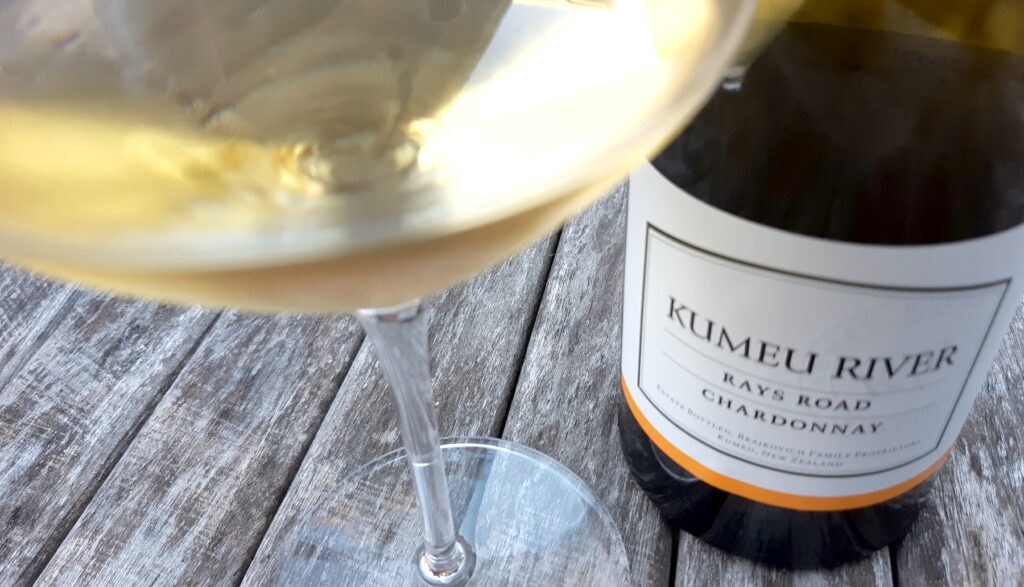
I can see the likes of Mate’s Vineyard, Hunting Hill and Coddington being replaced by designated blocks in Rays Road. Maybe – hopefully – evocatively named. And the label will live on under new skies? I shared a bottle of Rays Road Chardonnay 2019 with friends recently – and my goodness it was good. I totally see where those overseas critics are getting those scores, and reviews, from. I’ll leave you with a link to my thoughts from tasting that bottle in January – https://winefolio.co.nz/?p=14072.

Rays Road Chardonnay 2019 is certainly going to have some longevity.
Nebbiolo- Did Gary say where that fruit is going?
Yes – at the annual tasting I was impressed by the improvements in the Rays Road bottling, but that recent glass of it certainly looked very sharp. It already sits well with its Kumeu siblings, which is praise enough.
I didn’t ask about the destination of the nebbiolo, but have heard the Brajkovich brothers talk about putting some in… so one assumes it is for Michael to turn into something amazing. Glad I have my Cru subscription.