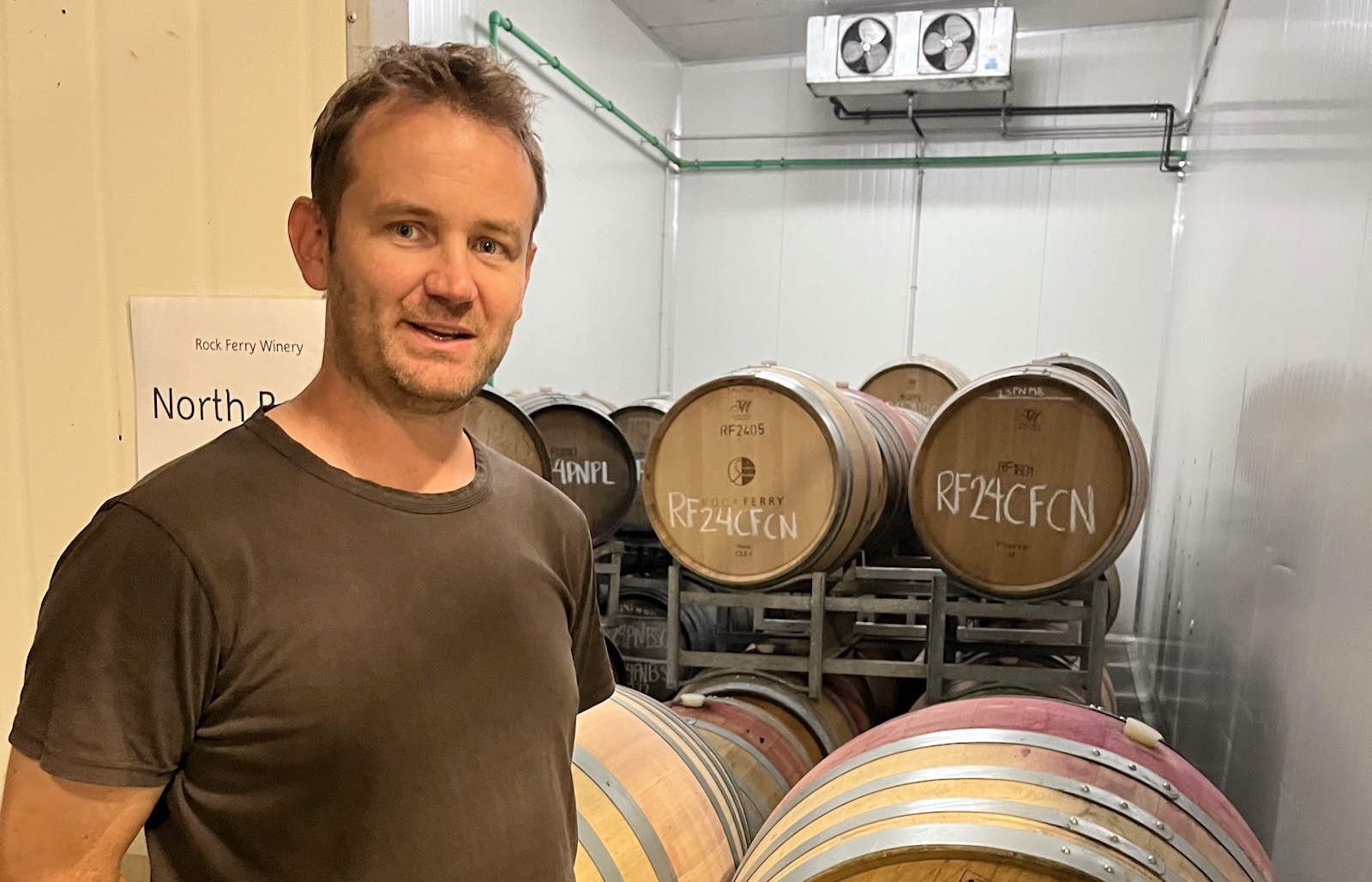
During my last trip to Marlborough at the end of last Summer, I caught up with winemaker Jordan Hogg at the Rock Ferry winery. He had come to my attention for a couple of reasons. First was a session where I tasted through all the Rock Ferry wines at the excellent Art of Wine Expo – and was very impressed. And then when he was in Auckland one time showcasing his own label Atípico, which was also very good – https://winefolio.co.nz/?p=10846. I’d promised I would try and catch up with him next time I was down in Marlborough, and today’s that day.
WineFolio: Good to see you again. This has been a brilliant trip. I’ve seen a really wide range of producers this time – from Huia and Churton, to Bladen, St. Clair and Fromm – and had a chat to Michael Wentworth about AMW yesterday as well. I like to look at a range of things. For me, the conversation is the most important thing. I can try wines back home in Auckland – but when I’ve travelled down here, it makes sense to maximise my time seeing and talking.
Jordan Hogg: Shall we take a walk through the winery so you get the lay of the land, first? Let me show you the vineyard map as well, since it’s here. We have three main vineyards, so we are by the Orchard Vineyard of Jeffries Road. There was lots of orchards and stonefruit grown in this area. Now it is Pinot Noir, Sauvignon Blanc, Chardonnay and Pinot Gris.
Our second vineyard is Brookby, up in the Omaka Valley of the Southern Valleys. You’ve got Pinot Noir, Sauvignon Blanc on north-facing clay soils. And then also the Trig Hill Vineyard in Bendigo, Central Otago. We’re the furthest East along that Bendigo Loop Road, with Tarras below us. A very rugged, beautiful landscape.
Our winery was an old orchard packhouse. Our owner, Tom Hutchison, purchased this block of land with a shed on it. If you see that metal plate up there – the rest is an extension and we popped the roof up to fit in our larger tanks – which are 15,000 litres. With it being a packing shed we’ve got these insulated rooms – so I store my barrels in there. And in the off-season I can keep the temperature nice and consistent for elevage. And in harvest I can do the opposite and have rooms nice and warm for white barrel-ferments.
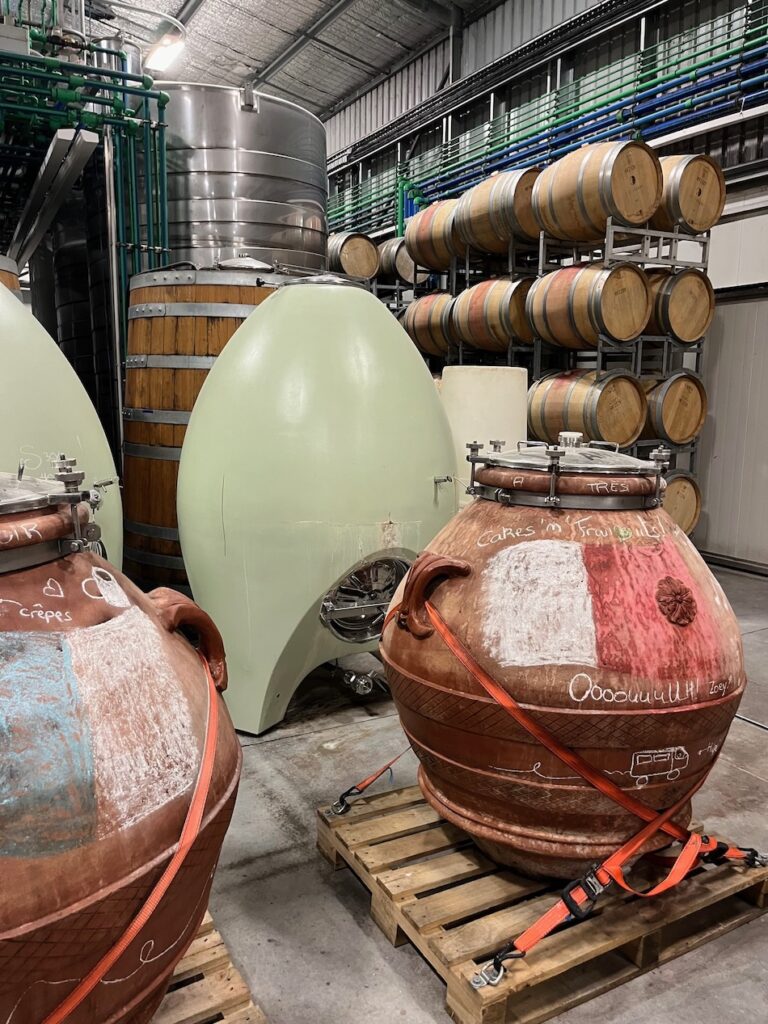
As an organic winemaker it is nice to have versatility with our more limited toolbox. I’ve worked in places that are a lot more cramped, so I am appreciative to have this much space. We have a range of vessel types and sizes. We have amphora here from Tuscany. We have concrete eggs. We have wooden cuves, which are 3500 hectalitres, and the various stainless steels. Barriques, and puncheons. So we can guide our winemaking style according to the appropriate vessel, in various components.
Some of the reds, we’ll rack just before harvest, after ten months ageing. And we might blend this time of year, then rack back to puncheons to age for another six months, ready to bottle in springtime.
I’m lucky to be able to do the Atípico side project here as well, which has been growing each year – but I make sure there is a separation between the two jobs.
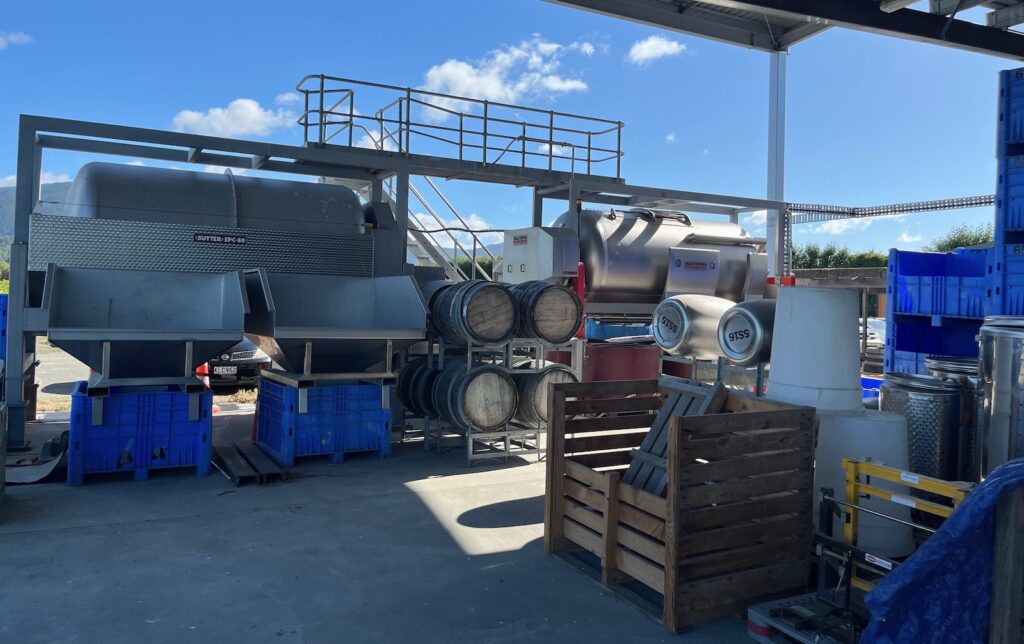
In our reds fermentation room there are ten french wooden oak cuves which are open top. There’s a mobile platform that we can use for doing pigeage. And through here is our crush pad – so you can see the flow through the winery from here. This is where everything starts. Everything is picked into bins, so we don’t have a receival bin. We tip into each press, and the juice goes into tanks or barriques. The payoff of not having the bin is a lot of lifting and forklifting.
WF: What were you doing along your journey to this point?
JH: I am from Auckland and we moved here when I was starting High School. My parents are from Marlborough. Over summer there are lots of jobs here – bottling lines, picking, vineyard work and so forth. Then I went to University in Canterbury, doing Biochemistry, but not knowing exactly where that was going to go. Having the wine industry in the background, and not wanting to do any further study towards a PhD or Masters, I worked at Wither Hills after I graduated. Went into the lab for harvest, but stayed for a year and really enjoyed it.
I got the winemaking bug, so went back to Lincoln to do the postgraduate winemaking. I could handle doing one more year of study, about something I was passionate about. I ended up at Greystone and Muddy Water, working with Dom and the crew there. That was really cool. Beautiful vineyards, good people and good winemaking. After that I moved up to Marlborough and worked at Seresin Estate for six years, working my way up to Winemaker. I did a harvest in Burgundy whilst I was there.
In 2016 I won the Young Winemaker of the Year award, and was particularly proud since I was at a small winery. I left Seresin after the changes, including selling the winery to The Côterie. I did a year at Indevin – I call it my “Finishing School for Sauvignon Blanc”. That was a big change of pace as you can imagine, but a great learning experience for a year. I guess I’d been making wine in a certain way for a long time, and then to see how they make wine… it reinforced the good and bad ways of how I made wine. There were some things I saw that I would never do, and some things that I learnt that are good. Any experience like that can be positive. Then in 2020, I started at Rock Ferry.
WF: I’m at a stage now where I understand most of what winemakers say to me – even though I have no practical experience of winemaking. I am comfortable with reviewing and judging as long as people understand that I couldn’t necessarily pick wine faults on a technical level. I have been told that I have a good palate and I basically trust that to say whether I like something or not – and that’s it.
I have been interested in wine for a long time, and have a knowledge of wines that I’ve tried that I rely one, going forward. I’ve judged at both the Easter Show and the New Zealand International Wine Show. I do find it a bit odd that it is mostly the same people doing it all the time, but as a relative outsider, I’m just happy to have the opportunity.
JH: I do think the judges should be less winemakers and more people like yourself who have more contact with the public. As someone who has worked in a place where you are writing wine lists and listening to what customers like – you’re better placed to judge.
WF: I also find that there is certain pattern to the judging, that doesn’t necessarily reward wines that do not fit that box – whether they are individually interesting or not. I quite like wines that have character and are not your typical – where you’re awarding a Gold Medal because a wine is a ‘good example of a classic style’.
JH: That’s why certain labels won’t submit their wines because they get lost in a line up where people are looking for those wines that pop out more. Rather than the elegant ones with finesse.
WF: Also, reviewing wines is in some ways a rather odd job. I might sit and go through a dozen wines in a morning – making notes as I go. Then I type those up and it comes to the point of assigning a score. So, you have a think – context of what it is, what else I’ve tried that might be similar and so on. And I sometimes think that the number doesn’t quite match the words that I wrote about the wine. I’d prefer to write about it and leave you to decide – without the marks out of a hundred. Because sometimes that’s all that gets noticed?
JH: And even when, at the start of the Chardonnay session, we will say ‘don’t just award on the basis of that flinty, struck-match character’ – look for the ones with elegance as well. And what ends up winning? The one with that exact character! Even though you’d had that discussion.
WF: I recall trying to judge the Chardonnay Trophy at the 2023 New Zealand International Wine Show. I turned to one of the other people on my panel and said “What do you think? I reckon I’ve got fourteen glasses of the same thing here!” Honestly, they were SO similar. Everyone who had judged the Chardonnay classes during the show had obviously been swayed by the same style, hahaha.
Now – you get to make quite a few different things here, as winemaker. Is that part of the appeal? Not just that it is Central Otago and Marlborough… but Nebbiolo, and Sparkling Pinot Blanc wasn’t it?
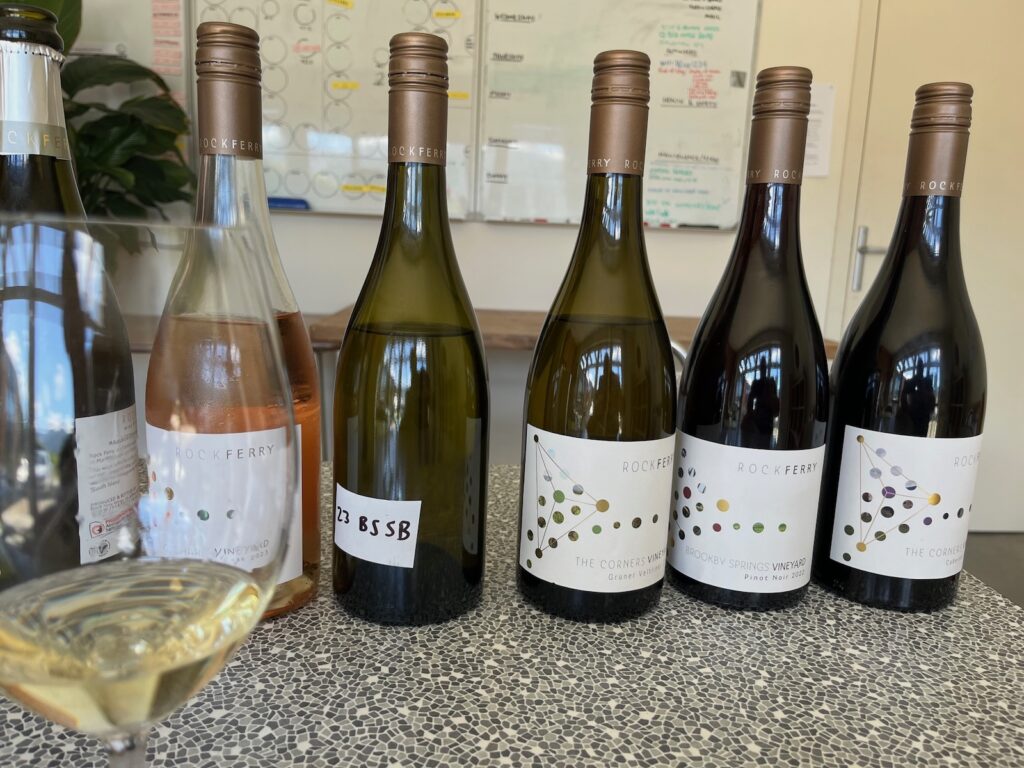
JH: Yes, that’s us! And it is definitely the appeal. You tell from the places I’ve worked – Greystone, Seresin and now here – that I’m focussed on certain styles of wines and winemaking. I was attracted by the creativity and the vineyard parcels, and an inspiration to try something new. We’ve planted Nebbiolo, Grüner Veltliner and Cabernet Franc, and then, down in Central, some Tempranillo. Those little fun parcels to play with as a winemaker.
Pinot Blanc we’ve made in many styles. It has gone into table Pinot Blanc, Pinot Blanc Brut and into our rosé. I make it into my Sundial and my Under the Plum Trees, so that’s five wines. It is great to have that in the grape palette of things to bring together. And I love the Southern Valleys. Working at Seresin we had the Raupo vineyard which is south and east. And you’ve got Brookby and the Wrekin. I have a real affinity with that. Pinot Noir, Chardonnay and Sauvignon Blanc, so that was a massive attraction.
You said you’d been up to Churton? I like what they’re doing. They grow beautiful grapes and it is exciting that they’re selling grapes to other people like Simon and Lauren from A Thousand Gods, Kelly Washington, Smith & Sheth and so on. We need more of that in Marlborough. Obviously there’s The Wrekin, and Clayvin is selling a bit.
This is Pinot Blanc Brut 2022, made from fruit just behind the winery. More dappled light on the fruit to preserve that freshness and acidity. All handpicked and pressed, then settled and fermented in stainless steel. The idea behind this wine is that Pinot Blanc is a point of difference. And we’re not looking to compete with that Champagne/brioche richness. This is about freshness and bright fruit. Organic Pinot Blanc, from Marlborough, fits in a different place. It gets the full works – it’s Méthode, aged for a minimum of one year on lees. We make the base wine here then it goes down the road to No.1, because they’re specialists at what they do.
WF: I think you’re in safe hands there. There are people who’ve been doing it for decades there. So, why does it not say Méthode on the label? I’d expect to see that.
JH: Well, that’s a decision made by someone like our Marketing team, I guess.
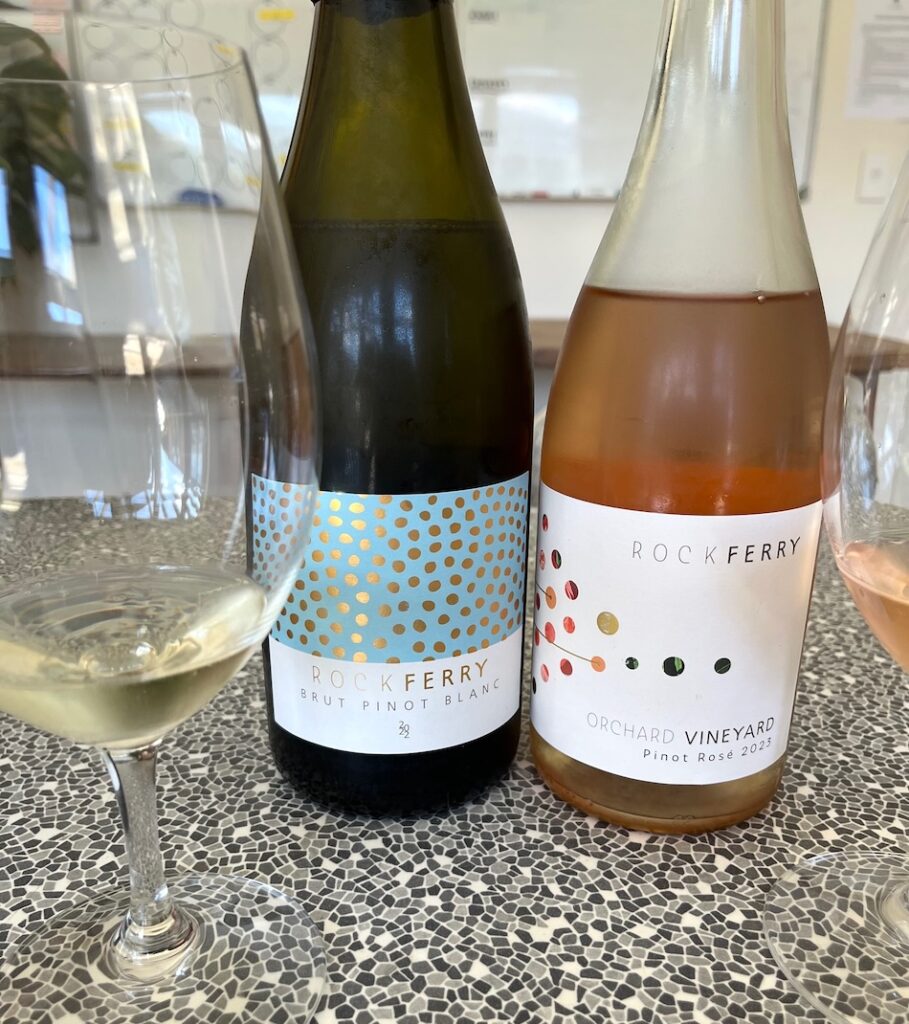
WF: It’s interesting to see how people are labelling their sparkling. I’m going to see Ben at Balvonie next and he has his Prosecco on the market now. Obviously they’re going to run into issues with calling it Prosecco soon, but it is also Méthode, and Vintage. So he has that to fall back on, even if it has to be re-named from Prosecco to ‘Italian style sparkling Glera’ or whatever. Yours is vintage. I think it could say ‘Méthode Traditionnelle 2022’ on the front. That will help a buyer. When they taste it, it is whether they like it or not that matters. There’s quite a bit of good sparkling around now – I also like the ones I’ve had at Huia and Johanneshof over the weekend.
JH: Yes, it’s good that Josh at Huia has Tom’s trust to push the things like the field blend and the wild ferments – good on them.
WF: I do like inquisitive winemaking. People who are like “what if we did this – would that make things better?” I had a chat to Dave and Christine at Bladen over lunch, and they were saying that they’re quite conservative, but Blair and Deni had made their ‘Sum of Us’ white blend in secret – and now it’s a great success.
JH: Oh yes – it’s Alsace varietals isn’t it? I tried it when I was judging at the Marlborough Wine Show and it won the ‘Other Whites’ Trophy. And it was my favourite of the alternative whites – it was really good.
Here is our rosé – from the Orchard Vineyard – the same block as the Pinot Blanc. We picked the three Pinots, so it is predominately Pinot Noir. Usually about 85%, with the balance as the two whites. We’ve got some Clone 5 which gives a pop of red fruit and then the Abel clone. In Provence they often do co-ferments of reds and whites for their rosé, so it is partially an inspiration from there. As well as the fact that the vineyard is right there and the Pinots ripen in a very similar spectrum. A co-fermented, field blend rosé just makes sense.
We’re after freshness, so we press it, then rack it to stainless steel with an aromatic yeast for that lovely brightness in the wine. I find there is more than just strawberries and cream which you can get from some straight Pinot Noir rosé in the region.
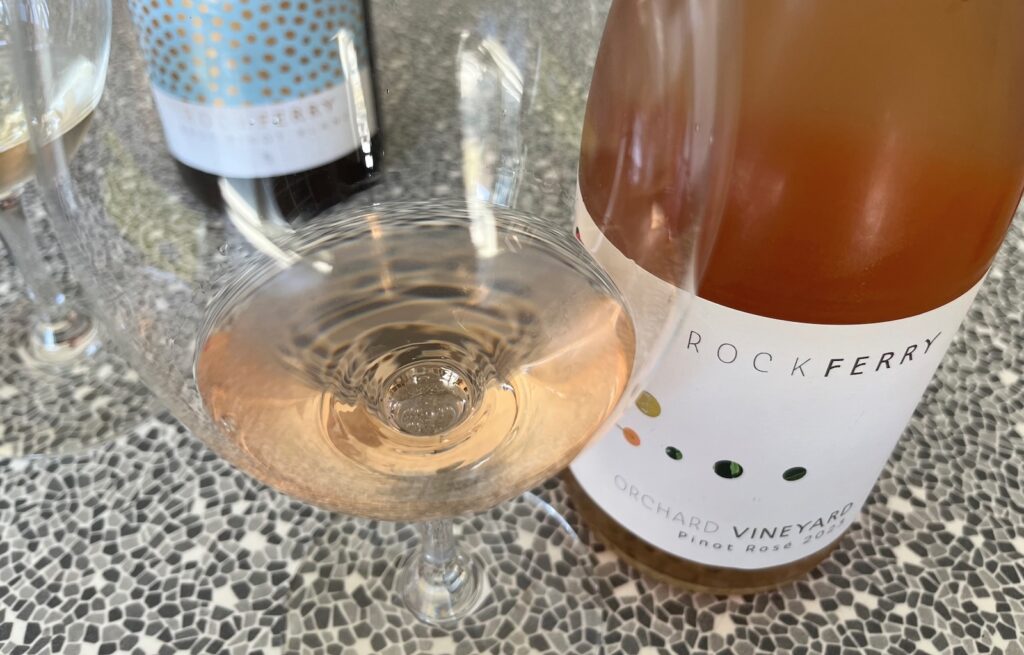
WF: Again – labelling… if it is a co-fermented field blend… why not say so on the label? That’s a great point of difference that you could tell a consumer. You could charge more for this because of that? It’s special – label it like that and charge $5 more for it. I think I really like that – in the right situation. It’s not actually making me go ‘wow’ sat here right now. But that’s perhaps a good thing – that it doesn’t have that immediacy? I don’t know. It’s not just a simple wine – and those ones tend to get me if I really look at them.
JH: We’re not after something that is very neutral – like many are – we do want some phenolic and texture. We’ve been around for coming on twenty years and I’m conscious of what has been out previously. I don’t do much crystal ball gazing. We do Pinot Blanc and we’re focussing on Cabernet Franc as our ‘other red varietal’ from Marlborough, and we’re pretty excited about how that is going. Nebbiolo is a bit more marginal. We’ve made it for a few years but it only ripens properly every second year, at best.
We’re pulling away from less and less new oak each year. If I’m blending or bottling and I’m tasting new oak then it is too much, so every year I’m pulling back. That follows trends that I’m seeing when talking to winemaking friends.
Right – two new wines – on the left is a Brookby Springs Sauvignon Blanc ‘23, and on the right is a Corners Grüner Veltliner 2020. We purchased the Brookby Springs vineyard in 2021, and I’m very excited by those Southern Valleys hillside clay soils. Pretty simple winemaking from low-yielding middle of the slope vines. Hand-picked then settled overnight and racked into a wooden cuve. We inoculate it with a pied de cuve, then rack it back down to some puncheons to age on lees for around ten months. Our take on an alternative Sauvignon Blanc, but without going down the cloudy juice to oak route and ending up Chardonnay-esque. Silkyness, density and weight without clouding that fruit picture.
WF: I like it has an agility as well as weight – athletic, not big and burly. I think it is identifiably Marlborough, with the dials turned down a bit. I’m getting a streak of quartzy minerality through it as well – which adds to that lightness of touch, and linearity.
JH: The brief was to make something that still had a nod to Marlborough, and I think that does. When it wanted to go through malo, and it did, there’s still freshness. With the Grüner Veltliner I’m trying to capture that spice and the aromatic musk quality. Similar winemaking to a lot of the white wines. This was racked into large format, neutral oak. You need to be careful with Grüner Veltliner in Marlborough – I’ve tasted a number of portions or finished wines with a streak that can be confused with Sauvignon Blanc.

WF: Picked too early. I’m happy to see people doing it quite well now. Because I remember having some around ten years ago – where I spat them out. I like the aged ones – from the good places in Austria. And this 2020 is your current release? Excellent.
JH: Moving on to reds – this is our Brookby Springs Pinot Noir 2022. ’22 was a tough vintage for sure. Challenging, cooler – trying to balance out all the elements – phenolics, flavours, acidity, sugars was difficult. A lighter colour was the result of the vintage. We’re not chasing colour. Looking for spice, green notes, lovely red fruit.
Southern Valley tannins can be quite slippery, powdery and long. It is mostly Clone 777 from the middle portion on the hill. A little bit of whole bunch in there – 10-ish percent. This would only have 15% new oak but I do smell and taste it in there. Not a lot but more edgy than I would like.
WF: It gives a frame to that light red, crunchy fruit though. I believe that the whole sub-regional story of Marlborough can be told very well through Pinot – as well as Sauvignon Blanc. Vintage variation is also amplified in Pinot Noir as well – I think.
JH: Coming on the back of the ’21 which was more of a showstopper vintage, where the wines had a seductive density to them – I think we did pretty well with that wine. I think it will age well. If I compare my feeling with being in the winery in ’21, and then this, in the winery, was much more of a challenge. I’d love to see this in 5-8-10 years time.
WF: Well it doesn’t taste of tears!
JH: In 2021 we had no restrictions in the winery, because we had no COVID here, but in ’22 we were back to social distancing, and masking. I actually caught COVID in ’22. But, that’s in the past. Now – Cabernet Franc, from the Corners Vineyard, which we’ve sold unfortunately. We have some that’s going to be planted here on the Orchard Vineyard. We’ll have a small gap from ’25 to ’28. We’ve got some ’24 in the winery, and this is the other red we want to focus on.
WF: Not Syrah?
JH: There are some good ones – like Te Whare Ra and Novum. But with Cabernet Franc we’re picking it to capture that classic leafyness. There’s obviously a density of fruit in there. When the fruit comes in there’s a perfect physiological ripeness. The sugars are just right, the acids are just right. And we don’t want to pick it any later so it goes into a vague ‘international style’ red, with a dark fruit character. There’s an abundance of tannin on the palate, so we think it is going to age well.
WF: This ‘Loire’ style is not really me, when it comes to Cabernet Franc. I’m much more St Emilion for that varietal – which I do really like. I am conscious of that bias though and I work on getting past that, and doing more analysis rather than just “I like it”. I get a touch of Italian about it as well. It doesn’t have that smoky ‘franc funk’ element, but I do think it is a very good wine.
JH: That was the angle we chose – being Marlborough. It’s a skill isn’t it? As a job I find I have to understand styles that I know I don’t like. A few of those new wave ones, like Amoise, are similar, being light on the palate and going for a crunchy red. We’re pretty pleased with how it is going. There comes a point with the wines here at Rock Ferry where I don’t have to polish all the edges. We want wines with character, and not where vintage variation is smoothed out.
At this point Jordan changes hats, and out come a selection of his private label – Atípico.
JH: The 2023 ‘Sundial’ that you tried was a blend of Pinot Blanc and Pinot Gris. And this vintage is a blend of Pinot Blanc, Riesling, Grüner Veltliner and Pinot Gris. Putting all four varietals on the label was a challenge, so I’ve just called it ‘an aromatic white blend’ for this vintage. Hand picked, field blend, foot stomped and then pressed together. Into old oak and taken back to the vineyard to ferment where it was grown. My playful name for that is ‘vinsitu’ which is on the label.
With all the wines I’m hoping to make something textural, vibrant and hopefully delicious. And trying to showcase other Marlborough stories. This one is more citrussy than the previous, and that is due to the Riesling and Grüner components giving more acid drive to the wine. This will be a one-off for the Sundial as unfortunately the Riesling and the Grüner are no longer with us.
WF: Even amongst the more experienced wine fans, like me, there’s still a lot of interest and inquisitiveness about things like blends. I’ll go into a bar and I might not look at the menu – I’ll just leave it with them to bring me ‘a crunchy red’ or ‘a textural white’. If there’s a few of us, we can quickly knock off whatever bottles are open by all ordering different things and trying everything. You have your favourites, of course, but I do wonder whether things like craft beer changed our approach, because you stopped ordering Steinlager or Guinness, and instead you would ask ‘What’s New?’ and have that.
JH: Yes, I visited Mo on Friday and he loved and bought all of them. Hopefully he’ll pour them for people and confound them – in a good way. He said that this – the next wine – was the first Sauvignon Blanc that he’s going to have by the glass, which is a bit of a compliment. I also visited Camillo at San Ray, and they had had Sauvignon Blanc on by the glass, and they sold a bottle a week – which is terrible, for any wine by the glass.
The ‘Blanc’ is the first time I’ve made this wine. Essentially the same portion as our Brookby Sauvignon Blanc, but my twist is that it is whole clusters for nine days – so, on skins. Only a gentle hand pat once a day, for minimal extraction. I called it ‘Blanc’ on purpose, as I think this is a white wine with some complexity and slight phenolic framing. After those nine days it was whole bunch pressed into a single old puncheon, and aged on full lees for fifteen months. I think it gives aromas that you don’t see in Sauvignon Blanc very often.
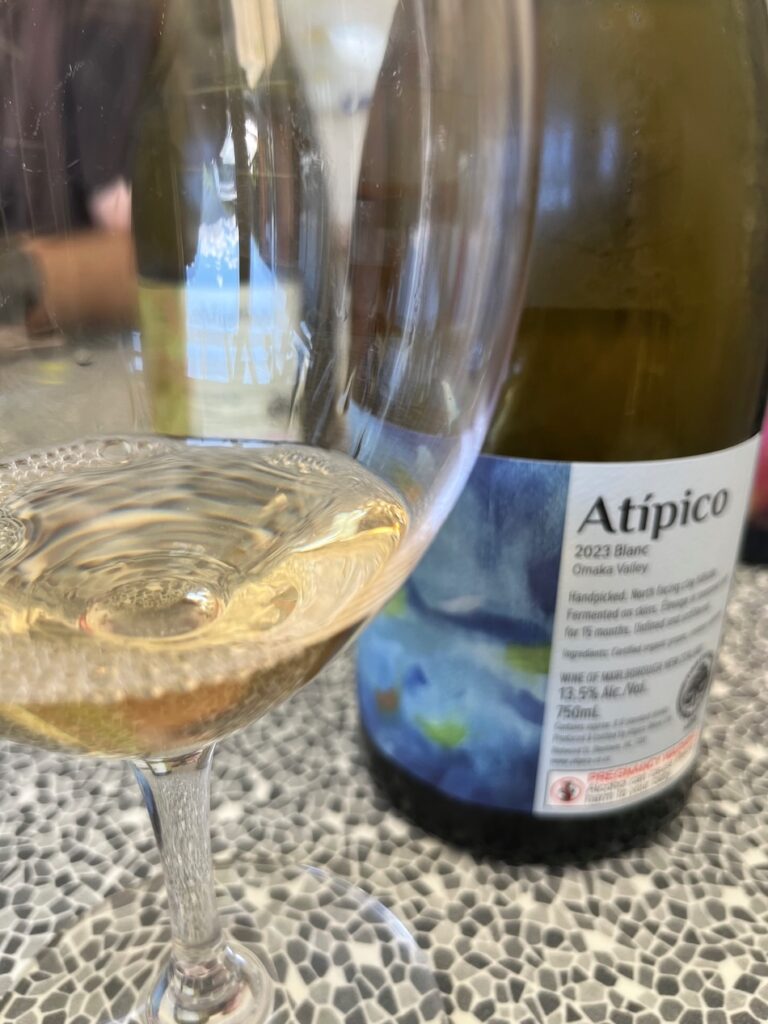
You get lovely florals and lots of asian spices as the wine warms up. That’s my favourite part – that it takes you on a journey and you pick out some turmeric and cardamom in there. Things you don’t really smell in Sauvignon Blanc and I’m really pleased. There is a depth of fruit in there as well – I haven’t just messed with it, with clunky winemaking. Hopefully it wouldn’t scare a Sauvignon Blanc drinker too much.
WF: I think it might!! hahahaha. It’s one of those things that I can see going well as a hipster wine bar, but in a more conservative place… I’m not so sure. This has, to my taste, only a prickle of phenolic – it’s not a full-on orange wine. People like reference points… so bear with me – where in the world would you say this is like – that’s not Marlborough?
JH: I don’t know any whole appellations that are making this kind of thing. Maybe some natural winemakers in the Loire? But they’re more oxidative. Maybe Daggenau? With something like the Chardonnay – it is hard as a winemaker when your first wine is successful, that you worry that you’re going to capture that same thing the next year!