One thing might lead to another. Such is life. An opening of a 2015 Syrah to share with a fellow wine-lover in another part of the country, sparks the idea to investigate a little closer – just what are the tales behind that wine. The wine is Te Whau Syrah (at Two Terraces vineyard) and a few months later, here we are. With the man best placed to spill the beans – Tony Forsyth. Who for many years was behind one of the most iconic properties – vineyard, restaurant, winery – on Waiheke Island.
Te Whau sits on a southwestern peninsula on Waiheke Island, separating Pūtiki Bay and Kuakarau Bay (Rocky Bay). Long before European settlers arrived, the headland was a highly strategic and spiritually significant location for Ngāti Pāoa, the mana whenua (indigenous guardians) of the area.
Home to three ancient, fortified Māori villages – Okoka, Kohai, and Kupapa which still retain archaeological features, including old terraces, shell middens, and kumara pits. The area is formally recognised by Heritage New Zealand Pouhere Taonga as a Wāhi Tapu Area. For much of the 20th century, Te Whau followed the pattern of rural western Waiheke. That’s to say it was a sheep and cattle farm; with large fields overlooking the Hauraki Gulf.
Tony tells us that he was sitting on Ponsonby Road in the early 1990s, having a coffee and reading his inch-thick copy of the New Zealand Herald, when he turned to his wife and said “I think I’d like to have a vineyard.” Little did he realise the path he was about to go down. He claims he has “had my share of luck over the years” – and this was one moment when that scenario played out. He happened upon a young, keen Real Estate agent (it was his second day) who showed Tony around Waiheke, and it was by chance that a parcel of land had just been re-released onto the market that morning.
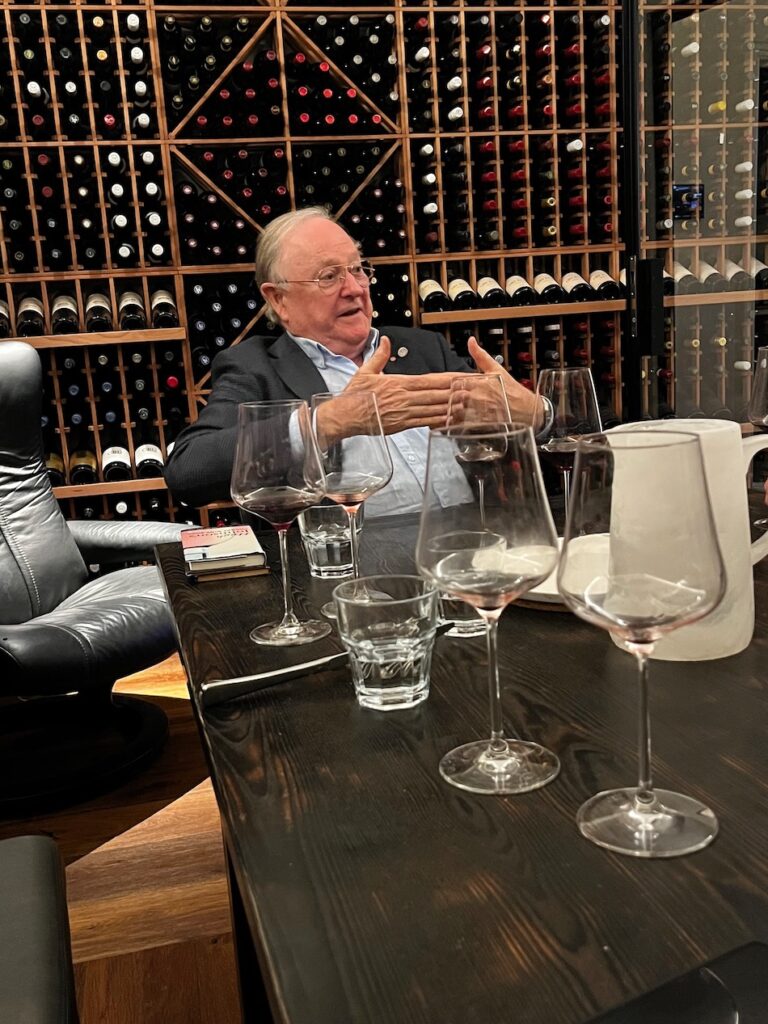
To cut a long story short, Tony bought the rugged “piece of dirt”- gradually piecing the various plots together until he owned them all. The slope would become Te Whau Vineyard. A sabbatical took him to Europe, where he sat down (with his plans in his bag) with, amongst others, Château Mouton Rothschild, and worked out how to make the dream into reality. Back on his patch, he went and knocked on the door of their neighbours – the Goldwaters, and asked for advice. He and Kim Goldwater would become great friends, as 10,000 vines were planted in the clay-heavy, but virgin, soils.
Along the way he acquired a winemaker – Herb Friedli (who was making wine at Stonyridge) arrived one day at the vineyard and announced to Tony that he would make the wines… “I start tomorrow”. Tony’s particular love for the wines of Château Mouton Rothschild meant that the flagship wine would be a Bordeaux-style red – The Point. A classic blend of Cabernet Sauvignon, Merlot, Cabernet Franc and Malbec. They later added Petit Verdot to the mix. This evening we also get to try their highly-regarded Syrah, but, alas, not the Chardonnay – which Tony regarded as their best wine… “It’s all gone” he laments.
The vineyard became a prominent Waiheke landmark due to its striking, multi-level building jutting out from the steep western slope. It featured an acclaimed restaurant with 360-degree views stretching back to Auckland City on the top (entry level) floor. Then the gravity-fed winery underneath. The restaurant was famed as much for its wine list as the food – Tony was responsible for the wine, becoming “a very good customer of Peter Maude Fine Wine importers.” And, of course, the house wine was Te Whau’s own offering.
Tonight’s venue is the cellar of WineFolio contributor, Steven Brunskill, with wines from his collection, topped up by a couple of bottles from Tony’s own cellar. A rarity is the first vintage – The Point 1999. Food is courtesy of Phil Clark, spread across five courses, matched to the wines on the table.
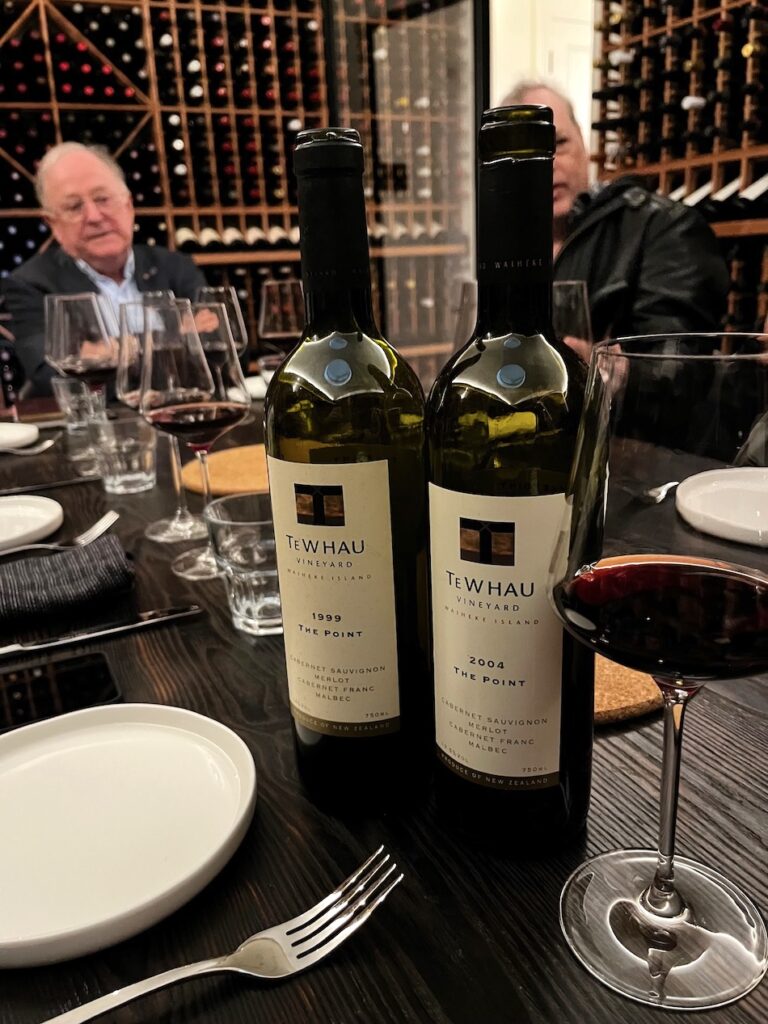
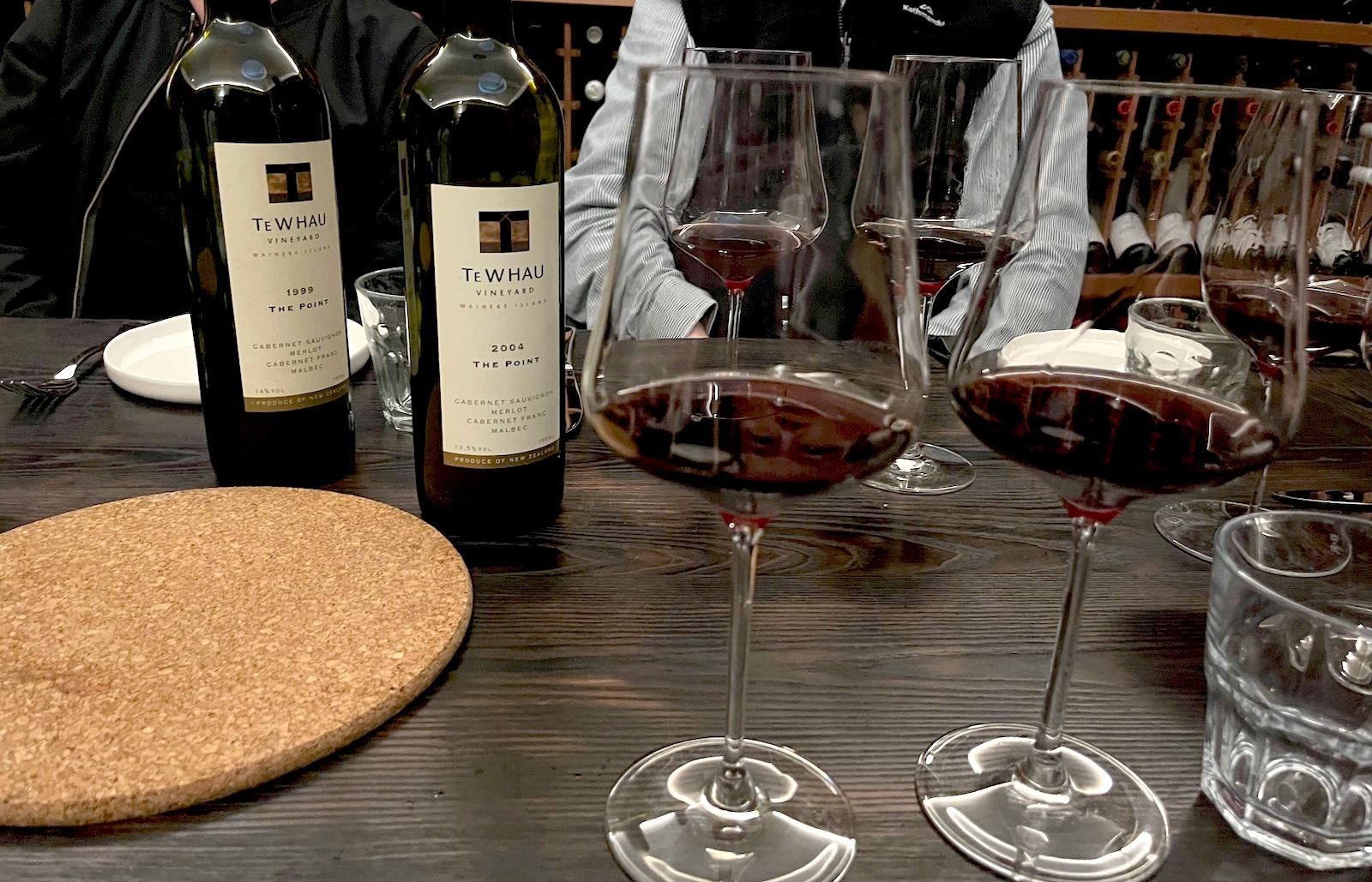
We start with two early vintages, and a Venison Tartare. The Point 1999 was made from three-year old fruit, and, as are all the bottles, sealed with a cork. When Hugh Johnson visited the site back in the day, he took a first look at the glasses before him before turning to his wife and saying “My dear, these wines are serious – I’ll need my notebook from the car!” The legendary British wine writer would go on to name the winery in his exclusive global top-200 list.
The 1999 is really good, but, stops short of being amazing. Plenty of cassis, mulberry and plum flavours, but it is The Point 2004 that wins this pairing. Much more perky, with great concentration and a distinct Cabernet Sauvignon identity. A linear acidity that is nonetheless well integrated, carrying the wine to a lengthy finish.
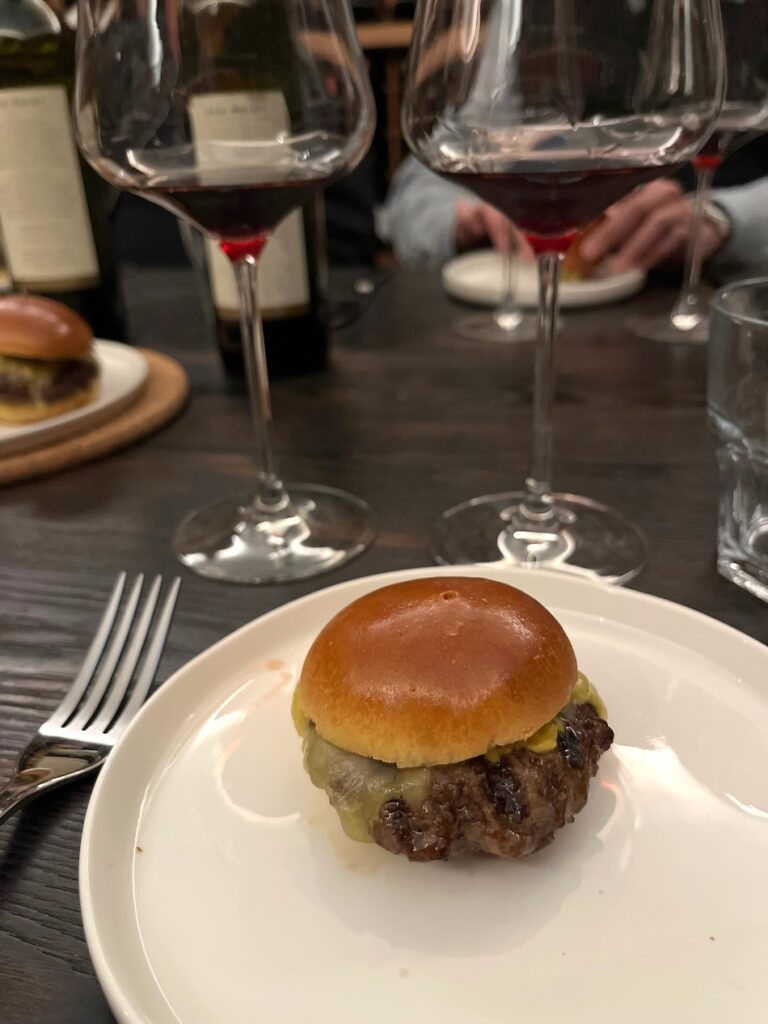
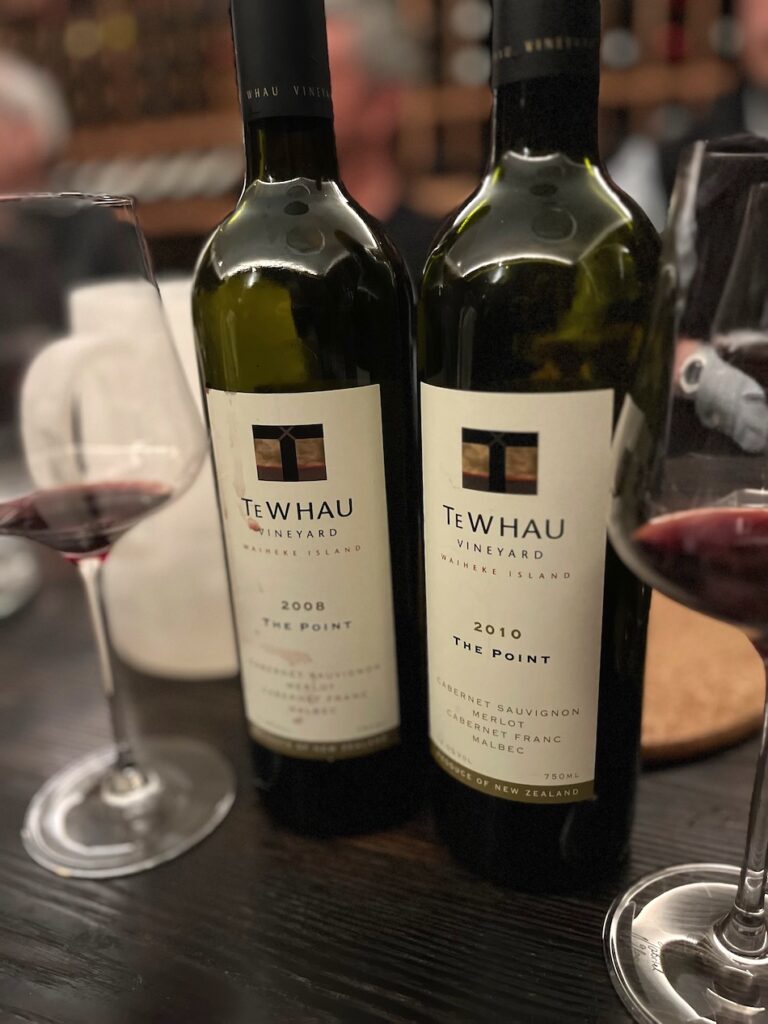
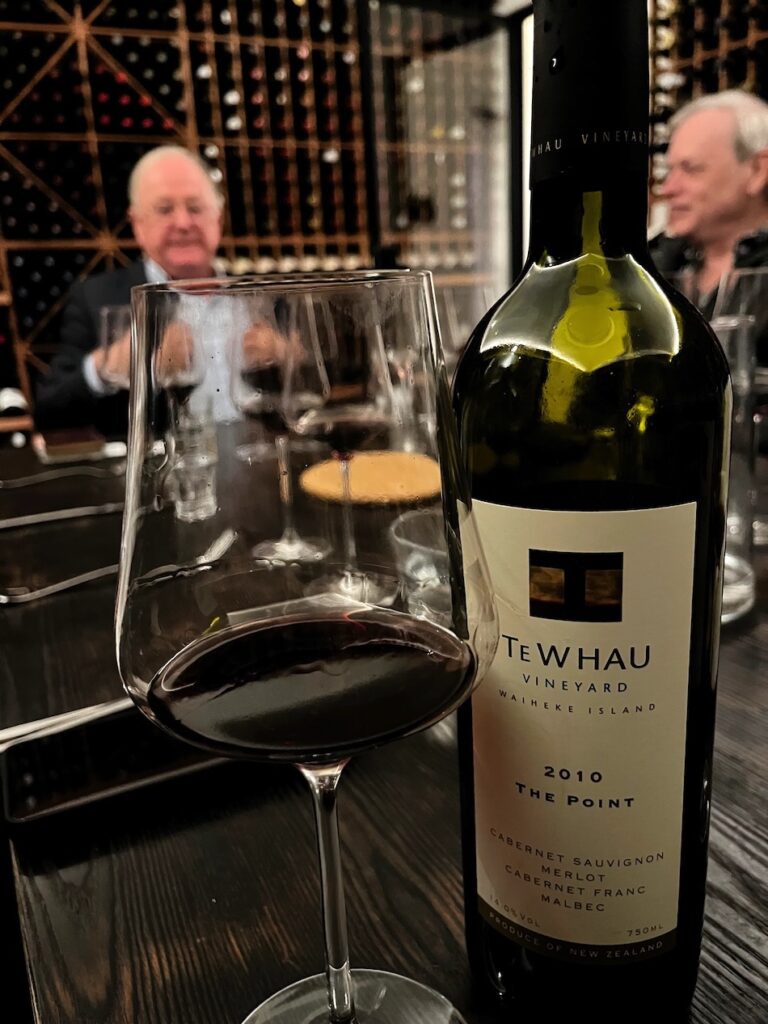
Another pair of vintages gets a boujee Beef sliders food match. Mini burgers with a gourmet slant. The Point 2008 is a deep black-red colour, with a bouquet that mixes ripe fruit and floral notes of rose petal and lavender. As earlier though, it is in the shadow of the second wine in the glass – a rather superb tasting of The Point 2010. As elegant as it is bold, this is a blockbuster of a wine. The intensity is striking, with a depth and tone of great Cabernet, complemented beautifully by lush Merlot fruit, and some grippy tannin. The structure allows the powerful flavours to sing – one of the best New Zealand iterations of this style of wine that I can recall.
It had been such a surprise hit of a previous dinner at Steven’s that Phil decided to mark a return of the epic Cauliflower, blue cheese and truffle soup – to pair it with a couple of more recent vintages. Now, not every year is ideal for growing grapes on Waiheke. In harder years, Te Whau would produce a ‘Petit Point’ wine. But although the 2012 was a challenging vintage which saw a season characterised by relatively poor weather, it did have a good indian summer, which just saw the grapes reach ripeness in time to make The Point 2012.
Steven reviewed this in August, noting “smooth, matured fruit sits lightly and elegantly on the palate and is showing secondary development. Drinking beautifully now, and expect to hold at this level before moving into more tertiary phase.” The Point 2013 comes from one of the highlight vintages of the last few decades. Not as power-packed as that 2010 – this has some way to go if it aims to reach that level. Still quite primary and bright – the fruit showing plum and blackcurrant with a cool, minty edge. Fine tannins and lively acidity merge with a cedar note from the oak. Quite linear and tight.
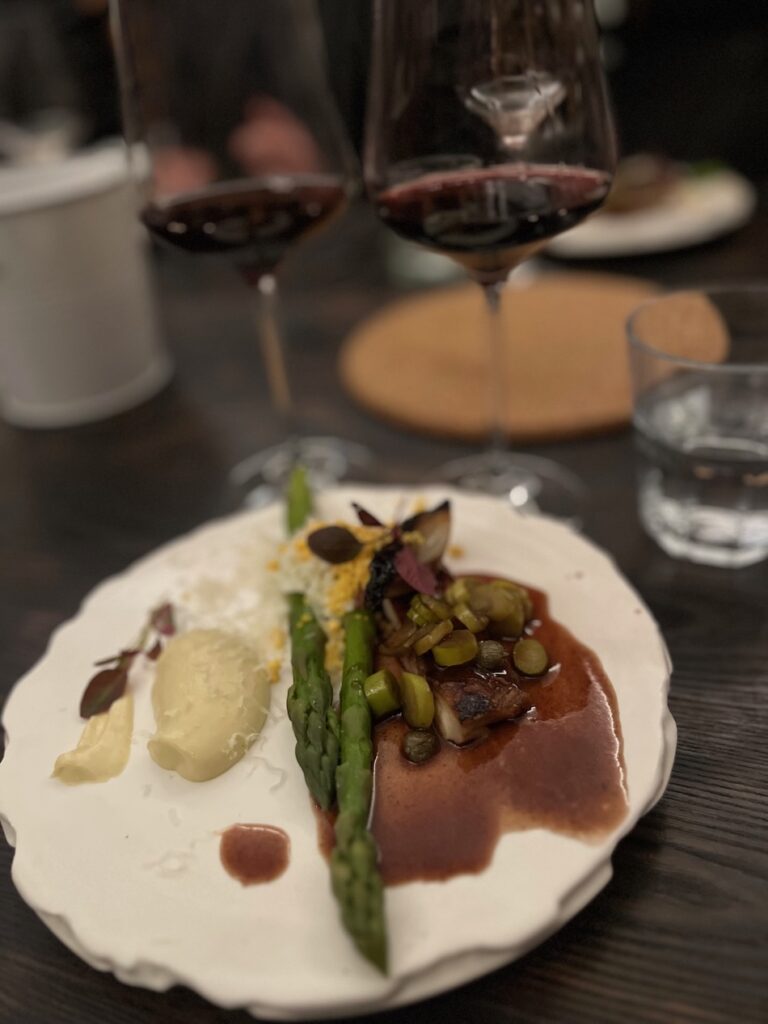
We’re onto more food again – our pair of mains starts with Spring asparagus, crispy chicken with a Portobello mushroom and truffle purée, but this is the last pair of the Bordeaux blends. The Point 2014 is in a very happy place (compared to the slight reticence of the ’13) with a vibrant dark ruby colour matched to fruit flavours that include some deeper reds as well as the black – despite being nearly two-thirds Cabernets. A touch of redcurrant and pomegranate with black pepper and graphite. The Point 2015 was the last vintage and the youthfulness shows in the brooding, inky depth in the glass. Fine tannin is layered with spiced oak, but contrary to that dark colour, the palate is only medium-bodied. Soft, balanced and well-proportioned, it has a decade of development ahead, but drinks very well tonight.
Syrah from Waiheke is all worthy of your attention, and has been winning awards for years. A diverse range of styles is produced, but I’ve picked a Waiheke Syrah in a blind tasting line up before, based on a certain plushness to the fruit, and generous balance. It doesn’t have the grunt or minerality that you might see from other wine-growing regions that produce Syrah – like Gimblett Gravels as one example.
To finish the evening, we have a run of four vintages of Te Whau Syrah, and they are matched to Smoked beef eye filet, beef cheek and seasoned vegetables, plus a sizzling dish of Potato bake for the table. Again, there’s a variation from growing seasons, with the cooler 2012 sitting next to the legendary 2013 – and then a pair of very good years. Both the 2014 and 2015 vintages on Waiheke Island were well-regarded on release – producing wines with plenty of ageing potential.
Syrah 2012 immediately shows a medium-bodied European-influenced elegance. A seamlessly balanced structure does allow the fruit to swell through the palate, but it doesn’t rely on ripeness to make its mark. The Syrah 2013 is more approachable than the Bordeaux Blend from the same vintage. Blind, this could easily be a northern Rhône style, but the plushness of the fruit would give you second thoughts. Teasing with white pepper and a bitter chocolate edge, it has a well-rounded texture, and is drinking beautifully tonight.
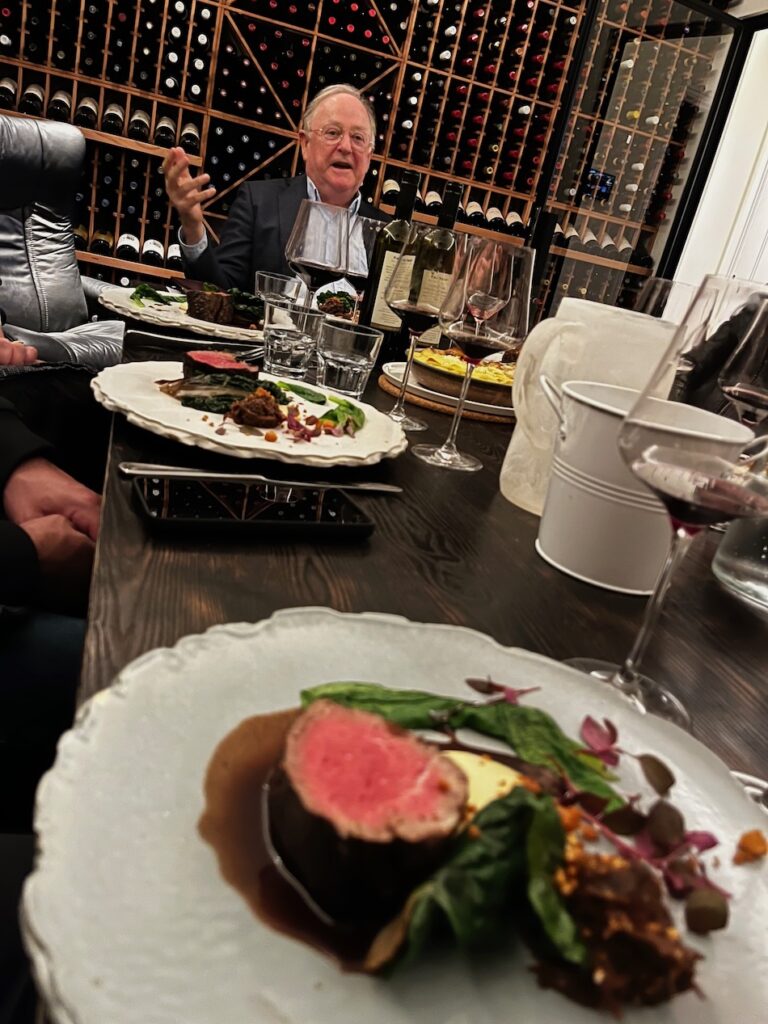
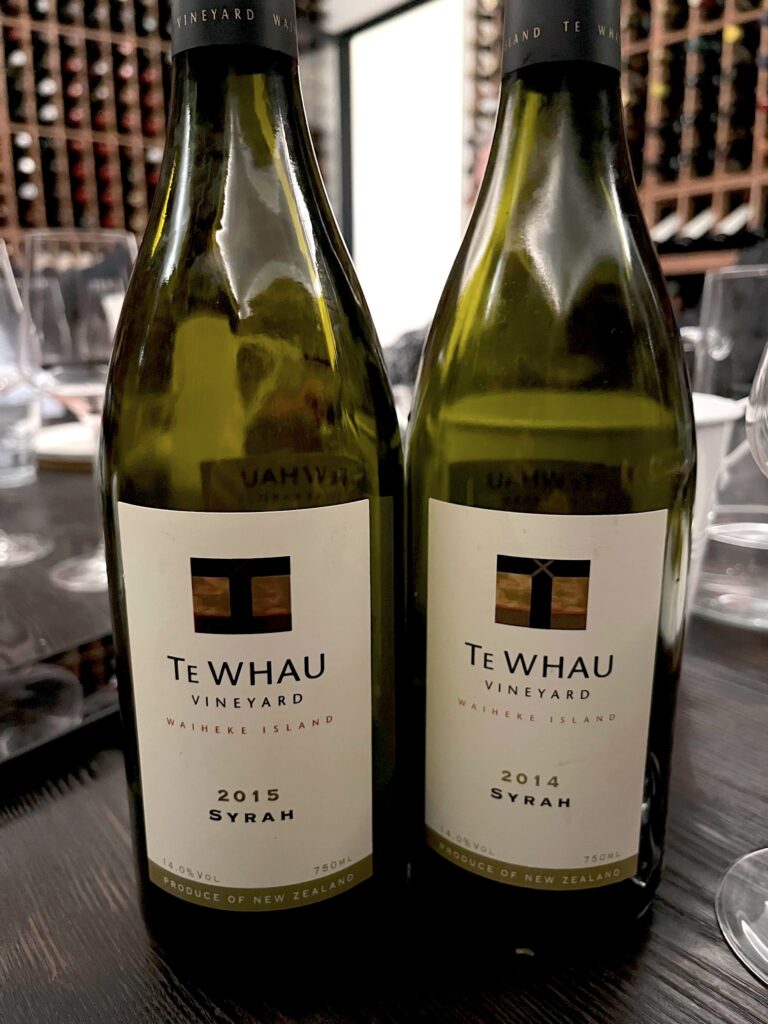
The complex, Syrah 2014 has more fruit-forwardness, with glossy flavours of boysenberry, cherry and black plum – but, again, it is the medium weight of the palate that delights. Acidity, fine oak toast and tannin play equal parts, and all supporting the fruit. Syrah 2015 leads with spice – cloves, nutmeg, sumac and a touch of tapenade. Violet and lilac florals add delicacy and prettiness to the bouquet. Black tea tannins bring it back to form and focus, with some grip and backbone.
That 2015 vintage was the last production. When they stopped wine production, closed the restaurant, and sold the property in 2017; the main building housing the winemaking facilities was converted into a private residence. However, the vineyard lot itself was separated and the grapes are still used. Tantalus Estate, in the nearby Onetangi Valley have approximately 40% of fruit from the vineyard in their excellent Cachette Chardonnay, for example.
As someone who has worked in publishing for forty years, and would happily add the title ‘storyteller’ to my CV; I did enjoy hearing the anecdotes from across the years. The label may be gone, but the bottles pop up in the secondary market every now and then. To hear the background to it all made the wines even more precious and enjoyable. Steven has already had several such nights at his pad (Gordon Russell, Hugh Crichton, Puriri Hills, Te Motu amongst others) and hopefully I’ll have a few more to report on going forward.