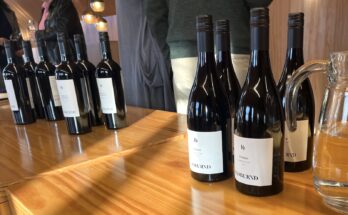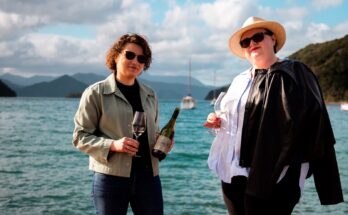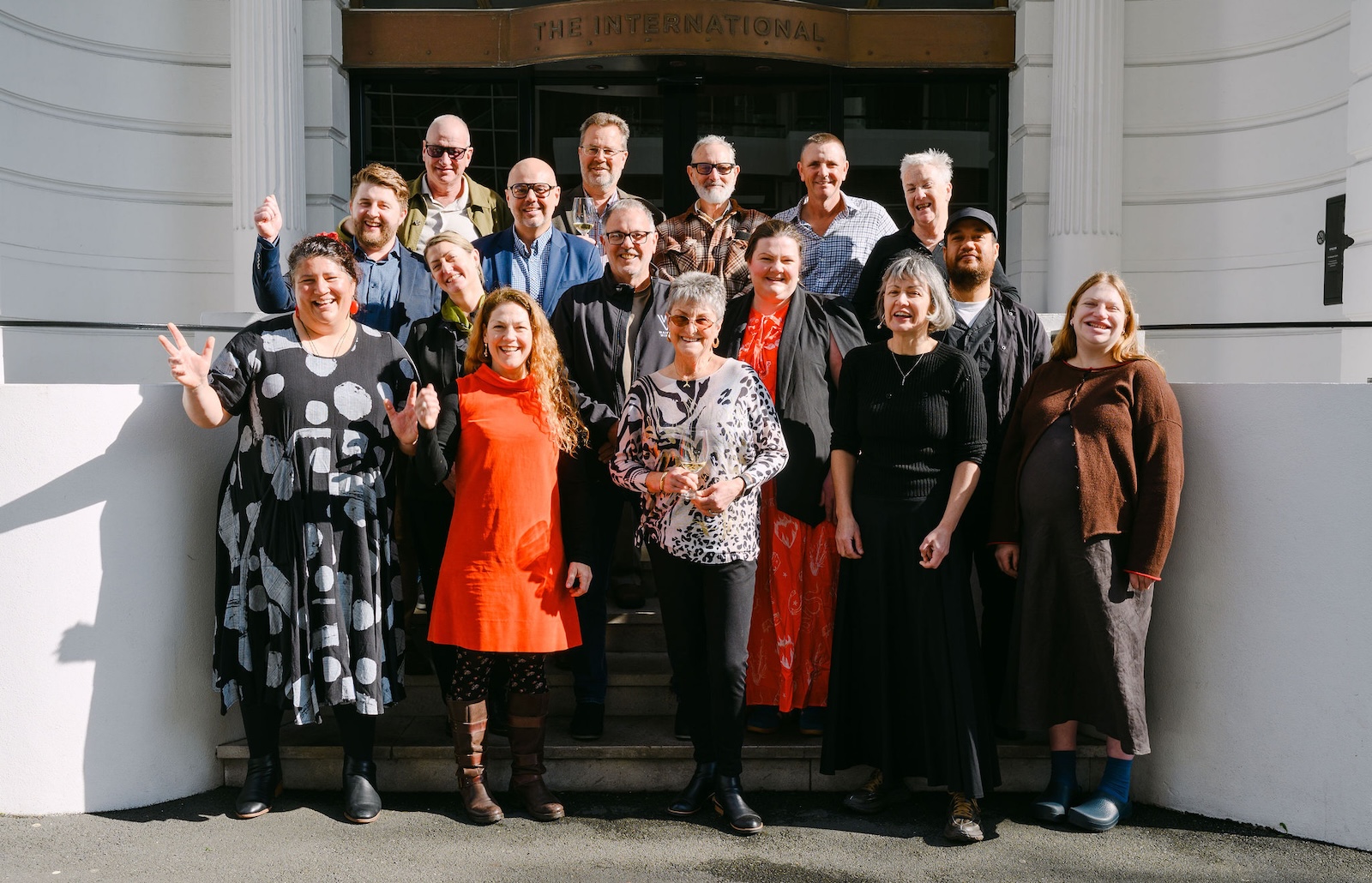
The Two Terraces Vineyard held a Tasting in Auckland last week. I don’t know of any other vineyards that will host a showcase. Individual labels, or groups, or organisations, or regions, yes – but this is just one vineyard (with two terraces). It’s unique, and it is extraordinary to see the line-up of winemakers present at Onslow. These are the ones who make the wines that are the face of the vineyard – twenty of them, taking different parcels of grapes to craft their own expressions.
Their client list reads like a ‘who’s who’ of Hawke’s Bay wines. A mixture of the established and young guns. Warren and Lorraine from Bilancia, Oscar Bish from Tony Bish, Smith & Sheth and Pyramid Valley, Decibel, Wairiki and Easthope are all present alongside the new guard of Halcyon Days, Tawhiti, Three Fates, Swift Wines, Huntress and Amoise.
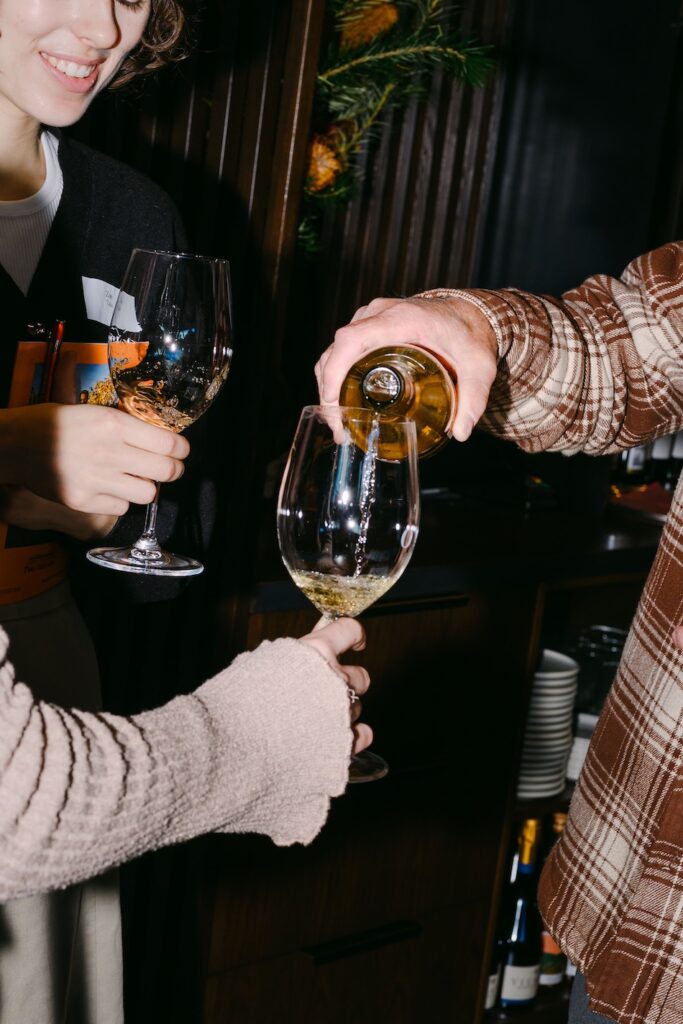
These winemakers have beaten a path to the coveted fruit that comes off this riverside terrace. I spoke to Jannine Rickards from the Huntress label, and it was clear just how stoked she was to have been able to get some for her Huntress Hihiri Albariño 2025 and the Huntress Puiaki Chenin Blanc 2025. Daniel Brennan is also making a couple of wines (also Albariño and Chenin Blanc) from the vineyard.
When I spoke to him around five years ago he had expressed a hope to have his own ‘home’ and vineyard – but given the current uncertainty around wine consumption and some vineyards not even being picked in the last vintages – I think he is doing just nicely having access to a resource like Two Terraces.
The growers have just had to come up with ever-more elaborate ways of keeping everyone happy, with lists and sub-lists balancing wants and connections.
When they first broke ground, the plantings of Gamay Noir and Chenin Blanc came from suggestions from winemakers, and Ian is keen to keep up dialogues with what the producers are looking for. They tend to have an open door policy – to the point where a rarity that is a diverse collection of independent makers gathering together in one place to talk about one thing – does actually happen – in the lounge of the Quinn’s house overlooking the top terrace.
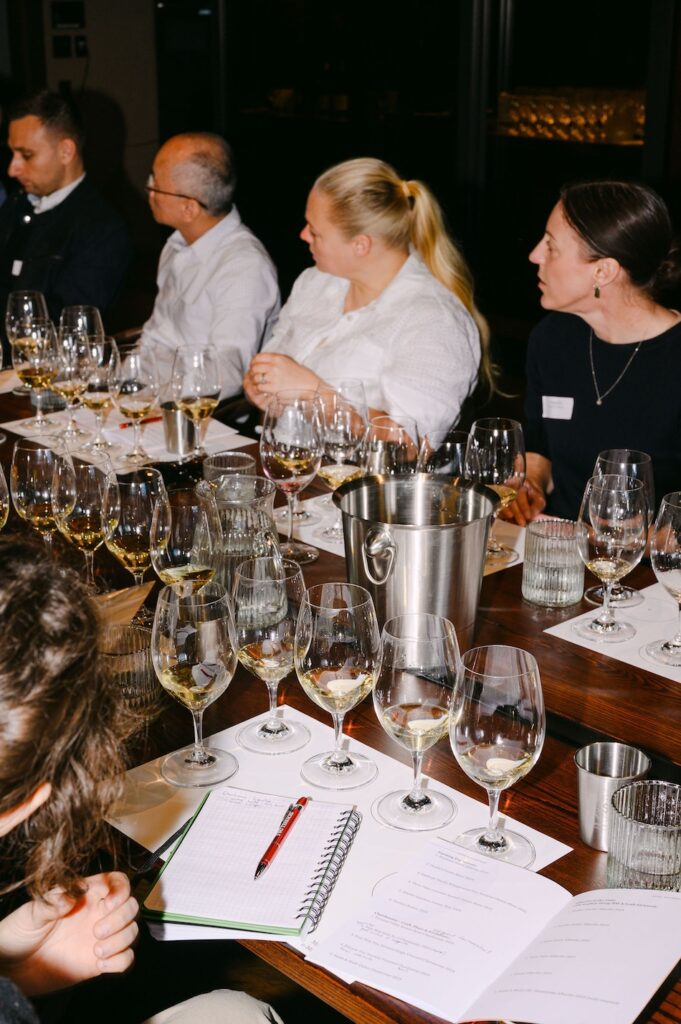
There are three Masterclasses through the day. In the first Ian Quinn talks about the concept of ‘Farming for Terroir and shows a range of white and reds. Then there is ‘Chardonnay – Craft, Place and Evolution’. As you can well imagine, I put my name down for that. The session on ‘Albariño at the Table’ with Stephen Wong MW and Leah Kirkland looked interesting too, with dishes on the table alongside the wines.
The Chardonnays show a finesse and elegance, with a few signature elements woven throughout. One that stands out is a savoury phenolic thread that Oscar Bish is reticent to declare, but does think it is something along the lines of ‘culinary herbs’. I see freshly sliced fennel certainly. The main difference between the Chardonnays at the Masterclass is the winemaking. Oak tends to stick out when used with more intent – but I like that. There is a brisk acidity as well. They can get a thirty degree diurnal range in temperatures – from 3 degree mornings to 33 degree afternoons. A few wines are made where that style is blended to balance wines from the plains – such as Smith & Sheth CRU Heretaunga wines (both the Albariño and Chardonnay).
Many of the winemakers will trust the fruit to the point where indigenous ferments are the norm. The soil health encouraging a diverse range of plants alongside the vines, and the rude health of what comes off as a crop doesn’t need any prepackaged yeasts to help it along. As Oscar puts it “There are lots of little decisions along the way that help to express the vineyard”. One of the most important decisions is when to pick – so keeping in touch with Ian Quinn is crucial. The weather, of course, can be crucial. But when they decide to go, Oscar’s crew go hard and aim to finish picking by lunchtime. Tony Bish is often on hand to do some foot stomping directly in the vineyard – Oscar’s reason is “We love solids in Chardonnay” so they try to get some skin contact with juice before it hits the winery.
Warren Gibson gives us his idea of “controlled neglect” as one of his cornerstone methods. “What you don’t do is as important as what you do” For him turbidity is important too – and hand-picking. “It’s hard to make great Chardonnay without hand-picking, and you need texture and phenolics too”
Photos by Jinki Cambronero