In the next instalment in an occasional series here on WineFolio, where I’m looking at how wine moves around New Zealand – from retail, to online, to distribution, to marketing, to auctions… and today with importing. I’m talking to Tim Fenwick about how he ended up importing Grower Champagne into New Zealand.
Tim: My beginnings were food. I finished school and went to study to become a chef. I studied for a couple of years and worked for about five years in the industry, in Christchurch. But it got to a stage where I decided it wasn’t really something I wanted to do – being in the kitchen. I wanted something beyond that. So went to University and did an International Business degree, with a bit of Spanish.
Then I went to Spain for a year – lived in La Rioja. Drank great wine and ate great food. Then I came back and finished off the last six months of my degree. Went to Shanghai for an internship. Came back, looking for a job and did a couple of months with Greystone. And all through that studying period I’d sold wine at the Farmer’s Market for Terrace Edge, for my friend Pete Chapman.
There’s always been a wine interest. And a whisky interest. Being in Christchurch you get inspired by Whisky Galore. But then it was probably cigars that got me into whisky! I think it was the summer of 2009 – a buddy and me got into cigars quite heavily. I was still a chef. It’s so fringe though – and the smoking thing is so taboo.
WineFolio: I do find though that it is the edges of things where the interesting things are happening though?
TF: Yes, at the fringe you’ll find those enthusiasts and it makes things more exciting. And like being a chef, cigars is all about taste. It is principally taste and experience. Some of the most engaging foods are things that engage more than one thing. It’s not just flavour, it’s texture; it’s the people you are with; the conversations you have, and the environment. We tried to figure out how to best pair that cigar with various beverages. Start off quite light, with a Chardonnay then move into some red blends.
WF: Are you into sherry – having lived in Spain?
TF: Very much into sherry. And that style of wine – like Jura and oxidative whites out of Rioja. Even the sweet sherries.
WF: And was the decision for Grower Champagne part of that fringe enthusiasm thing?
TF: That, and having bought a business that imported Grower Champagne! I moved to Auckland for a job in a small business in 2014, and I loved the whole hands-on approach in the small business environment. To be involved in all facets of the business and have relationships with suppliers, partners, consumers and retailers. Having flexibility and being nimble was something that I wanted to do for myself.
So, with my wife, was debating whether we set something up, or what do we do? And this cropped up – a supplier of Grower Champagne through FMCG to market – which I’d been working in. And it aroused some interest. We met with the couple, and it felt right… and we settled in February 2025. We’re around a year and a half into it. Lots of learnings. We’re trying to flesh the business out a bit.
We’ve got a wide range of styles of Grower Champagne, but it often got to the point in the conversation with a restaurant or retailer where it was “Great – what else have you got?” So we have partnered with a Negociant out of Bordeaux, and have met some wonderful people through that as well. It will bump up our range at various price points. That has just arrived and we’re about to hit the road and sell it.
WF: Could it be a challenging time to be starting that?
TF: It is, but it is really challenging to sell Grower Champagne, or any Champagne, in the middle of winter. We’re bringing in some great value modern Bordeaux red. We’re also looking at some dry Furmint from Hungary as well. I guess I’m attracted to some of the offbeat things, but I think there’s place for styles outside the things we’re so familiar with.
In a wine environment where there’s a personal selling element, there’s enough space in the conversation to point customers towards something a little bit interesting. It might offer a bit more value as well. Finding a good Chablis for under $50 for example – which can be difficult these days. Where traditional styles and varieties are getting more of a reputation, then costs are up.
WF: What about English wine? I’ve been researching that recently.
TF: Well it doesn’t represent a massive value proposition. They’re great, and I’ve really enjoyed them, but they’re not $30 a bottle. I’ve seen some English sparkling in New Zealand, but it hasn’t been at the cheap end. It’s closer to $100. It’s intriguing and it is great juice.
WF: Who are your current customers?
TF: Our main route to market is wine stores, and we are also listed through Foodstuffs. We’re in around 50 New World Supermarkets nationwide. They are the more premium stores. The best one we ever had was New World Victoria Park. They had everything of ours. New World Eastridge has everything of ours. Seven SKUs of Grower Champagne sitting at the end of an aisle. We’re doing in-store demonstrations and tastings so we can deliver that message to people.
It’s hard yakka in a supermarket, but they provide a shelf where you have the opportunity to sell some good volume, and connect with a very broad market. And if your product suits that environment, you’ll do very well. You have to maintain your ‘approved supplier status’ but I had done supplier audits with my previous job, so it was very familiar to me.

WF: Do you have to travel to see these suppliers?
TF: Before we signed on the dotted line and actually settled, we planned a trip to Europe that involved seeing family for a week, and then went to Champagne and visited these five families who would become our suppliers and business partners. My parents had my eldest daughter whilst we did the trip, but we took our youngest – who was 5 months at the time. It was January and freezing cold, so we had him in this snowsuit. We took him into all the caves and the first thing you always get shown is the press!
For Champagne producers – in order for them to have that Récoltant-Manipulant status, they need to have their own press. They also need to own their own land, and make their own wine under their own label. So the press is a symbol of independence, and a sign that they’re doing things kind of the hard way. The easy way to be a grower in Champagne is to have your land, tend it minimally, pick it as early as possible, and sell it off to one of the big guys.

WF: I assume there are co-operatives as well?
TF: Yes, people talk about a Grower Champagne being ‘RM’. One of our producers – Marion Bosser – a fantastic Mother and Daughter team and their label has ‘CM’ on it, for ‘Cooperative-Manipulant’. But they grow their own grapes in a Premier Cru village, and press it in the village press. So, is that a true ‘Grower Champagne’? But you see it in person, and it very much is.
And then there’s that micro-producer level in Champagne where it is a ‘garagiste’ approach, where they would never be an ‘RM’ because maybe they rent the land. I think the ‘Grower’ label is a bit broader than maybe what is taught in a WSET setting.
WF: I think that story is becoming more valuable. We talk about young people not drinking as much – but they are looking for authentic stories. I think they see through click bait and AI, and are looking for real experiences. I also think there’s a movement away from things like wines that are only drinkable after 20 years. You see people like Halite or Chateau Garage making The Real Review list of Top Wineries, and that’s very encouraging.
TF: People love a soundbite like ‘young people drinking less’ and there are some genuine reasons why that might be correct – like having less money in tougher economic times. The better perspective is to choose quality over quantity.
WF: How are you going to decide what else you’ll have in your portfolio?
TF: I think I back my palate. Understanding flavour and texture and so on, has been something since chef days. Then galvanised through interest in cigars and whisky, coffee and wine. These are things that I have pursued, and I have done WSET Level 3 in Wine, and then in Spirits. I found Spirits tough! Whisky I’m all over, but everything else – the variety over every culture in the world is quite a learning curve!
Check out the range at https://threefrenchvines.co.nz
Photos:
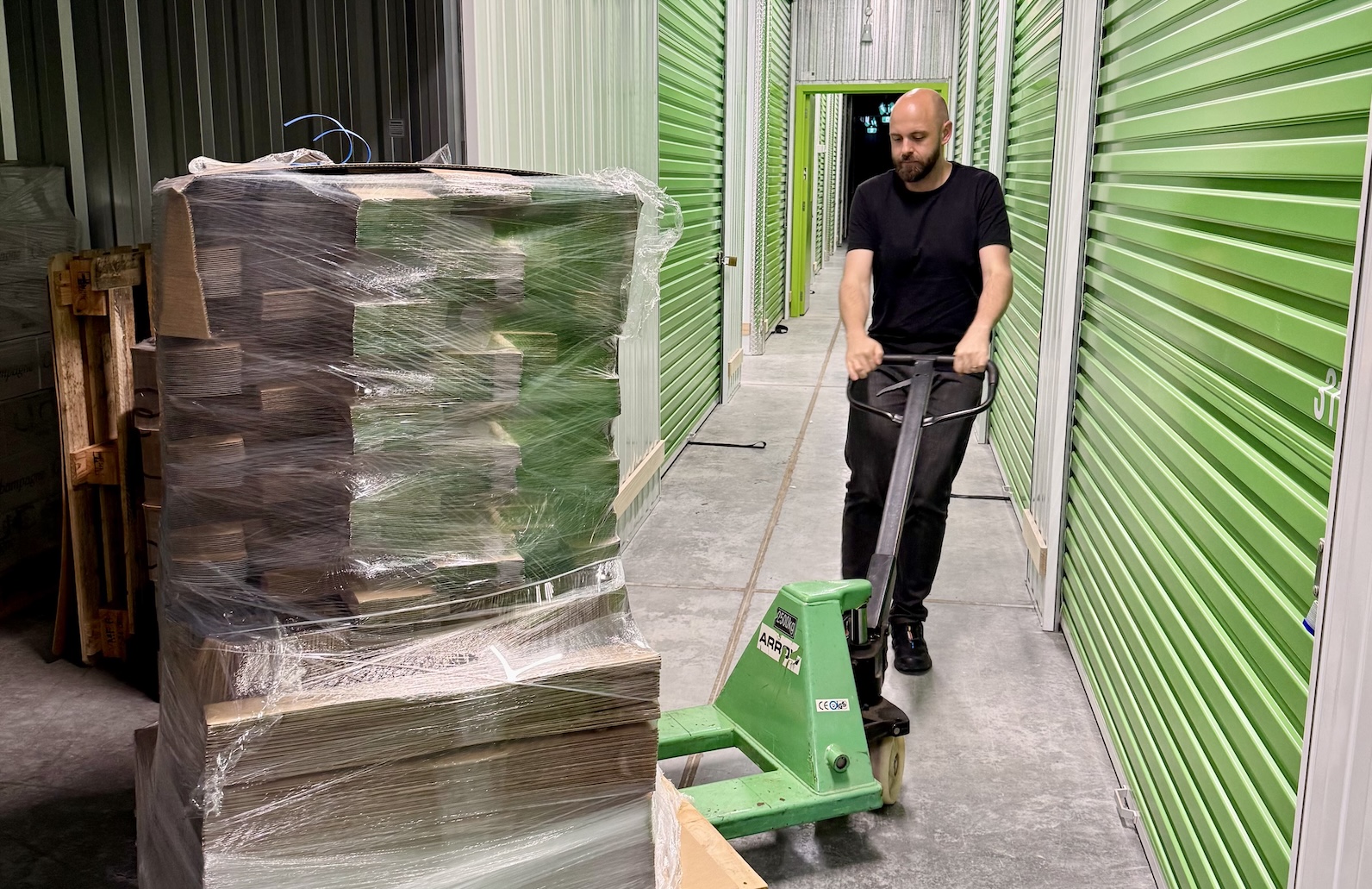
- Operations: the day-to-day reality of running a small business
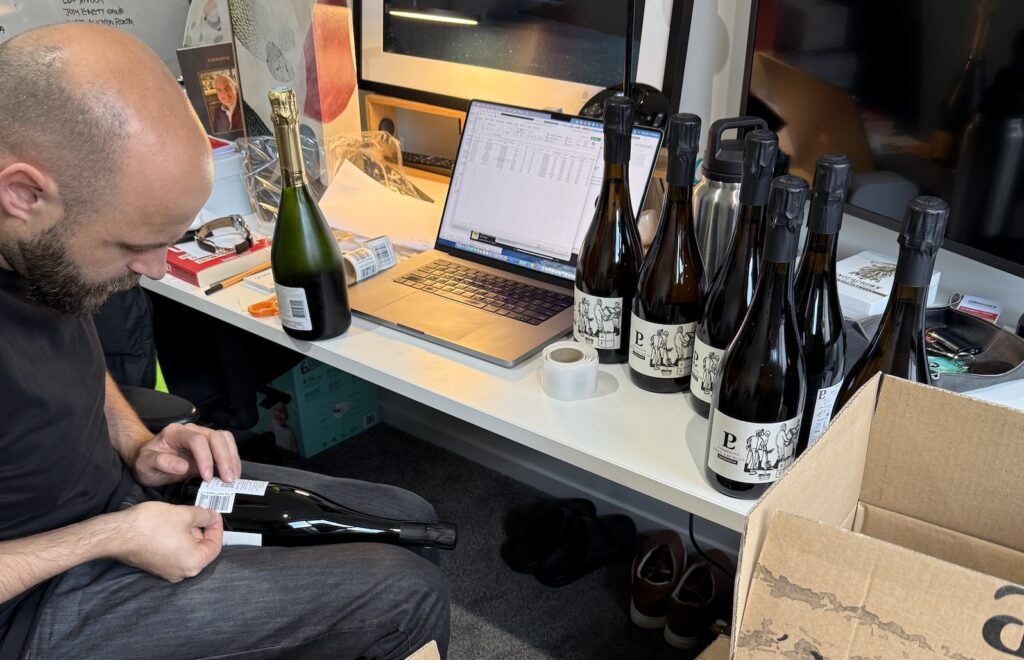
- Labelling: more reality of running a small business
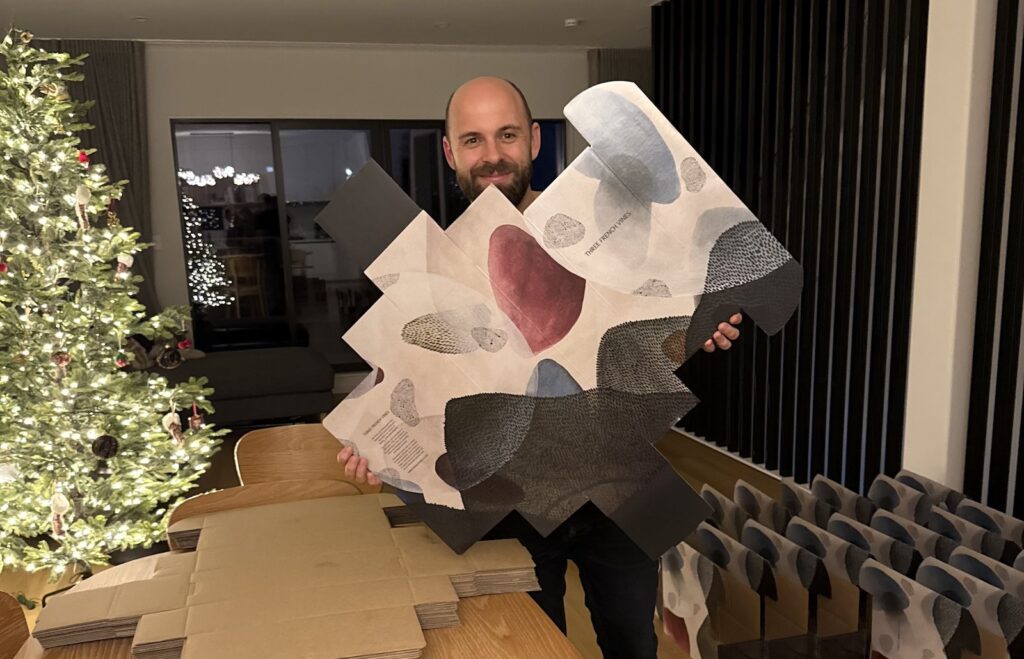
- Tim preparing corporate gifting orders for Christmas
- Tim and his son, Parker, tasting with Gauthier Monmarthe at Champagne Monmarthe
- Elodie and Bernadette Marion of Marion-Bosser tasting their Blanc de Blancs Extra-Brut