Today I’m talking to Anne Escalle – the General Manager of Edmond de Rothschild Heritage NZ. She was born in the Rhône Valley – in France into a family of wine & food enthusiasts. Having graduated with a Masters degree in Viticulture, Vinification and Vineyard Management from the National School of Agricultural Engineering in Bordeaux; her passion for wine led her to settle in Languedoc Roussillon for 10 year, as a viticulturist-consultant for premium wine estates. In 2007, she moved with her young family in New Zealand, where they all fell in love with the kiwi way of life.
For 12 years, she has been the viticulturist of the Ara vineyard in Marlborough. In 2019, she joined Edmond de Rothschild Heritage NZ to focus on what she considers the most important aspect of her GM role: excellence in wine and management, as well as a respect for the culture and the land. The mission started with Rimapere in Marlborough before expanding into Central Otago with the acquisition of Akarua.
After meeting Anne for the first time at an evening presentation of Akarua wines in Auckland, I wanted to ask a few questions to get a better understanding of what Edmond de Rothschild Heritage NZ was doing in New Zealand. Cue a Zoom meeting and trying a few of the wines – both from New Zealand and France.
WineFolio: What appealed to you most about this particular role?
Anne Escalle: I’ve been in viticulture for a long time, and often you are in your vineyard doing plenty of things. You work with your team, but you’re not always in contact with the final consumer. What I really like with what I’m doing now is that not only am I in boots in the vineyard when I can; but I am in the winery; I am working with the freight company; and visiting markets. Then I really can bring the vineyard to the glass of the consumer. And be genuine about it – because it is in fact what we are doing. It’s the everyday.
There’s not too many people between the hard work and the pleasure in the glass. And it is sort of finalising all the things I’ve done during my career. I do hate it when people think it is just one person who does everything. There’s always a team. And the fact that you’ve been helping them gives an understanding of what they’re going through. And that they are the expert – doing far better than you can do yourself.
But also keeping the red line between what they can do, and what do we need to do to go in the direction that we want to go. To express the best of our terroir and make the best wine we can. And within the scope that we are working in – which is that of the Rothschild family. They have an idea of where they want the wine to go. It’s good to have a frame, because within that you are free to optimise. But I am the red line, trying to keep everybody moving in the same direction.

I’m also checking with the consumer that we are not off target as well, because at the end of the day, we can have any good idea and think it’s wonderful, but if they don’t like it then that’s not what we should be doing. We should do what they love. What they want to drink.
WF: As one marker – how is the BioGro certification coming along?
AE: It’s a little bit like those Russian Dolls. You open one and you have another one inside! Something like moving to optimise our terroir using organic techniques has been quite easy, because the two vineyards we have got, already have a certain balance. We’re not asking too much. The vines were solid enough to go through that change without losing any quality.
We are certified since 2024 in Rimapere, and will be next year in Akarua. That is going wonderfully well and the wines are lovely. But, God, the administration to be able to put the BioGro certification on the back label for all the countries we export to, is a nightmare. And you know – that’s a shame that those things have to be so complicated. There are 20 countries that don’t even recognise BioGro. That part, I underestimated.
WF: How much do you think the consumer really cares about something like an organic certification?
AE: There’s a range of consumers. You will go from people that have no idea why a wine shouldn’t always be organic, you know? That wine is a thing that is just done naturally – from the earth and the sky, or whatever, and it should be organic. There’s also people who think that you should be doing the maximum that you can do – to respect everything. An example – if you buy a Chanel dress, you would think that there’s no child labour used to make the dress. That it is highly paid people that are putting their hand-crafted art into it. It’s not proven – it’s not on the label, but the brand is carrying this image.
If you have a brand that is already well known, you don’t need that as much. For example, in Central Otago the best known brand is Felton Road and they are, I think, Demeter-certified. But a lot of their customers expect them to be the best – or doing the best they can – because they have this name.
The problem is when you bring your wine to a region of people that don’t know you. Akarua is well-known in New Zealand but it wasn’t distributed in a lot of countries. When you go there you are a brand new person. And then you have Rimapere that has been exported to many countries for ten years, but wasn’t well-known in New Zealand. So when you are new you have to gain the trust. And certification, for part of our buyers, is still important. If you are able to tell the story and show what you do – directly to the consumer – then those labels would be less important.
It’s how we bring what we’re doing, to them. We are distributing in eighty countries. That’s complicated but that doesn’t mean that tomorrow – with the AI and the special immersive experience glasses you can use, we couldn’t bring the vineyard experience to them. It’s a little bit of everything. A toolbox in which you choose the best, like making the best wine – you shouldn’t be limited.
At the moment we don’t have this information connected to our final consumer, so we rely, partly, on labels. Also, distributors, who are the intermediary between us and the consumer – are quite keen to have that. Because it is a hard job to select wines and it helps them to do that.
WF: Even when people look at wines in a shop – like the one I managed – the bottles on that shelf are there for a reason, and if you want that shop to stock your wine, it often means them stopping having the one that is already there. You have to win that spot.
AE: When you have people like yourself who bring the expertise to the person and aid them to make choice. The problem is that often we are losing track because buying is done on the internet, or in a supermarket. That’s not really our area as we are only in smaller shops, but even there, or in restaurants, it’s complicated to find a wine as people can’t always express themselves.
WF: You talked about a toolbox earlier – the last time I walked a vineyard, the Vineyard Manager was talking about getting a drone for spraying. Do you have any new innovations like that that you use?
AE: We don’t have drones, because it is quite small. We might use one for a photo, and it can be interesting for sprays. But for the moment, no. We have a lot of precision viticulture tools. Like sensors that can measure the tensions, or need for water that the vines have. And how they react to irrigation. It’s not new information, but it is interesting to get it this way, because it is continuous. Whereas when you do it with a pressure chamber you need to have no wind – and this is New Zealand, so that is a bit of a challenge.

We have some probes in the soil that measure temperature etc, so we do use technology to learn about how our vines are really feeling – not how we think they are! At the end of the day you also need a very important tool that is skill of the viticulturist that is working the vineyard. Or the guy on the tractor that will notice something different. I like that you still have those two levels. Technology, but still with ‘gut feeling’ because you are a human being. You will notice things differently from some camera or computer.
To walk the vineyard regularly, then your personal computer, that is your brain, will notice the things that are changing. It’s very important to keep that as well. In fact you have a very strong analysis system in your body. It is a difference in a craft vineyard, like we are, than to try and use one recipe for all of it. We will also look at the calendars of the moon as well as using a computer.
WF: What is the last skill or technique that you’ve learnt?
AE: I’m trying to push myself to use AI a bit, to understand how it works. I don’t want to become disabled with AI, when I hope it can help me to focus on where I can use my human skills. I am really just on the starting line, but it’s a must because tomorrow it will go very fast. My team has been using it for a wee while, and I have asked them to do it for me, but I need to learn.
WF: What differences will new ownership intend to make to a label like Akarua?
AE: They are part of the pioneers of the region, totally and we took the challenge with a lot of respect for what has been achieved by the Skeggs family. They wouldn’t have bought it if they did not like the wine. What the Edmond de Rothschild family structure can bring, is to take the wine to the next step, and to bring Akarua to the world. That’s one thing that an international company will bring.
They know that you need to invest to get to the next step in quality, or be more future-proof. Their scale and time is perhaps not what an entrepreneur in New Zealand can afford to be. They want to create something that will go through the generations. All the projects that they have done is on the same path. They want to optimise the place, invest, and create something for the future. To be organic and to use regenerative techniques was really the key.

WF: How do they see something like a Central Otago wine in that global view?
AE: From their point of view, Central Otago is one of those three names that come up when you want a nice Pinot Noir. Obviously you have Burgundy that has been at the top of the pyramid for a long time but is getting less accessible. Then you have Oregon that has a lot of energy and talent and is a ‘big’ Pinot Noir. And now you have New Zealand, but compared to the USA it doesn’t have quite the same population – and potential.
But something that is always important with the new generation – Benjamin and Arianne de Rothschild – is that they want something that is modern and elegant. For them, complexity and delicacy – not the big, heavy style. When they invested in Argentina, which was something like 27 years ago, they did it in Mendoza of course, and Malbec, of course. But in a high altitude place in the Uco Valley – 1000 metres above the plain.
They love New Zealand – it is super safe and politically stable. As an investor that is quite important. The only problem is that it is far away.
WF: And they see that there is more to it than just that New Zealand wine, in global terms, is good value for the quality?
AE: I really think that we are underestimated as producers of wine in New Zealand. We have beautiful terroir. We may lack a bit of experience, but there is a lot of talent and people are learning very quickly. We have the right variety and terroir and in just thirty years we have done what it took people a hundred years to get to. With Climate Change, New Zealand is in a slightly better position than other people.
The acidity – that can be a little too much in some wines – will in fact preserve the balance in the future. I believe we are too humble with our bottles. We are not expensive enough. Our highest priced cuvé – the Siren – is the one that we don’t have enough of. What I mean is when you have the quality and the right story, and put it on the right table, then the price is not the problem. You have to match your market with your product.
It’s important to have a range and to open doors. And don’t just market to your consumer of today, but look for your consumer of tomorrow. Make sure that your product is not pretentious and inaccessible, but have the best quality for each tier you offer. It needs to be good and have the right story – and in New Zealand we have that. We have everything that will make us a wine for tomorrow. We deserve our Seat at the Table, to reference that film.
WF: My most serious question today. Will you plant more Chardonnay?
AE: Yes. We did already, at the end of last year. And then we will again the year after next. A fallow year and then more Chardonnay is coming. We believe in Chardonnay. First of all, we all love it, so we don’t need to be pushed. The signals are strong as it comes back strongly in the premium markets. That are not all oak and not all fruit.

WF: Do you have any concerns over the future of people drinking wine?
AE: The next generation is not buying bullshit. They want to know the story and want to drink what they decide is good. The percentage of the next generation that is drinking wine is not as high, but the ones who are have strong opinions, and they don’t care what Grandad was drinking. I think what we are doing in the vineyard will resonate with them. I think they will try everything but not drink every day. This business is not producing ‘cheap wine’ but we need to be cautious because if we don’t walk the talk… We do need to make sure that they have the opportunity to try our wine.
WF: Well wine is not an essential item. Its purpose is to bring joy.
AE: Yes, it is exactly that. When I see my team having pleasure in what they are doing, and when the consumer is enjoying the wine and the story, then we are creating happiness. I like to be in the shadow of that – to be behind a name that captures that joy. When you see that the work is done and you bring it to the table and they have social enjoyment. I like it when they almost forget about the wine – it is just ‘in the air’.
I’ll be reviewing some of the wines on WineFolio in the next weeks. I already did the couple below, but look out for more – including the wines from France that are available here!
Akarua Dry Riesling > https://winefolio.co.nz/?p=13313
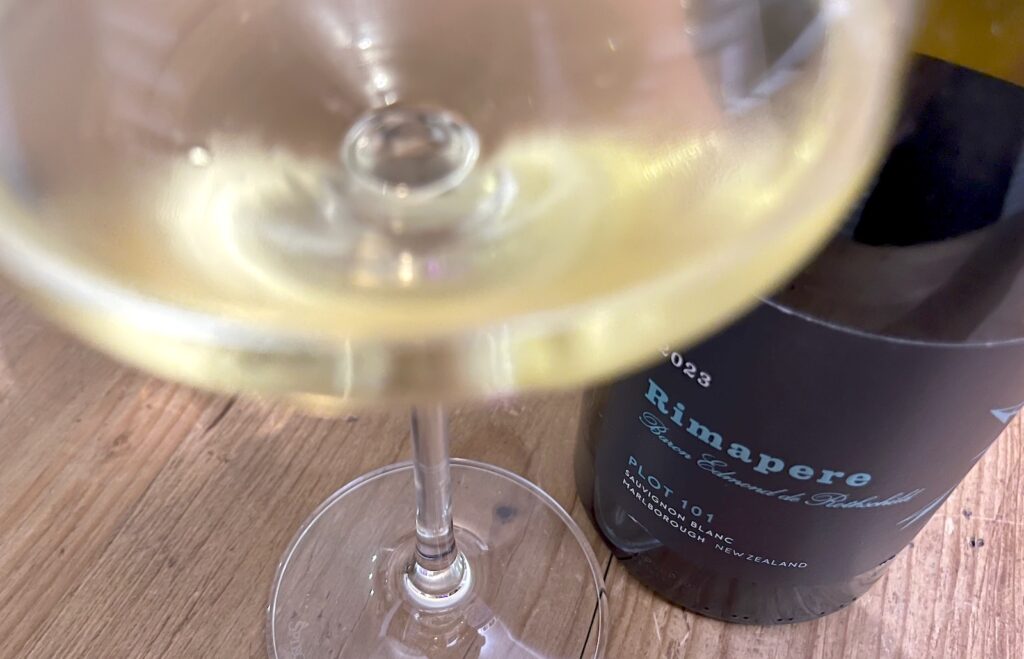
Rimapere ‘Plot 101’ Sauvignon Blanc 2023 > https://winefolio.co.nz/?p=13279