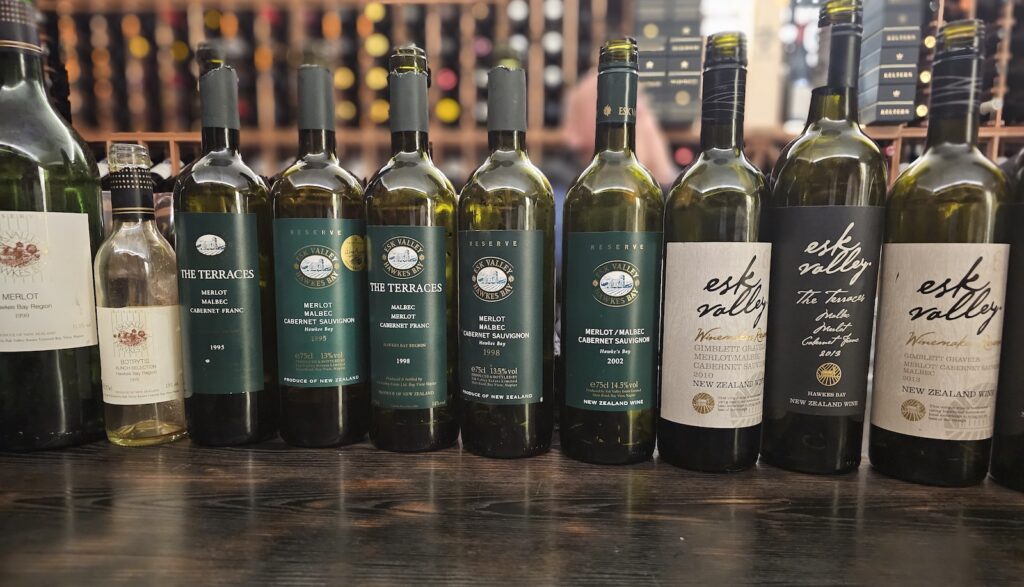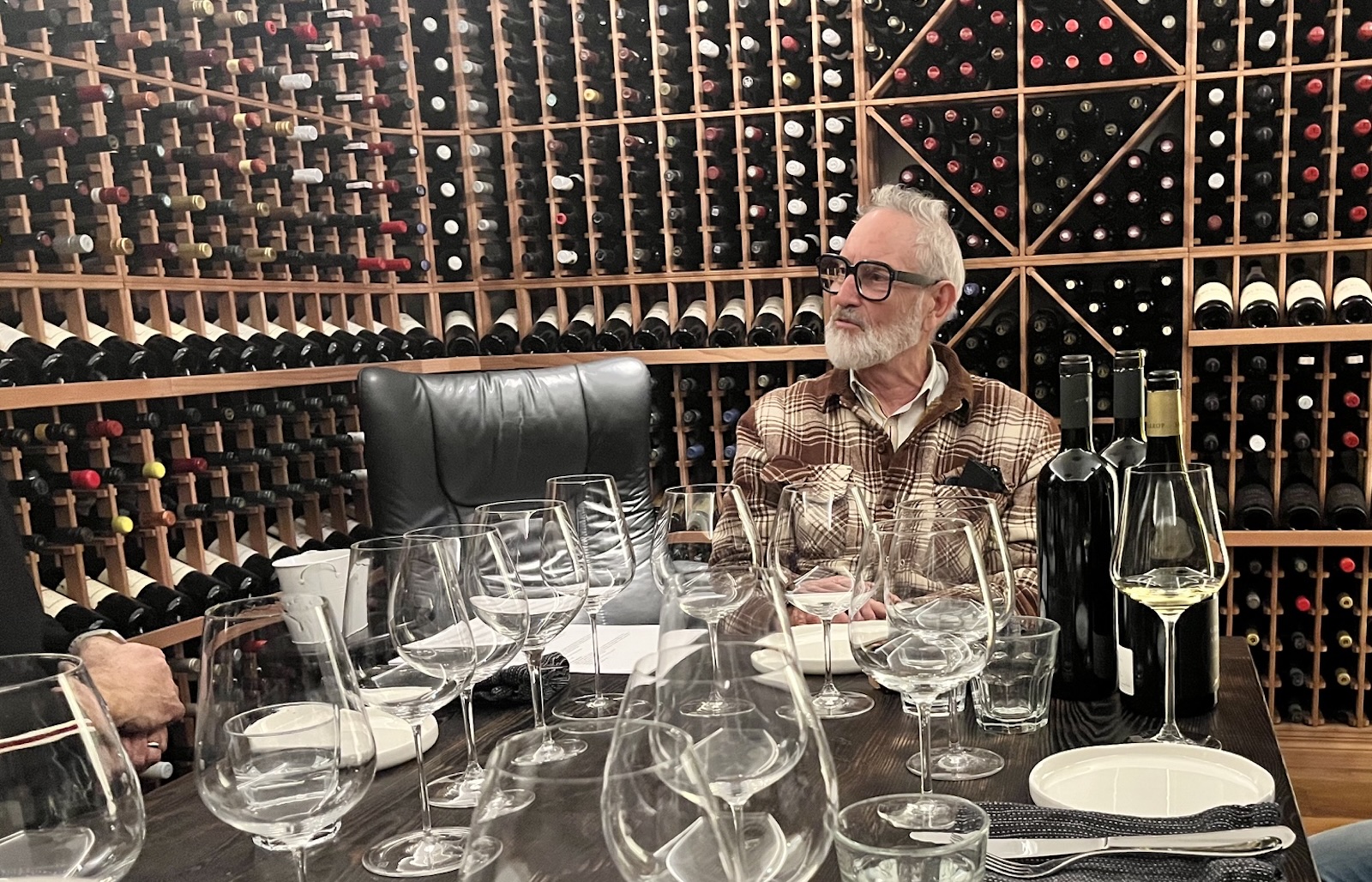
Gordon Russell spent over 30 years as the head winemaker at Hawke’s Bay’s Esk Valley winery, taking the helm in 1993 after joining as a cellar hand and assistant winemaker. He became renowned for traditional, hands-off artisan methods and pioneered classic regional styles, including New Zealand’s first Malbec, Verdelho and Merlot Rosé, as well as iconic red blends such as the ones we’ll be tasting through tonight – Winemaker’s Reserve red and The Terraces – the first wine to showcase what is now a fairly common Merlot, Malbec and Cabernets blend.
Under Gordon’s expert guidance, Esk Valley also had significant success in both New Zealand and International Wine Shows. He was given a fairly free rein with an instruction “to produce quality”. A full trophy cabinet was testament to the quality of wines they produced, and Gordon was honoured as New Zealand Winemaker of the Year 2007 at the Royal Easter Show.
The winery evolved to champion traditional techniques, such as the gravity-fed flow of wine, but also using open-top concrete fermenters, and techniques like hand-plunging for red grape extraction. The Terraces, from a steep hillside plot adjacent to the winery, quickly evolved into a true field blend, with the Malbec, Merlot and Cabernet Franc picked at the same time and co-fermented. There was some consternation when they pitched the price for the wine at the same level as Coleraine from Te Mata, but it was quickly clear that this was one of New Zealand’s finest red wines.
Esk Valley’s origins go back to Englishman Robert Bird, who originally built what was then known as Glenvale Winery and Cellars, back in 1933. Dig a little deeper though, and you’ll discover that occupation of this land goes back 600 years to the Heipipi Pa site that sat on the hill with the same shelter and outlook that the vineyard now enjoys. This was Hawke’s Bay’s earliest settled Pa, and known for the fact it was never attacked – probably due to its aspect overlooking both water and land. Many people lived there over a long period of time and evidence of its varying uses can be found with its numerous kumara pits and shell middens discovered throughout the site.
The terraces were originally excavated using diggers in the late 1940’s by Glenvale who planted the slope with hybrid varieties. However the low yields and sheer cost of producing anything from this block meant it was soon abandoned as vines, and converted to a pine forestry block. During the 1980’s Glenvale went into bankruptcy and Sir George Fistonich – founder of Villa Maria – took the chance to purchase the property. Esk Valley Wines was born. Gordon recalls an early meeting on site where the vision for the land was revealed. The pines went and the Terraces was replanted in 1989 – with its first small harvest in 1991.
A young Gordon was quick to realise that the Terraces were well suited to the traditional Bordeaux varieties, leading Esk Valley to be the first to start using Malbec as a leading component in their blends. For a while Gordon also gathered the nickname of ‘Mr Merlot’ due to his ability to transform the grape from a workhorse filler, to one of Hawke’s Bay’s great successes, making spectacular single varietal bottlings.
To celebrate his legacy, WineFolio contributor Steven Brunskill offered to host an evening dedicated to a quick trot through some of the (red) wine highlights of his career at Esk Valley. Another night will have to be scheduled to address his contributions outside of the Bordeaux varietals – Chenin Blanc, Chardonnay, Syrah, Verdelho – the list goes on. A combo of enthusiastic winelovers, standout vintages, and seriously good food by local chef Phil Clark makes for an entertaining few hours celebrating a career where curiosity met craft.
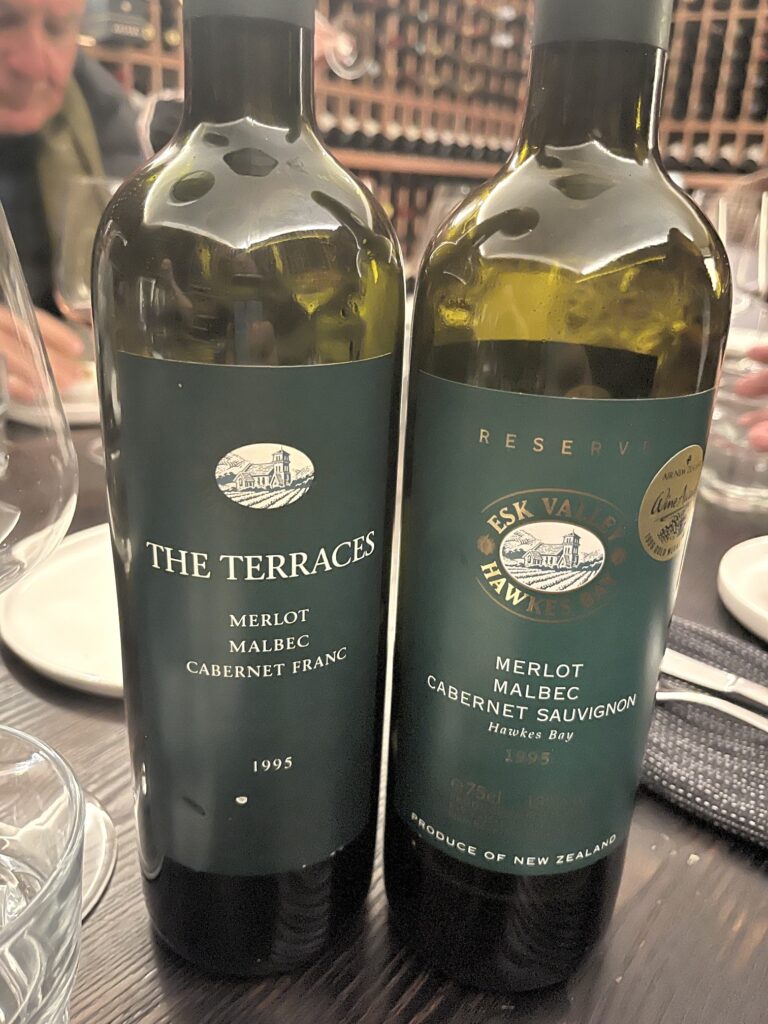
We start at the oldest wines, and then work back towards more modern expressions. With the exception of a couple of rogue wines that get sneakily opened at the finale (read on). So, Flight 1 is “The early days” – we crack these two – Esk Valley Winemakers Reserve 1995 and Esk Valley The Terraces 1995 – and scoff a couple of platefuls of Mini herb & potato rosti with avocado. Gordon tells us the story of the vintage – which he would personally regard as one of the truly great ones. It rained heavily during the summer “It was like we had no summer at all” but then they had the most beautiful Indian Summer, with sunny days that spread into autumn, leaving huge cracks in the vineyard and allowing the later-ripening varieties to develop.
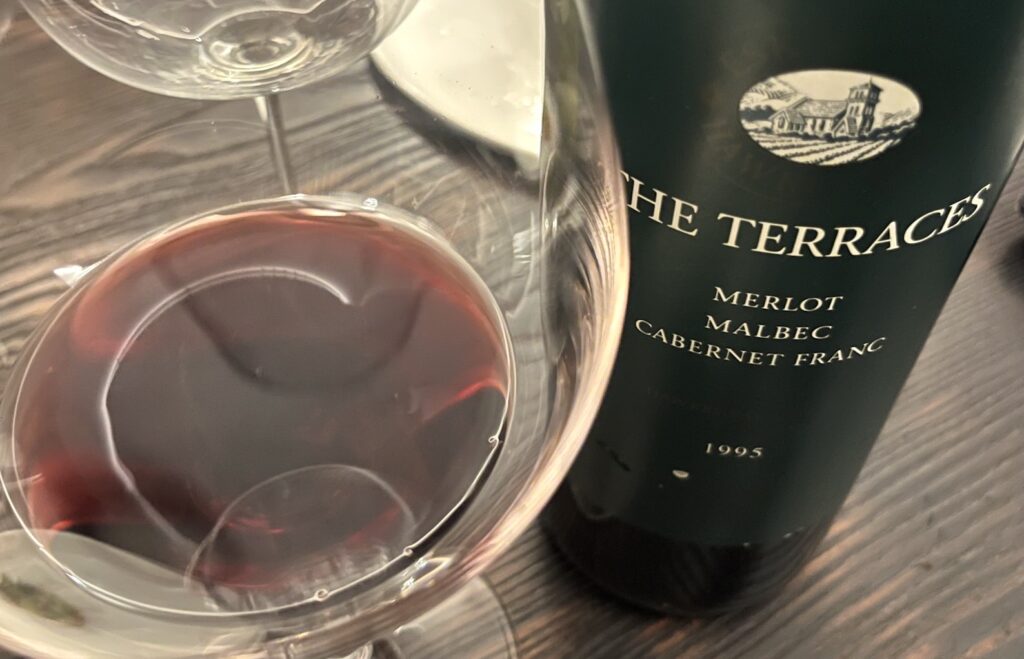
The Terraces is glorious. The fruit is sweet and ripe, with cherry, black plum and blackcurrant and the secondary flavours of cedar and cigar box that you would expect from a wine of thirty years age. Back then, it would have used new oak, but it isn’t an oaky wine – just miles of ruddy and powerful balance, texture and complexity. Incredibly perky and certainly not ‘aged’ in a traditional sense. Just how long this wine would keep, I don’t know – but I wouldn’t be in a hurry to drink up. The Reserve is less stellar, but still a very good wine. It’s well-made with still-juicy fruit, but does show a bit more dustiness, and in my opinion, is perhaps just past its peak.
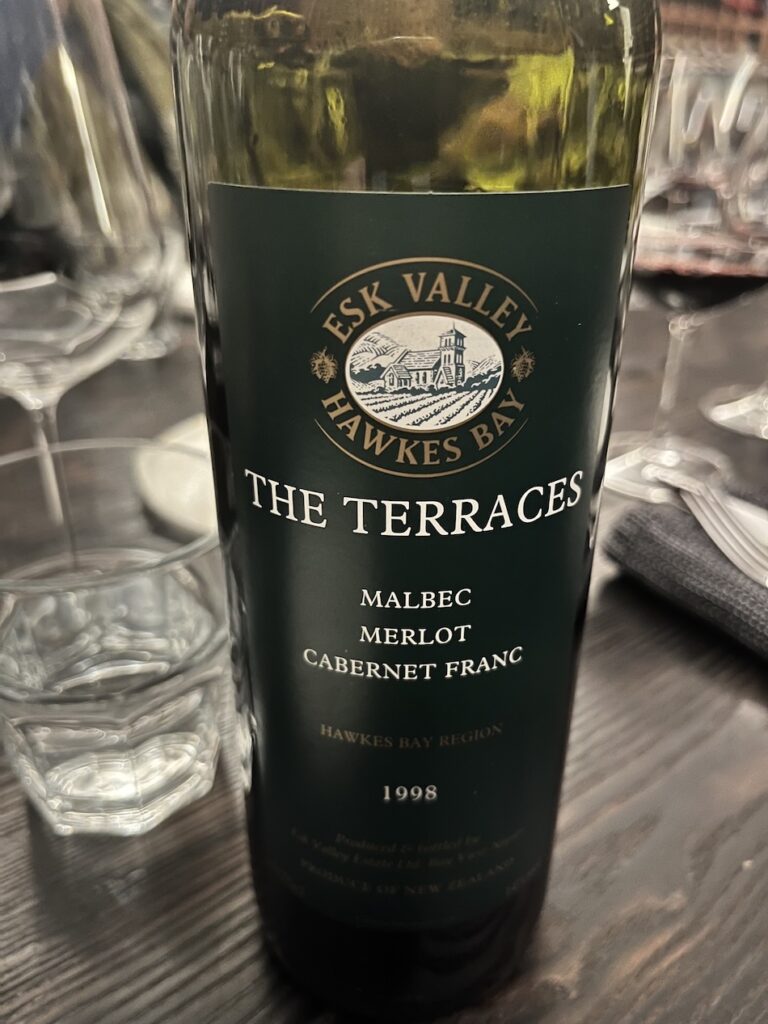
Steven has given Flight 2 the illustrious name of “1998 – The first ‘exceptional vintage’ in NZ. How is it looking at 28 years of age?” We nibble on goujons of fried chicken and consider this question – and study two glasses of the most glorious Hawke’s Bay reds – Esk Valley Winemakers Reserve 1998 and Esk Valley The Terraces 1998.
Again, I have to start with The Terraces… I reviewed this wine back in February this year, where I said “The perfume has boysenberry, plum, cherry fruit, with liquorice, vanilla, sage, white pepper and cinnamon. Excellent depth and concentration, with fine, subtle tannin contrasting well with a juicy acidity. Both oak and savoury notes fill the mid-palate, with salami, tapenade and roasted beet, then a spicy toast from the barrel”. That’s a good start for tonight’s bottle too, but I would certainly go higher than the 94/100 score I doled out in February. This bottle is simply superb. It would head straight into the ‘Top 10 list of Bordeaux style red blends from NZ’ that I’m sure we all keep in our heads, don’t we?
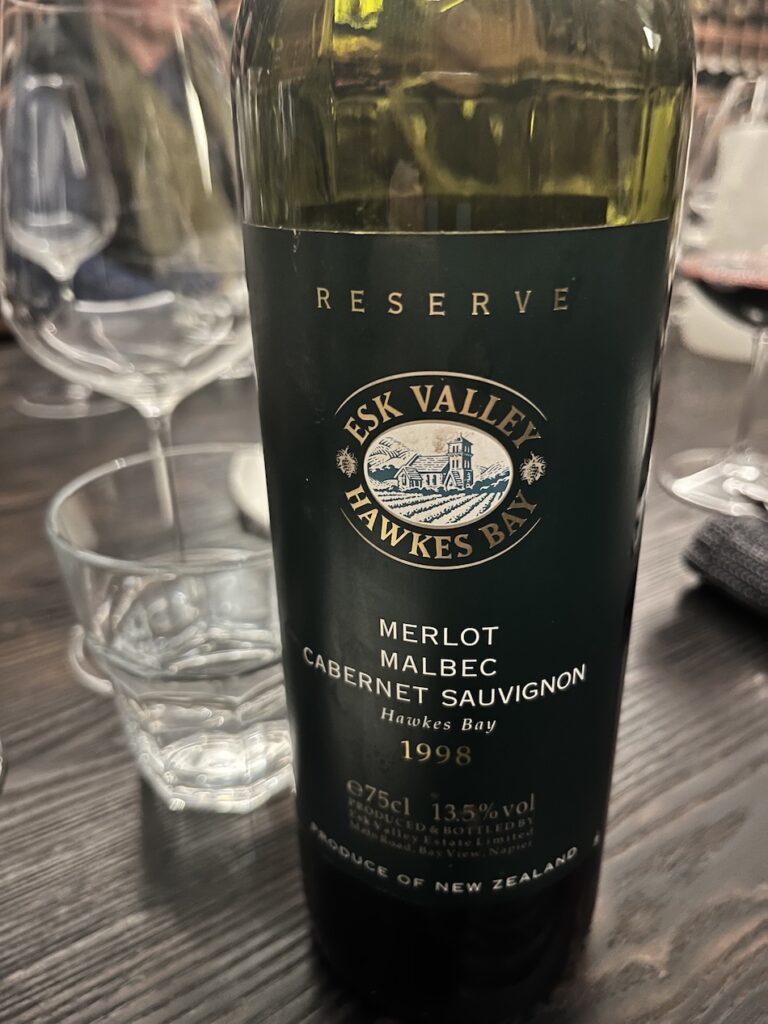
A couple of those gathered offer an opinion that the Reserve is possibly the better of the two – Including Gordon himself. Certainly The Terraces is broader, carrying more attention-grabbing oak, and the Reserve has a lighter touch – more elegance and poise? If they weren’t side by side in glasses in front of me, I would be singing the praises of the Reserve too – were I served it another time – but The Terraces edges it for me, here and now.
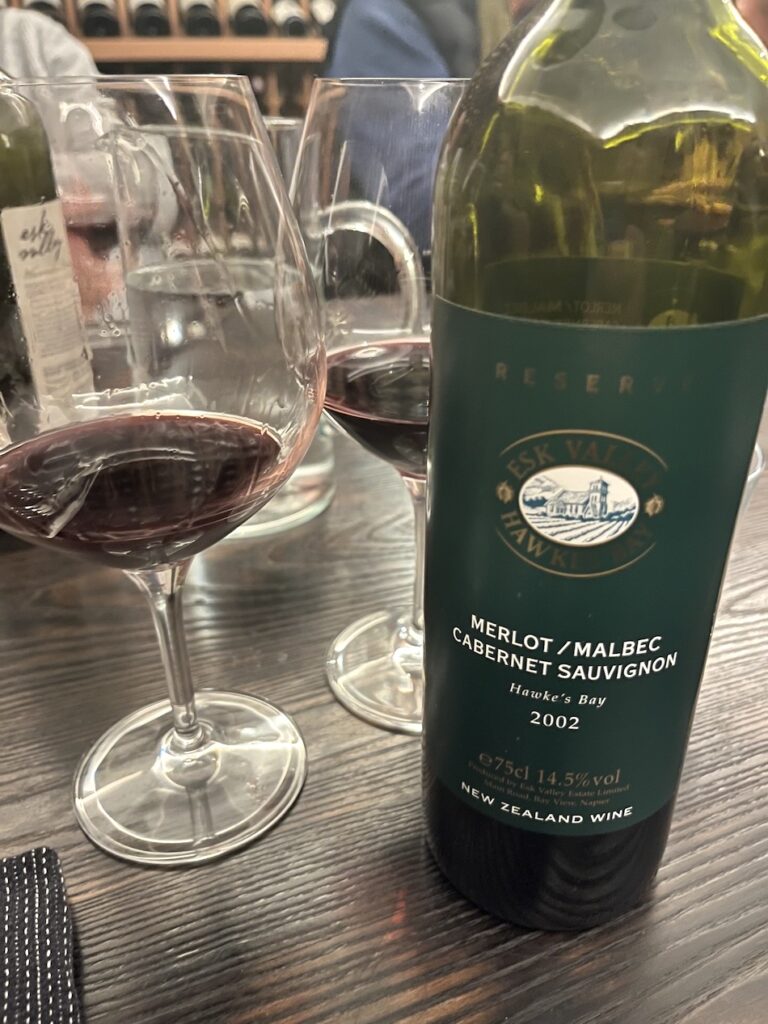
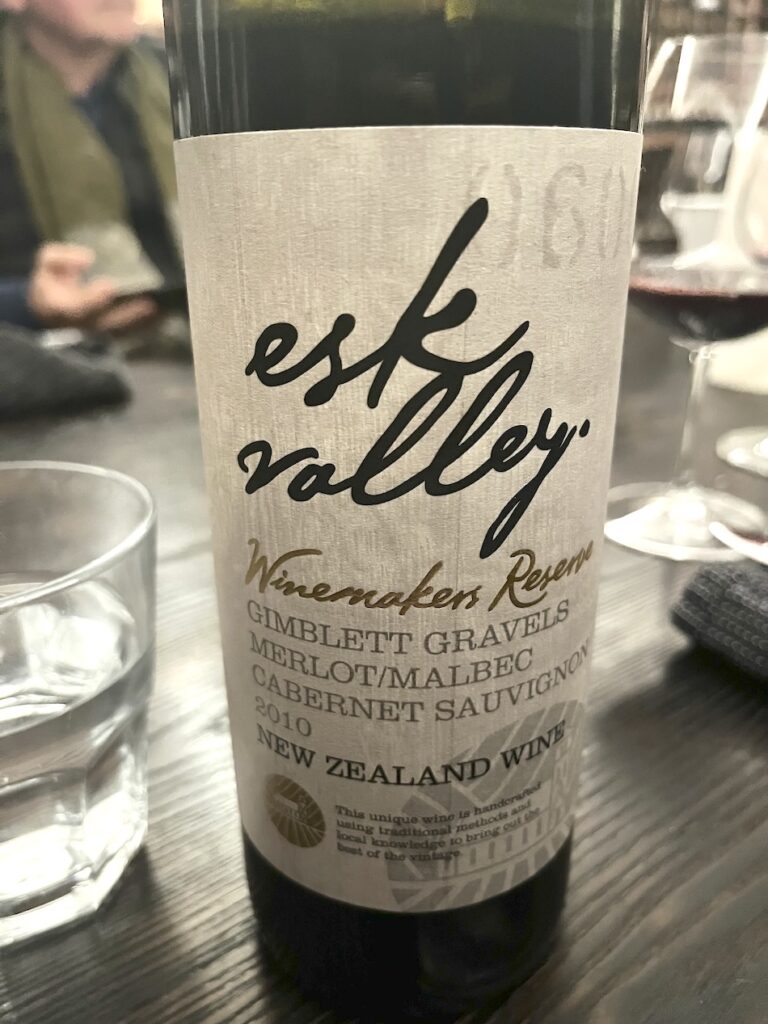
The next pair have a more restrained title: “Flight 3 – The 2000’s” and get a dish of Beef cheek ravioli with radish, caramelised onion and garden herbs to tee them up. This is one of Phil’s classics, and it gets to share space with one of Gordon’s favourites – Esk Valley Winemakers Reserve 2002. Also in a glass is another of the very good vintages in living memory – Esk Valley Winemakers Reserve 2010. Coming from the Cornerstone Vineyard in Gimblett Gravels, the younger wine in particular shows a profile of dark fruit, and well-integrated pepper and spice notes. A fine structural balance and interplay of crackling acidity, sumptuous fruit and tannin grip. The 2002 has a confident bounce – again, it does not really present as a near quarter-century wine. A benevolent complexity makes it a fascinating study – easy to like, and enjoy.
We couldn’t have a look back at a range of Hawke’s Bay reds and not include a certain vintage. So Flight 4 is “2013 ‘The Best Ever’ ‘Outstanding’ vintage – the more recent equivalent to 1998?” We’re fortunate to put that question to the test, and try to find the answers in a pair of wines – Esk Valley Winemakers Reserve 2013 and Esk Valley The Terraces 2013. And, equally fortunate to have a plate of Pork fillet with red wine poached pear, caramelised cauliflower purée and fried quinoa to match. 2013 is considered a benchmark vintage for Hawke’s Bay reds (and to some extent for whites) due to dry, warm weather during harvest. Both these wines are slightly impenetrable. Which sounds crazy to say about a 13-year old wine. They are deeply coloured, with rich black fruit such as blackberry, cherry and blackcurrant. There’s a smoky spiciness and tight structure, but also a softer textural edge. Given how good the pair of 1998 wines were – maybe we should postpone judgement for another 15 years.
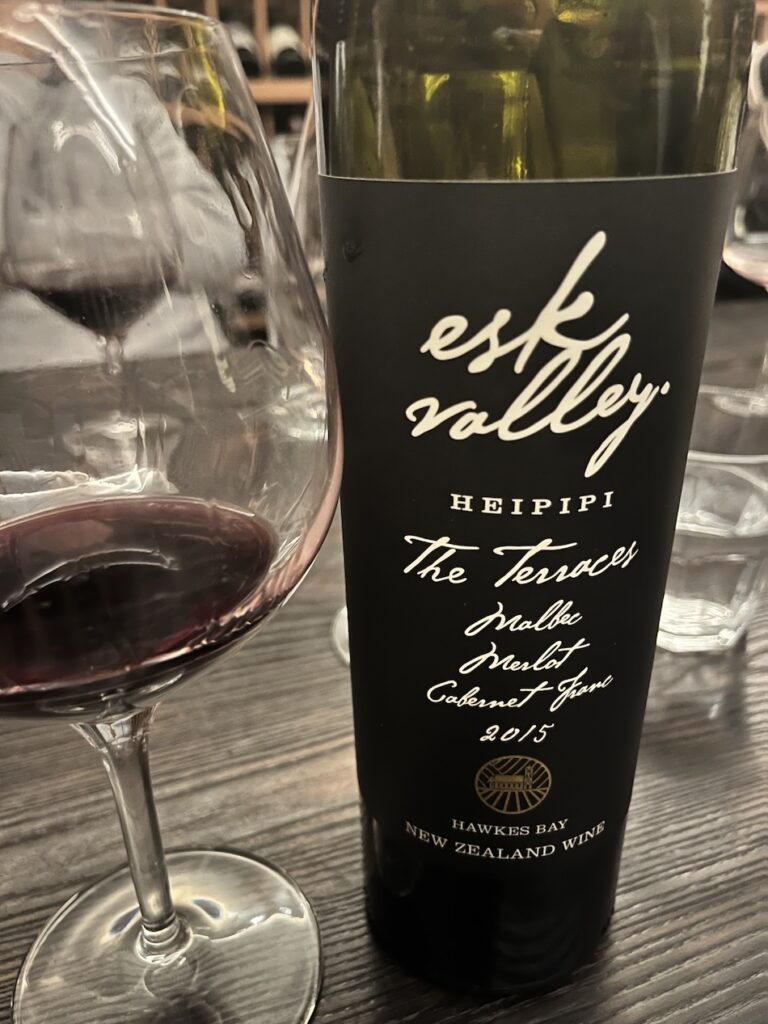
Incredibly there is more food to come – Lamb rack with a tomato chorizo salsa, seasonal vegetables and creamy roasted potatoes, but just one more ‘official’ wine. Esk Valley The Terraces 2015. This one is more accessible than the 2013s. Glossy and ripe, with boysenberry, mulberry, liquorice and plum compote. A lesson in elegance with a lingering suggestion of toasted spice.
As a few bottles had been brought along for an outing from their various cellars – well, as back-ups really – it was decided to open a couple of oldies. So we shared a Esk Valley Reserve Merlot 1990 – out of magnum no less; and a tiny jewel-like bottle of Esk Valley Botrytis Bunch Selection Reserve 1992. Since we’re doing all this hard work for you readers, I do have to report that the Merlot was completely fabulous. I’m an unashamed fan of decent Hawke’s Bay Merlot, and it was a delight to see just how well this treasure had aged. Varietally correct, with a burst of ripe plum, dried herbs and a lightly medicinal light balsam note.
The dessert wine was a deep mahogany colour – showing the age of it. It’s made of Chenin Blanc and Chardonnay but looks like it would taste like a date pudding! There actually is a bit of that, but it is surprising wine to try. It has quite lively acidity and a lightness of touch, with only a flittering of sweetness and density. Would have suited the smaller entrée courses – possibly the fried chicken in particular. Still, a good finale to an epic night.