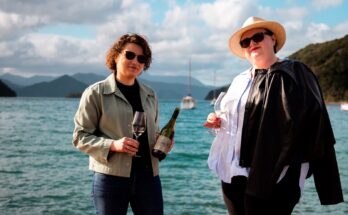
It’s a sunny Sunday afternoon in Autumn when I pull into Johanneshof Cellars. They are in the Marlborough wine region, but are along the road to Picton – a reasonable distance from the majority of what you’d think of as Marlborough wineries. They’ve been generous enough to host me on a Sunday afternoon after their Cellar Door closes to visitors.
As the last customers fiter out, I’m immediately blown away by how many awards are on the wall! Co-owner Edel Everling smiles and comments “We didn’t actually take part in the shows for ten years, and then we realised that when we won the Pinot Gris Tasting in Cuisine, we realised that ‘oooh the Cuisine sticker doesn’t actually change’.
The other half of the partnership – Warwick Foley chips in that “When we won the Decanter World Wine Awards Trophy a few years ago – for the Champion Aromatic wine over ten pounds – we never got anything! No phone calls, nothing. We approached a load of really well known retailers and even they weren’t interested. They just wanted cheap Sauvignon. I said to Edel ‘We’re spending all that money on air freight and then people aren’t interested – honestly’.
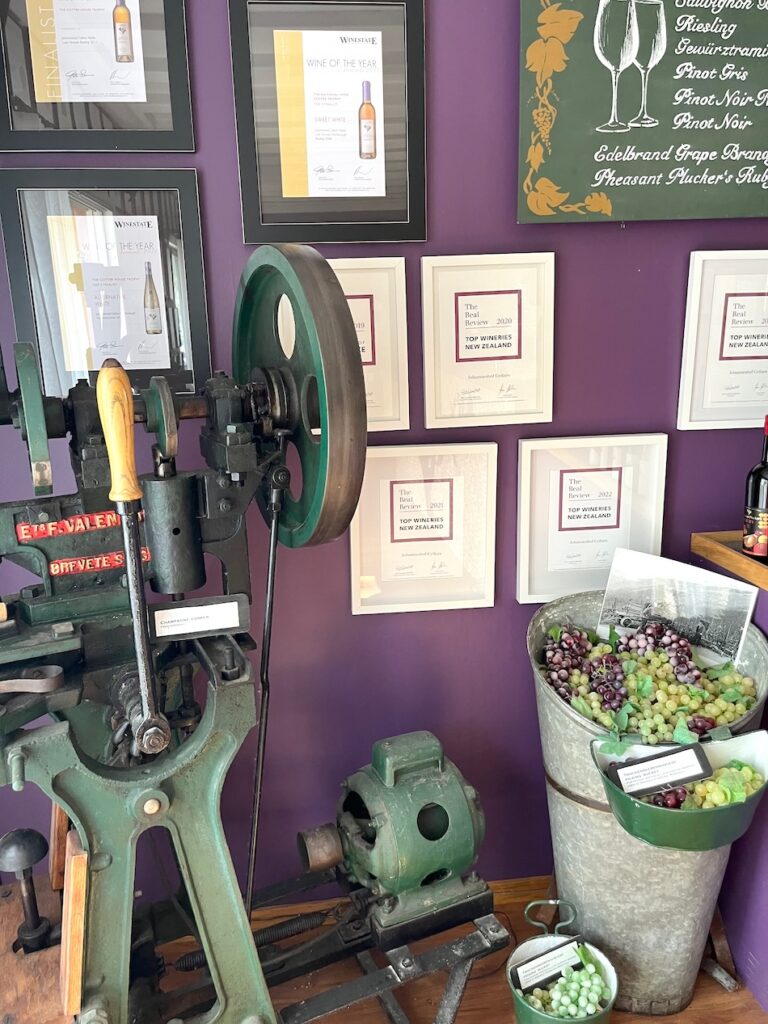
I’m obviously amazed at this – that something that has been voted to be the best wine of its type in the world, doesn’t then get recognised and boost sales? I find that bizarre. So what’s the point?Warwick adds “Yes, that’s what we said. And they’d ring up every so often and say “Why don’t you want to enter?”
After the Tasting Room settles, we sit and Warwick opens a 2018 Sauvignon Blanc, which they don’t make a lot of. Their idea was to put it into older French oak and make it Fumé style. Warwick explains: “We made three barrels. And after it was fermented we whipped it out and put it back into other oak for five years. We just thought we would do it, because people don’t do it! And a lot of people don’t even try it – because it’s old.
For example, a local guy – his brother bought him a bottle of it and he opened it for a bunch of people who were coming over. One of them was a young winemaker who just looked at the vintage and said ‘that’ll be stuffed’ and tipped it down the drain. I couldn’t believe that when I heard it”.
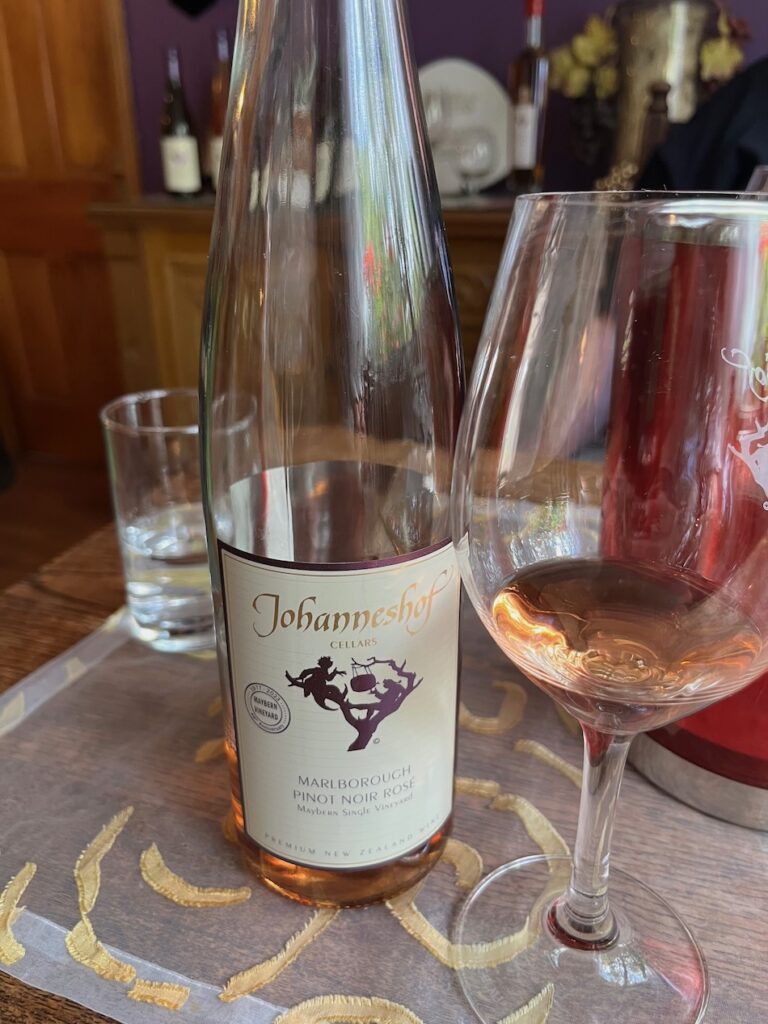
It goes well at the Tasting Room – a lot of European visitors buy it and enjoy it. It sits at a higher price than your usual Sav – but it’s not your usual, so there’s a reason for that. My rule is ‘is it delicious?’ applies here – especially with a wine coming from a different perspective. Another example is the rosé. They only started making rosé in 2016. The reason it doesn’t have a vintage on the label is that you’re allowed 15% and under of ‘other wine’ in order to label it as a particular vintage.
It is mostly 2024 but they added a parcel that they had aged in french oak from 2023 for a year. It made up 17%, so the vintage labelling had to go. I can report that it’s extremely nice! I can take it or leave it with most rosé. For me it has to have character.
Warwick considers that “At the moment there’s a shortage of rosé out there, and this is $25 a bottle. I don’t think it matters that this is dry-farmed and handpicked — it’s the price that counts. People don’t know the difference”.
Although they only have Pinot Noir on their home vineyard, they do make a range of wines – including a Pinot Gris – from a contract grower in the Wairau. It is very good. I mention to them that I like Pinot Gris :for different reasons than the Book Club does”. I’m a big Alsace fan.
Warwick: Yes, us too. That’s why we went in this direction. There’s white peach, pear and a little bit of honeysuckle. It’s the style we like. The Gewürztraminer is in the same vein.
WF: I think there are a couple of people around who seem to get it. Prophet’s Rock are interesting. They have that Vin Jaune that sits and bubbles slowly away for a couple of years. And I like things like Soleras.
Warwick: Well, we’ve been making our Edelbrand – Brandy since 1991 – and that’s a solera. We started off with the first barrel. We used Tronsseau oak because you couldn’t get Limousin – but now you can – and that is better. A few years back we bought some Sauré barrels, and in Cognac they use 300 litre barrels, so once we could get Limousin we got the 300 litres ones.
And we have made a Pineau de Charentes, but we can’t call it that – it’s just Pineau. I haven’t bottled it yet. Also, we started a vinegar off thirty years ago – a red and a white. And chefs really like a good aged vinegar. We’ve got a couple of barrels.
WF: It’s funny because one of my ‘standard questions’ that I ask everyone is “Is there anything else you’d like to have a go at making?’ And sometimes I have to prompt them. I won’t have to do that for you – sounds like you’ve got a lot of things under way already!
Warwick: I’ll get you a Pinot to try later on. We haven’t made one for a couple of years because we wanted to get a bit whacky and join the circus of organic-ture! We have twice the rainfall of the main area – we get 1200, where in Blenheim they’re 700. It’s made it quite difficult with going organic, and having something like powdery mildew can just wipe you out. So we’ve gone “no, too hard”, and we’re not even going to try and do that. So we’ll just go back to being careful, but conventional sprays. So we had a couple of years of just no red wine. But we made one last year.

One thing that Edel and I spent a lot of time on – and we were happily married until we started a business with no money – we used to go to Alsace regularly. She and I lived in Rüdesheim. She went to Geisenheim – and I did too, but I went as a guest student just to get the knowledge. In Alsace the food’s great, the wine is lovely and it is beautiful scenery. We had a wine that turned us onto making bubbly from a winery called Kuentz-Bas, made out of Pinot Blanc. We came back and played around, and have now made bubbly for quite a lot of years. Edel and I both make the wine here. It’s not like ‘I’m the man and I do the winemaking’. Edel has a degree in winemaking and oenology from Geisenheim.
My parents bought this property of ten acres back in 1971 and they bought up to half way up the slopes, right around the valley. In 2006 they harvested the pine trees and the owner – Rick Osbourne – of the trees came and introduced himself to us. We were keen to make ‘a sensible boundary’ which meant buying up to the ridgeline. We did that and planted it in oak trees, so now we have 17 acres. About forty of the oak trees have ceps on the roots. The rest is maple, european beech, ash and elders which are growing really well.
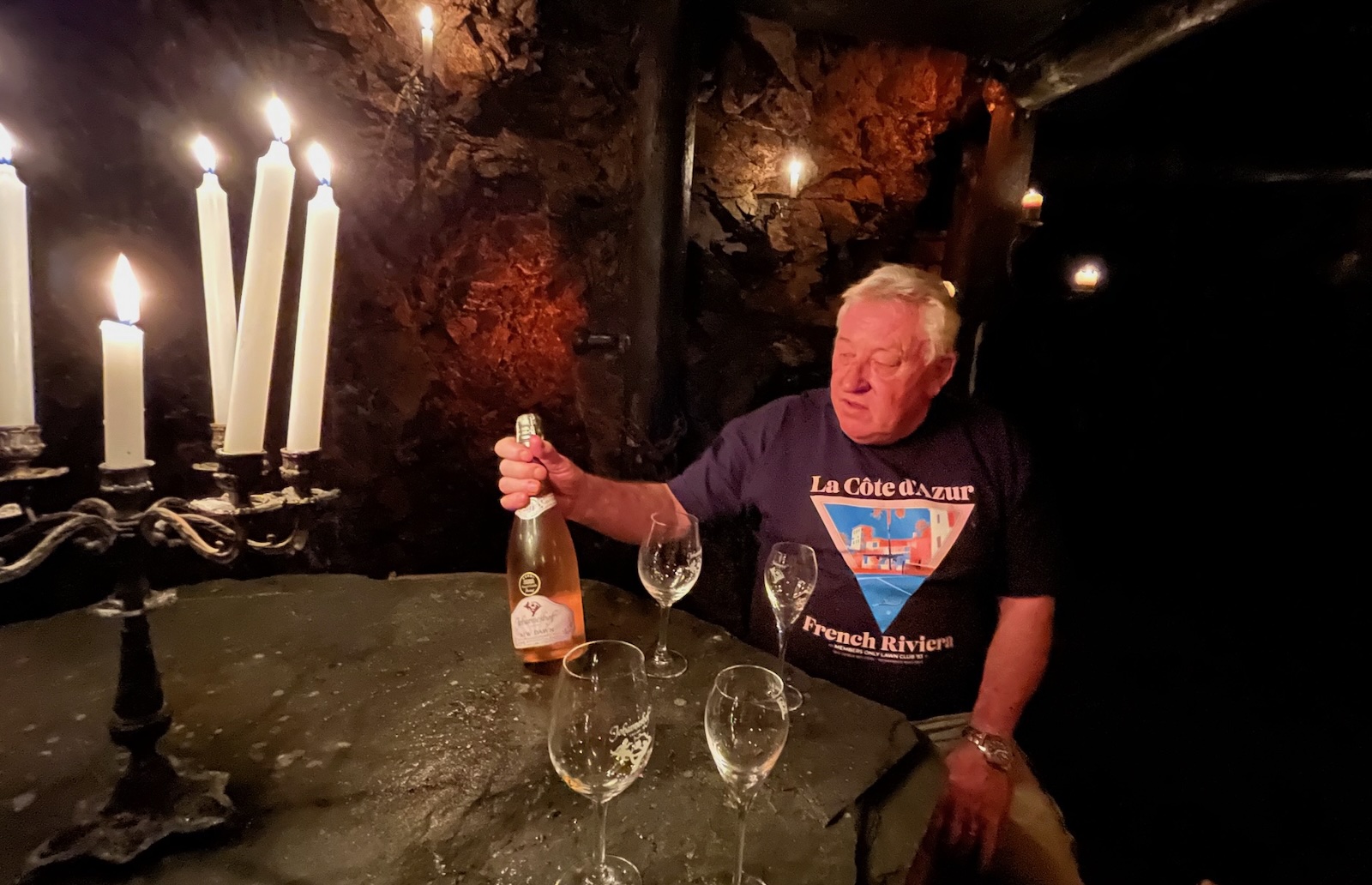
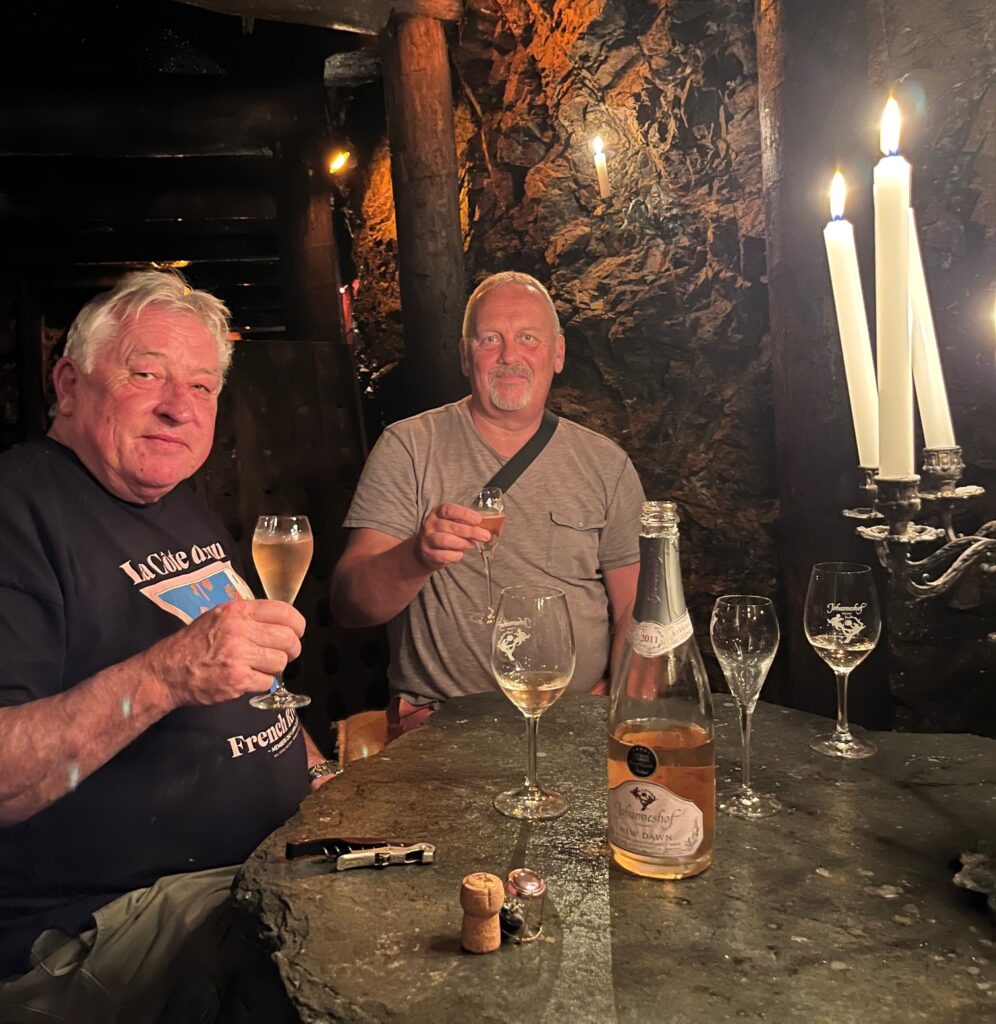
We head out from the Tasting room and around to the cellar, which I’d been told would be a highlight of a visit here. Warwick opens the doors and explains: “In 1993 we got some West Coast coal miners, who used pneumatic hammers and gelignite to cut into this rock. Once you get five metres under the surface you get a nullification of the ambient air temperature against the earth temperature. In this case, the temperature drops and stabilises at about 12 degrees. Humidity can go up to about 97%. We ran it uphill because we knew there would be water ingress, and it runs out naturally. We do ferment up here – there are sixteen barrels there, and that’s enough when you’re a small winery. We’re at seven stories deep at the moment”.

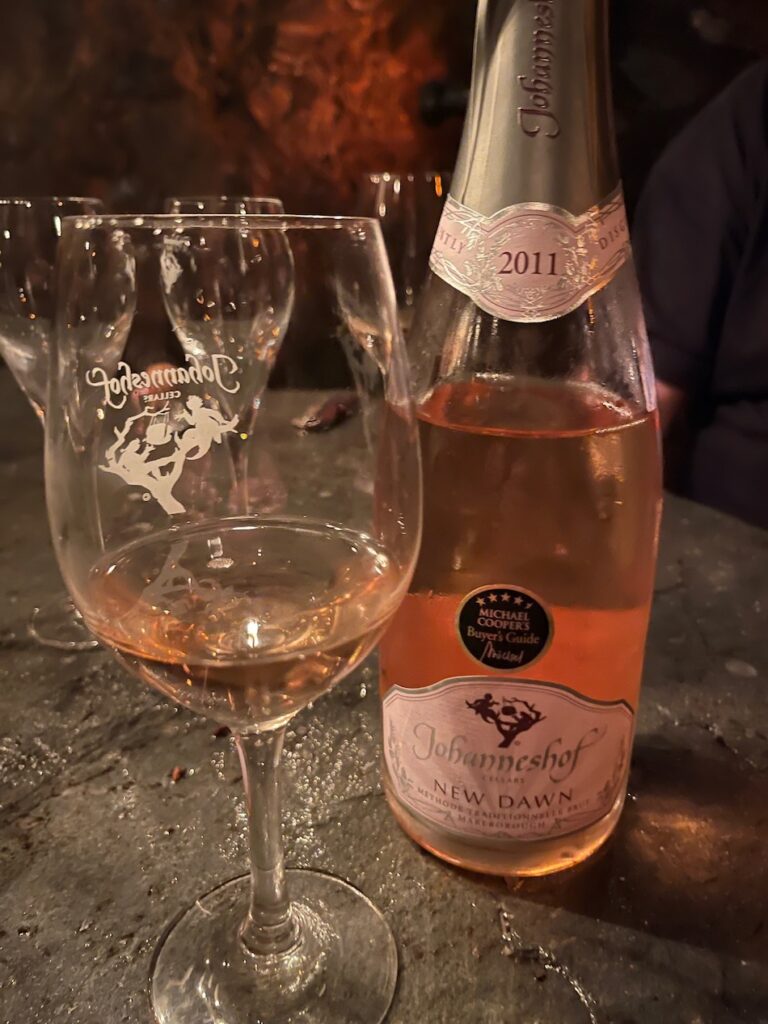
At the end of the short walk through the rock there is a table set up, and Edel, Warwick and myself settle down for a chat and a few samples. We start off with a ‘New Dawn’ Méthode Rosé 2011. It’s quite a special spot, and the wine fits the setting.
Warwick: I was struggling for some adjectives for it one day and my daughter who was twelve was eating strawberry marshmallows and it hit me – that’s exactly what it is! We’ve tried to leave our wines on lees for as long as we can. This 2011 was disgorged about four weeks ago. It does help to get the autolysis characters if you can leave it a year. The French aren’t stupid. They do it for good reason. You get an evolution in the bottle. Whereas this is fresh and lively and recently disgorged. We’re lucky because we’ve got our own machinery upstairs, which we bought off Cloudy Bay.
Edel: I see you’ve been judging and reviewing a lot. We used to taste a lot of wines when we were in Europe and I always thought that Warwick should do the Master of Wine course, but we couldn’t afford it. He’s got a really good palate and the memory to go with it. And you need that don’t you? It’s also practise as well, so when you come to New Zealand you’re not so exposed to those beautiful wines like you are in Europe. You get a bit rusty.
WF: I write about any wine that ‘is available in New Zealand’ – and a few others that might cross my path that I think would be valid for readers to see. So, a bit of overseas wine – for context really… I don’t think I’d review something like an ’82 Margaux though. I’m not sure there would be too much point.
Edel: We’ve got a few ’82 Bordeaux down here. He’s got this memory of every wine we’ve ever bought. And I don’t – after I’ve enjoyed them, I forget them. I wish I had more memory than I have, but some things are best to forget as well! We had a couple of tours through the cellar today, and I don’t know what happened to the Cellar Door key. We have two sets but the one that has the key to the inner cellar is bigger… and I think I’ve put it somewhere.
Warwick toddles off to have a look for some riesling and to find the keys to the gate – beyond which is their private cellar. He hopes to find an old Gewürztraminer.
Warwick: We’ve got a 2005 here we could try. Ours is really good after ten years and goes on from there. We use diam corks as they don’t get cork taint and they guarantee a good, tight closure.
WF: Mmmm, that’s my kind of style. It’s got that floral blast, but it’s not cloying, sickly. Quince and apricot, plus something like white chocolate meringue. The balance between plushness and drive is wonderful. This one is still fabulously fresh – even with a bit of puppy fat to it. What’s the oldest ones of this you’ve drunk?
Warwick: We have drunk the oldest ones. Probably something like a 2003 is still around. For riesling we didn’t keep a whole lot. We did half of it inoculated, and the other half wild-ferment in, actually, New Zealand oak. Our 2019 Pinot Noir is a wild ferment, and we’ve been changing our style. Hopefully people are getting used to the lighter colour. If they drink any Burgundy they’ll see that it is a light wine. It has been racked, and it’s just been hit with a bit of sulphur and Pinots don’t like sulphur – they react nastily to it.
WF: It has a generosity, and good ripe fruit, but it is rubbing its eyes a bit. One of the tough things about reviewing serious wines on their release is that I pull the cork and pour the wine out – and I’m somehow supposed to have a crystal ball – to see its future. Which I don’t, so i just say what i think of it. Of course, over time you get a sense of how a wine is and how it could develop – just based on experience of these things. It is only really because a producer will, sometimes, show you a new release and then a ten-year old version – so you build that memory of that, and that context is what I use in these situations.
Edel: As winemakers you’re torn between the commercial reality that you are actually selling wine, compared to your passion that you would actually like the wines to present at the optimum time. And that’s not the time that you need to release it. It has been our problem when you look at how really well our aromatics age – you wish you could release them a bit later.
WF: You still get a few groups turning up and showing an interest?
Edel: We’ve had a lot this year. We’ve built up a bit of a reputation with people from overseas to come to a place where it’s not all the same.
Warwick: And we make all sorts of stuff! I’ll give you a taste of our Pineau de Charentes – except it’s from here obviously, not Charentes – it’s got our brandy and our grapes in it. And we’ve got the Pear William coming out shortly, plus we’ve made Grappa. And don’t forget our ‘Edelbrand’ – that’s a mixture of a variety of grapes. The solera is down the front as you come in. We’ve been bottling it and selling it. The first one was distilled in 1991, and we’d do about a barrel a year. It will be our 35th vintage coming up.
I had a guy in from Armagnac once and I showed it to him. I said you can try mine and you bring yours in! We both couldn’t believe how close they were. He said “that’s really good”. There’s no caramel and stuff in there. The key to it is to get as many old barrels as you can… and blend. We’re the only ones in Marlborough doing it all the time. I think Hans Herzog has made a Grappa. Plus we make port wine – because we can. If you make Brandy, you can make port wine. It’s made from Pinot Noir in our vineyard. It’s not Touriga – but it doesn’t have to be.

Edel: It was a bit of a fun project – Warwick wanted to make one, and we thought it was just a one-off. But, oh my God, the people have really bought it. I sold a few bottles today – sells like hotcakes. We sold out of our first one – the 2011 and we had it for ten years before we released it. This one is a little bit different. It is a good option for people who want a sweet wine – and we don’t have our usual one at the moment. We have had a really heavily botrytised Riesling in the past, but it is sold out now.
Warwick: We’ve got a bottle of our last Trockenbeerenauslese wine, that got 96 points for Wine Spectator. Would you like to try that?
Edel: We don’t make it every year because you do need to have the right conditions. 2018 is our last one. Looks like we can’t find that 2018 though! hahaha. We’ll have to try the 2008.
WF: I love this – that’s terrific, but I do adore sweet wines. Not at all gluggy and quite dry on the finish. Toffee, honeycomb, and some weight and power there. I’d really love to go up to Rutherglen and try the Tokays. One of my friends is Hungarian and he recently went back and visited Tokaij.
Warwick: We met a lovely Japanese guy who was the winemaker for one of the big names, and he was told to come out here and try our wines. He brought a wine with him from 1997. And before he popped the cork on it I told him that we had made a 1997, so we’ll open ours too. There’s was Furmint and our was Riesling but there wasn’t a lot between them.
We made a wine in 1995 that took forever to make – two years just to get to 10%. We pressed it one night and it was a nightmare – just drop, drop, drop. It broke the New Zealand record for the sweetest wine. 68 brix – and golden syrup is 60 brix.
That epic dessert wine was a great way to finish. I never did get to try everything – but the breadth and quality of what’s on offer is superb. I’d whole-heartedly recommend anyone in the area to pay them a visit. Have a look on the www.johanneshof.co.nz and make a note of the address – 945 State Highway 1, Koromiko for your GPS.