It is a fine Autumn morning as the sun comes up, to see me driving through the rolling hills of the Waikato towards the eastern coast of New Zealand. A (coffee) stop in Ohope Beach to admire the breathtaking beach – often voted the country’s best – and trucking on towards another wine region – Gisborne. This is one of my last undiscovered gems. After I’d crossed Nelson off the list in Febraury, there’s only really the two regions – Alexandra and Gisborne – where I haven’t properly explored the wine scene.
A car full of good tunes has made the journey easier, but it is still a solid seven hours driving before I turn into the driveway of Bushmere Estate, ready to have a delve into a ‘regional selection’ collected for me by the fine people at Gisborne Wine Growers Association – on behalf of their members. A couple of gaps in the line up are explained by my personal visit to those producers in the next days, which is understandable. Even so, I have to take a breath as bottle after bottle, from box after box, is set up on a long table in front of me. Easily over 40 wines. I am impressed.
I’ll be starting with a range of white wines – including a few sparkling – then onto the regions’ rightly-lauded Chardonnays, and finishing on a handful of reds. Gisborne leans more into whites, and the selection shows that. I’ve often thought of Gisborne as something of a pioneering spirit. From early adopters of biodynamic and organic viticulture, to exciting new varietals, and New World examples of classic wines such as Gewürztraminer, Chardonnay and Méthode Traditionnelle. I’ll leave the Chardonnays and reds to a “Part 2” article to keep things easy and not go to thousands of words.
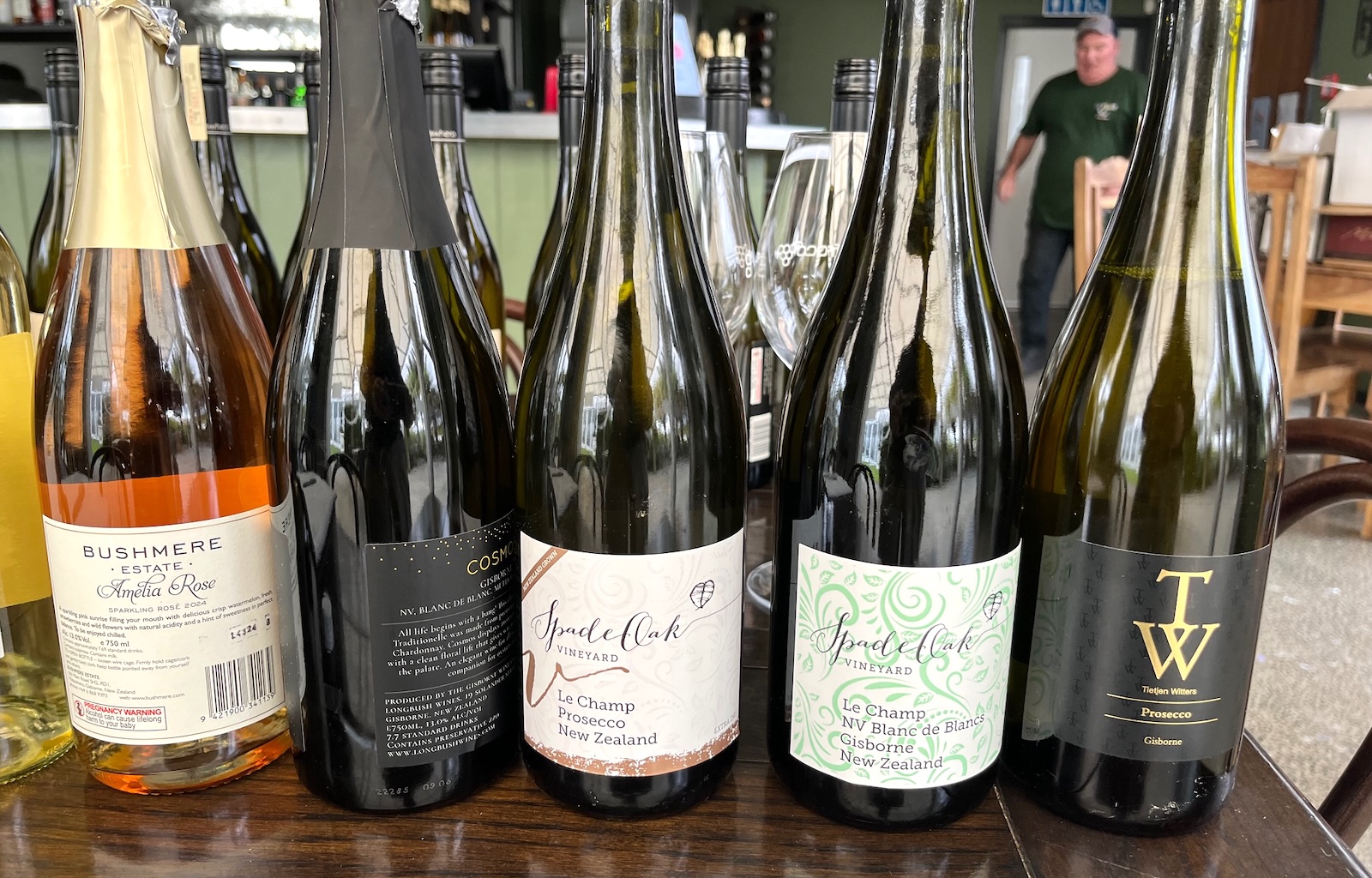
I have tried a wine made from locally planted Glera grapes in the last year – see here > www. winefolio.co.nz/?p=11699, but I didn’t know about the varietal making an appearance elsewhere. The grape is behind the world of Prosecco, and I start with two Gisborne wines – TW Prosecco, and Spade Oak ‘Le Champ’ Prosecco. In a few years time, any wine appearing for sale on New Zealand shelves will have to come from the DOC of Prosecco in Italy, courtesy of a trade deal between NZ and Europe. So I’m guessing that some revamped labelling will be required in the near future.
The two wines are delicious. Quite classically Prosecco in taste, if different in style. Prosecco does have quite varying levels of sweetness and it is rare to find as a bone-dry wine. The wines here are light, with a smooth mousse of bubbles, and a crisp, fruity citrus and apple flavour. They contrast with a Spade Oak ‘Le Champ’ Blanc de Blancs which is much bolder, showing a biscuit and toast edge to the perfume.
The Chardonnay lends itself to an expression with more spice and body. I’ve often heard Steve Voysey (the man behind Spade Oak) described as a ‘sparkling guru’ so it is no surprise that we’re off to a good start here. Cosmos Blanc de Blancs Méthode Traditionnelle is from Longbush Estate and also showcases local Chardonnay. Another wine with reasonable complexity, there is a richness and length to the palate, aided by bright acidity and an edge of minerality. Very good.
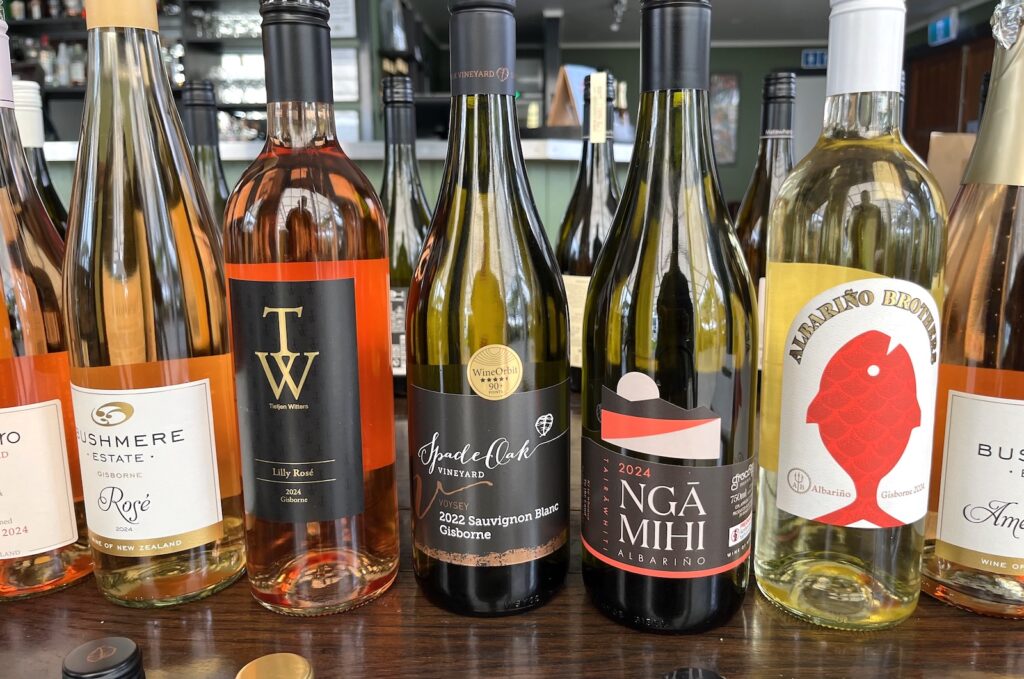
Rosé is an important category in today’s market, and there is a sparkling version on the table, then five still wines. Bushmere Estate Amelia Rosé 2024 is made from local Montepulciano grapes. A bold pink colour with equally brassy flavours of watermelon, peach and red berries. A creamy, fuzzy and uncomplicated glass of fizz. The Bushmere Estate Rosé is also (unsurprisngly) Montepulciano, and has a lovely note of liquorice to go with a saline acidity. TW Rosé also takes from an unusual source – Carmenère grapes – and also has a bold blush of dark pink to the colour. This is a dry style and full of character.
Matawhero are a local legend, celebrating their 50th anniversary this year and the Matawhero Pinot Rosé 2024 is a serious wine. Cherry pie and fennel flavours show off the Pinot Noir fruit inside. Thompsons isn’t a label I’ve come across before, and the fourth Rosé in line shows the fourth different grape varietal. It is amazing how many types go into Rosé, and here we have Merlot. Thompsons Rosé 2023 is a coral pink colour and perhaps my favourite of the bunch. Mandarin, cherry and baking spices. Smoothly textural into a decent length of finish. Longbush Rosé 2024 is an outlier, with a distinctly South of France personality. Light, vibrant ‘garrigue’ herbal elements sit alongside juicy cherry cordial flavours.
The region has helped to introduce grape varietals that are now commonplace. Albariño Brothers produce a small range of wines from this variety that has its roots in northern Spain but is thriving in Eastland too. Albariño Brothers Gisborne Albariño 2024 has plenty of juice to it, but also a spine that’s quite tight and saline – a full (previous) review is here > www.winefolio.co.nz/?p=11623. The local co-operative GroCo – the company name of the Gisborne Wine Growers Co-operative – produces a delicious version – Nga Mihi Albariño 2024. With plenty of lees-influenced texture and minerality it is generous and well-balanced. One of the stand-outs of this tasting.
A varietal whose presence in Gisborne continues to grow features in the next wine – Spade Oak Sauvignon Blanc 2022. Sav shows no sign of losing appeal across the world, and the region does produce fruit that has its own character but fits the NZ style. A 2022 is perhaps a little long in the tooth and lost a bit of freshness. It is still pretty and has a jubey fruityness with some air through it.
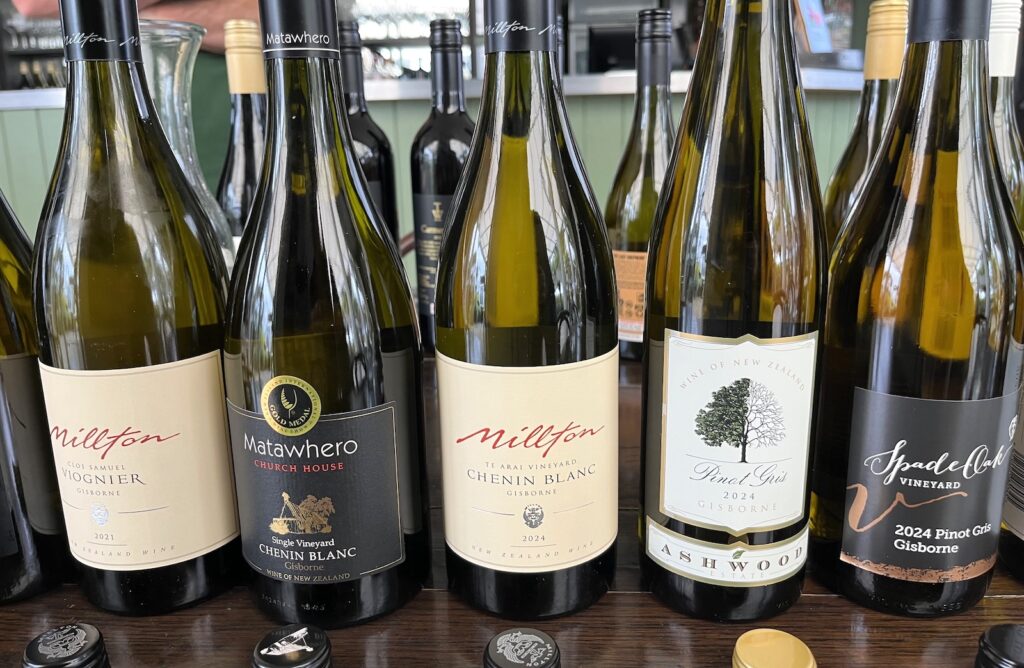
Pinot Gris does well around here and can be made in a wide range of expressions. Matawhero Pinot Gris 2024 comes from their dry-farmed vineyard and has bags of varietal typicity. Seriously textural, with a nutty, mealyness. Longbush Wines Pinot Gris 2024 is a well-presented package, with a label of birdlife that I believe relates to their eco sanctuary on site. The wine is plush, soft and has subtle herbal undertones. Spade Oak Pinot Gris 2024 is one for lovers of bolder styles. A big, spicy and lush-fruited example… it will appeal to Chardonnay lovers. The final expression – Ashwood Estate Pinot Gris 2024 takes another path, again. Defiantly opulent with a medium level of sweetness, there is also a prickle of tannin. Full-bodied and spicy with a long honeyed finish.
Millton Te Arai Chenin Blanc 2024 comes from the producer who has probably done most to promote the varietal in the region – if not the country. Possibly only Esk Valley in Hawke’s Bay comes close in terms of recognition. A fruit salad of citrus, apple and tropical fruits, with a wave of acidity to carry those flavours to a soft and plush finish. Matawhero Church House Chenin Blanc 2024 is a single vineyard wine that also has some repute – winning a coveted Gold Medal at the New Zealand International Wine Show last year. This one is more in a stonefruit spectrum, alongside the typical apple and citrus, but also has lovely texture and some honey flavours.
Millton ‘Clos Samuel’ Viognier 2021 is a wine I’ve tried in February this year, where I gave the wine a 92/100 score. See here > www.winefolio.co.nz/?p=12127. TW Viognier 2017 is a much tighter example, with the signature pithy texture sitting below a lovely bite of saline acidity. So often the wines from this producer have real character – much like the owners. The Co-ordinates Gewürztraminer 2021 is my first look at a pair of wines from a region that has long been flying the flag for the variety. The other one is Longbush Wines Gewürztraminer 2024, and both wines move away from the sickly rose petal high note in the perfume that I personally find off-putting. They have, instead, a focus on mandarin, with citrus peel, cardamom and white pepper. It is clean, but rich and rounded. There’s not too much between them – the older wine having a bit more depth and honeycomb, but either would be a lovely aperitif drink or with a meal that had spice to it.
Look out for “Part 2” in the next week, where I’ll document the Chardonnays I tried – still the region’s calling card, and the handful of reds.